At 7 p.m. on Thursday, March 12, 1970 an unidentified woman telephoned the Huntington Beach Police to report a drunk man lying beside the road. The man, sprawled in the muddy ditch, was twenty-five-year-old Thomas Astorina, but he wasn’t drunk, he was dead. Someone shot Thomas in the stomach with a .22 caliber pistol.
Police speculated that Thomas, arrested in February for possession of stolen property and reckless driving, may have crossed someone and paid with his life.
The killer, or killers, denied the twenty-five-year-old father of two, separated from his wife, a chance to make things right. Why did Thomas die?
Before his death, Thomas lived at 350 Avocado Street in Costa Mesa with three roommates, one of whom, Randall G. Allen, police booked on suspicion of murder. The other two roommates, Robert Connolly and Robert Liberty, remained at large.

Detectives knew of Robert’s trial for Marcella’s murder. His violent past and his release six months earlier from a state run mental institution made Robert a compelling suspect in Thomas’ death.
Robert flew under law enforcement’s radar from March until June when he embarked on a crime spree.
On Saturday, June 6, Robert and a female companion paid an unannounced visit to his mother’s home in Westminster. There, Robert pulled out a .22 caliber pistol and forced his mother to hand over $45. He claimed she owed him the money. Police did Robert’s mother a kindness when they declined to identify her for the newspapers. Having Robert for a son was a big enough cross to bear in private.
Following the armed robbery of his mother, Robert and the unnamed woman hitchhiked south. A teenage boy picked them up and drove them to the apartment of Robert Irion in old town San Diego. Irion and Robert met in a state run mental facility. It was the same way Marcella Landis, Robert’s first victim, met him.
Rather than turn him loose, Robert and his companion forced the teenager into Irion’s apartment where he watched in horror as Robert and the woman shot and strangled the man.
The couple left the teenager tied up and stole Irion’s Peugeot. The kid escaped his bonds and called police. When police arrived, they found Irions on his bed surrounded by lit candles.
A note scrawled in pencil on a closet door near the body read: “The Candlelight Killer Strikes Again.”
Detectives feared Robert would pay another visit to Orange County, and they began a search of his usual hangouts. He wasn’t in any of his favorite haunts—he was on his way to Colorado.
On the way to Colorado, Robert and his companion, identified as twenty-four-year-old Kendell Bierly of New York City, picked up a 17-year-old boy, Glenn Allen Fawcett, from Midland, Texas. In Colorado Springs, the three of them rented a motel room where, according to Assistant Police Chief Carl Petry, “They harassed everyone quite a bit.”
Around midnight on Tuesday, June 9, the three entered the motel office and tied up the owner, his wife and their small child, and then stole $100 from the cash register. They then searched the adjoining house for more valuables. While they were busy ransacking the house, the manager broke free and ran to another motel and called police.
Robert discovered the manager gone and in retaliation he took the man’s wife, Edna Brenek, hostage. The four left the motel in Brenek’s car.
Detective Bernard Carter and Sergeant Neal Stratton arrived at the motel moments later. Stratton stayed at the motel while Carter took off to search for Brenek’s car. He spotted the vehicle and gave chase.
The chase continued along Interstate 25 south of Colorado Springs and reached speeds of 100 mph. During the chase Robert held Mrs. Brenek up in the rear window of the car and pointed a gun at her temple. He motioned for Carter to stay back.
Carter said, “I felt if he was going to shoot the woman, he would shoot her regardless of whether I was there. Somebody was shooting at me from the back window, but the bullets all went wild—didn’t even hit my car. When I pulled up pretty close behind them, I fired three shots into their car.”
Nine miles and five minutes after the chase began, Robert threw his weapon out of the window and the car pulled to the curb. They arrested Robert, Kendell, and Glenn without further incident.

Charged in Colorado Springs with armed robbery, kidnapping, and assault on a police officer, they set Robert’s bail at $200k and $100k each for the other two.
Huntington Beach and San Diego authorities began extradition proceedings on murder charges against Robert and Kendell.
Robert used his time in the Colorado Springs jail to make a new friend, James E. Jackson Jr., accused of the fatal beating of a local pawnbroker. The two men dug through a cinder block wall at the jail, and they made it halfway through before steel rods stalled their progress. Someone discovered them and the intended jail break failed.

What do you do when your jailbreak fails? You get married. Robert and Kendall exchanged vows in a double-ring civil ceremony in the El Paso County Courthouse at Colorado Springs. District Judge John Gallagher officiated. A deputy public defender acted as Robert’s best man, and a female inmate was Kendell’s matron of honor. The groom wore no shoes and dressed in dark green pants and a green button-down shirt with its tail hanging out. The bride recited her vows wearing a medium length red-and-white striped dress, with brown shoes.
 Robert and Kendell described the day as the “happiest” of their lives. They paid no special attention to the “until death us do part” pledge. Following the ceremony a sheriff’s deputy placed handcuffs on each and led them to separate jail cells where they continued to fight extradition to California.
California won its extradition fight with Robert, and on September 18 he left Colorado for San Diego to stand trial for murder. Kendall joined her husband in San Diego Superior Court where the newlyweds pleaded innocent to the charges against them.
Robert Connolly, the other suspect Thomas Astorina’s slaying, turned up in Waukesha, Wisconsin. The FBI arrested him in Milwaukee on December 10 on a charge of unlawful flight to avoid prosecution.
The case against the Candlelight Killer and his accomplices was coming together.
Robert shared a cell block with two other murder suspects—New Yorker, Timothy Earl Dudley, and Carl Raymond Riggs of Romulus, Michigan. Timothy stood accused of strangling a young man with a bootlace, and they charged Carl with murdering an off-duty San Diego police officer outside a bar.
At 7 a.m. on January 20, 1971, jailers did a routine check of the three killers. They returned at 10:50 in response to an alarm bell. They found Robert dead, face down on his bunk with a blanket pulled up to his head. There were scratches on the knuckles of his left hand, an abrasion on his left elbow and discoloration on the sides of his neck.

Carl admitted to the murder. He said he executed Robert because he believed he was a police informant. Some would say it was a fitting end for the Candlelight killer.
 Robert’s behavior was bizarre, and the circumstances of Marcella’s death suggested homicide—she had a single stocking knotted around her neck. The police arrested the teenager on suspicion of murder.
 Judge Robert Gardner to send Robert to Atascadero for 90 days or until he could assist in his own defense.
 vice. When he finished, he phoned the police.
 Ewing Scott was released from prison in 1974, still vehemently denying that he had murdered his wife Evelyn in 1955.


 On August 17, 1987, ninety-one year-old Ewing Scott died at the
 Ewing’s attorneys told reporters they were worried that their client had met with “foul play”. Both the police and the district attorney were convinced that Ewing’s convenient disappearance was a hoax.
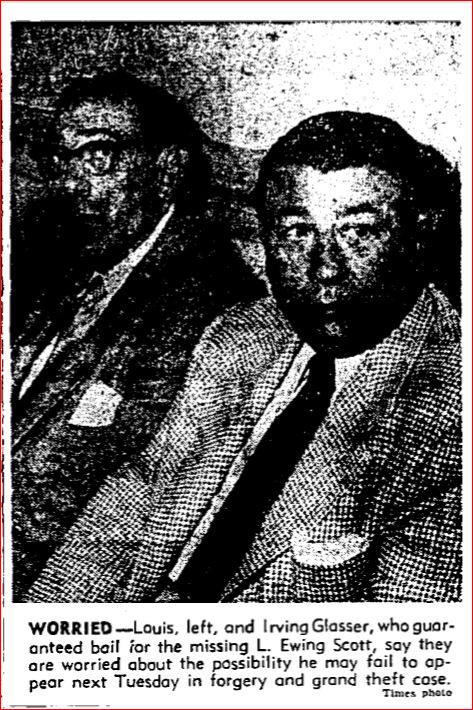 So, was Ewing sitting on a distant beach sipping a cocktail with a colorful little umbrella in it; or was he dead and buried in an unmarked shallow grave along Angelus Crest Highway? Nobody knew for sure.
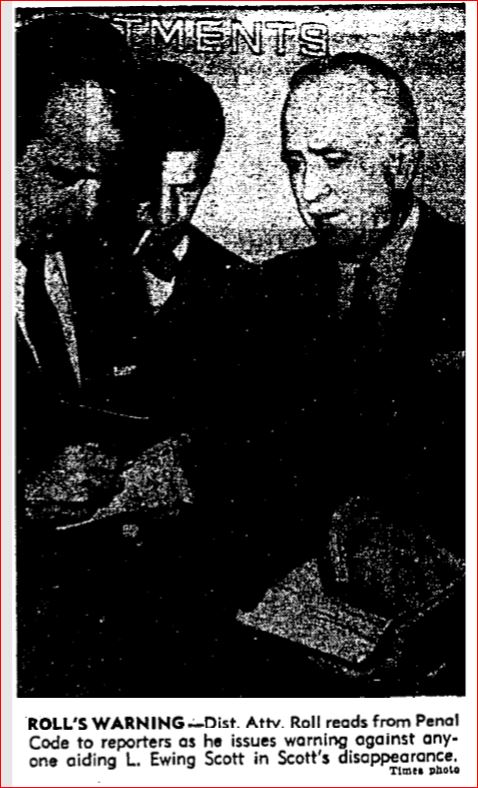
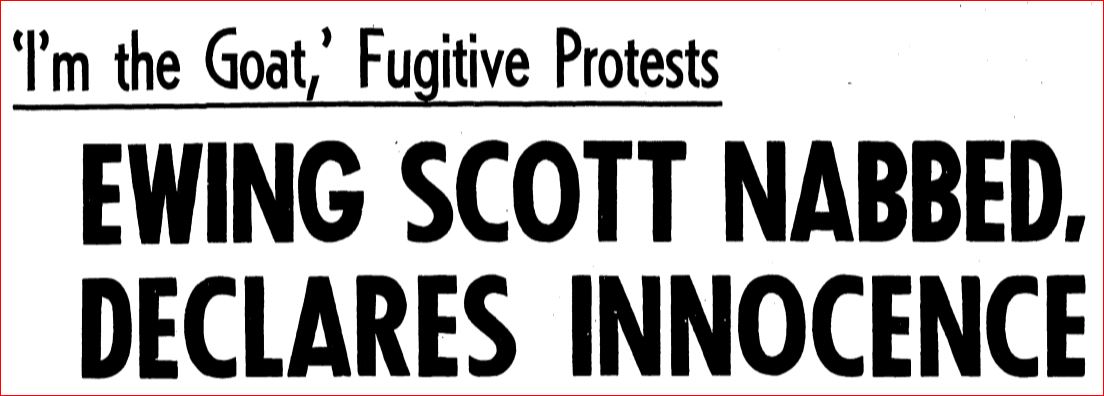
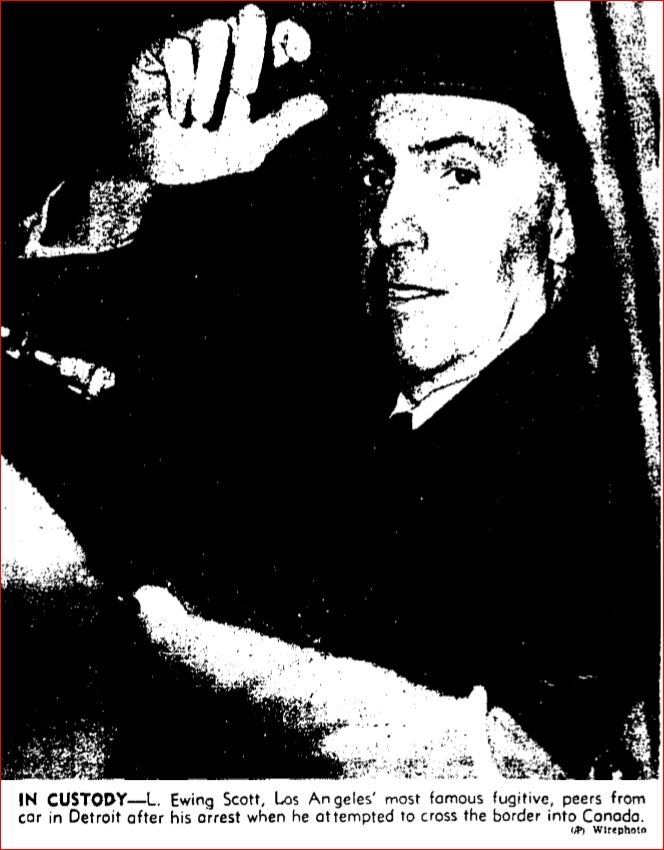 Ewing was charming and friendly during his interview until a reporter asked him point-blank if he had murdered his wife. Scott replied, “That is an asinine question. It is just plain ridiculous and stupid. It is the last thing I would want to do.”
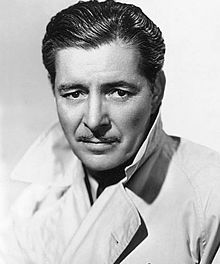 As far as any possible film, the charming, sophisticated and good looking English actor, Ronald Colman, seemed to Ewing to be the obvious choice to portray him on the big screen. Who would play Evelyn? Ewing wasn’t so sure. “As far as Mrs. Scott goes, I don’t know who would be exactly right. perhaps an older Peggy Lee, or Mary Astor. I’d have to see the woman first.” After further thought, Ewing said about the as yet unnamed actress, “I do know that she’ll have to be smart, dignified and rather good looking–and definitely not the wisecracking type.” Okay. I guess Joan Blondell wouldn’t be considered — although personally I think she would have been a fantastic choice.
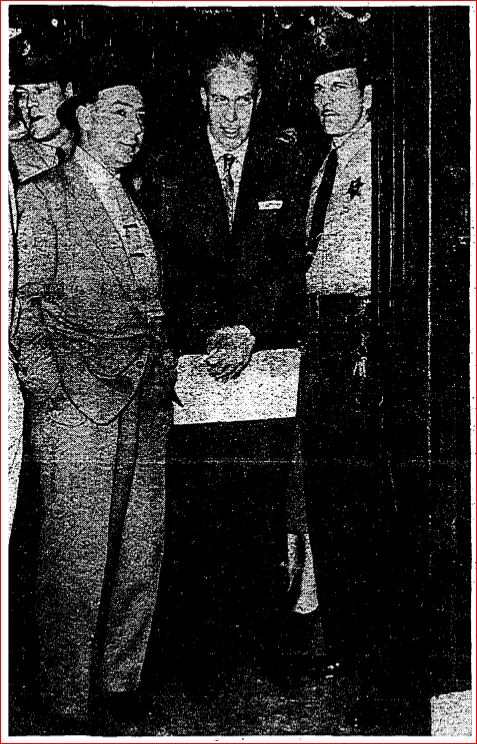 Despite the lack of a physical body, Deputy District Attorney J. Miller Leavy, was confident that the corpus delicti of murder could be established. There was a mountain of compelling circumstantial evidence to bolster the State’s case. Leavy was not only certain of a conviction, he asked for the death penalty.
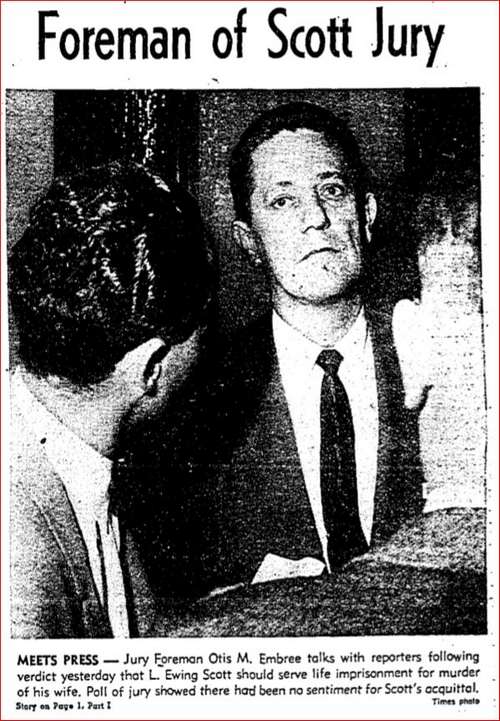 Several days later, following four hours of deliberation, the jury returned with their sentence: life in prison.

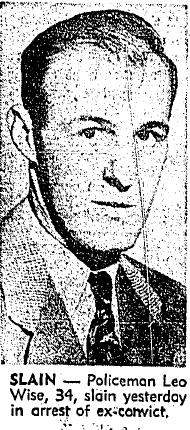 By now may be wondering what Marion’s criminal behavior in Ohio, Nebraska, and Colorado has got to do with Los Angeles. Simple. Like many others before him, following his release from prison the ex-con moved to Los Angeles–land of bright blue skies, sunny beaches and, in Marion’s case, third chances. Prison may have mellowed him, and perhaps it did–for a while. From 1940 to 1957 if he committed any crimes they weren’t serious enough to get his name into the newspapers. Unfortunately, Marion proved to be incapable of keeping his life on track.
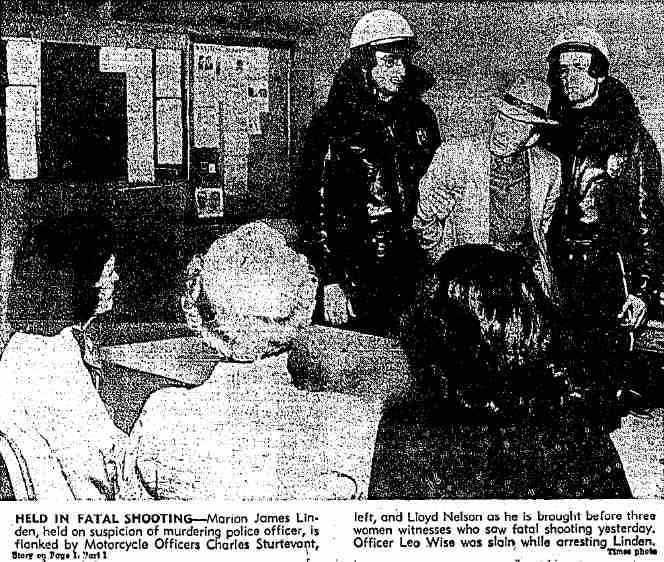 Lieutenant Gebhart took the suspect to Homicide Division. As they drove, the suspect said: “I hope you have me for murder. I shot that #@$%&*cop and I intended to kill him. If I had an opportunity I would kill all of you. … I tried to shoot him in the heart. … I shot him with a .32 and I didn’t think it would do that much damage, but I hoped it would.”
 In 1959 Allen owned a small jewelry and watch repair shop at 7715 Hollywood Way in the San Fernando Valley. The former Kansas farm boy was the father of two, a WWII veteran and former pilot who had spent five years in uniform before being honorably discharged. When he was mustered out of the service he took courses in watch and jewelry repair then opened his own business. He worked long hours and he continued to take classes related to his trade. The time he spent away from home was hard on his marriage; so hard in fact that he and his wife separated. Even though they no longer lived together he saw his children “at least twice a week” and contributed to their support. His mother-in-law said “he’s been good to all of us.”

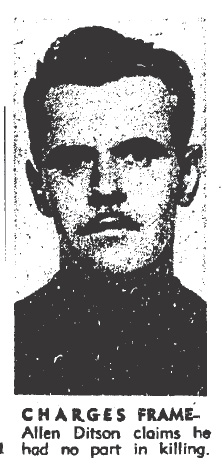
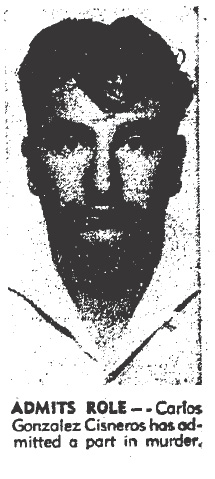 Because Allen and Carlos were incapable of keeping quiet about what they’d done it was only a matter of time before the law caught up with them. The remaining gang members began to fear Allen more than they did the cops. On June 17, 1960 Keith Slaten went to the police and a few days later Eugene Bridgeford did the same. The statements were enough for the police to get a warrant to examine Carlos’ Cadillac–they found traces of human blood in the trunk. One day later the police conducted a similar examination of Keith’s Ford and found human blood on the upholstery. On June 28, “sometime after 1:00 p.m.” Allen and Carlos were taken into custody.