
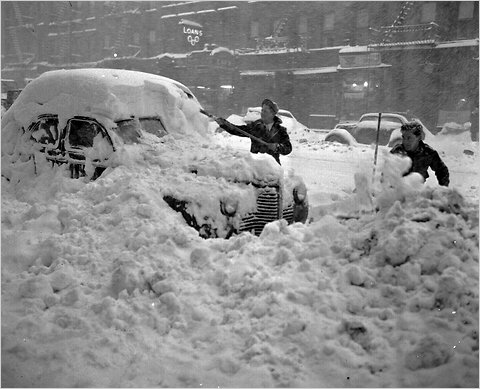
The LAPD was frustrated in its attempt to send Jane Doe #1’s fingerprints to the FBI in D.C. A massive snowstorm had grounded aircraft, and it would take days for the affected areas to clear.
The Hearst-owned Examiner offered LAPD a workaround. The paper had a Soundphoto, an early facsimile (fax) machine. They had never used it to transmit fingerprints, but felt it could be done. They agreed to send the victim’s fingerprints to the FBI in exchange for exclusives in the case. Knowing the investigation could not formally begin without an identification, LAPD Captain Jack Donohoe agreed to the arrangement.
The FBI identified the prints as belonging to Elizabeth Short, a 22-year-old Massachusetts native. Santa Barbara police arrested her for underage drinking at a local restaurant in 1943 when she worked at the Camp Cooke PX. And there was a mugshot.
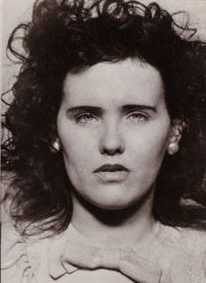
By January 17, the hauntingly beautiful mugshot was on the front page of newspapers across the country.
Her mother, Phoebe Short, and three of her sisters, who still lived in Massachusetts, arrived in Los Angeles to attend the inquest. Her sister Virginia, and Virginia’s husband, came from Oakland. It was a grim reunion.
Beth’s father, Cleo, refused to identify his daughter. He wanted nothing to do with her, the family, or the murder.
To spare Phoebe and Beth’s sisters, Virginia’s husband confirmed Beth’s identity at the morgue.
A murder victim, especially a beautiful young woman, dies twice. First at the hands of her killer. Next, in the newspapers.
The Daily News reported that homicide detectives were probing Beth’s “reckless career that ended under a sadist’s knife.” The judgement was unmistakable. Beth’s “reckless career” made her complicit. No one beat, slaughtered, and dumped nice girls like garbage.
Described as popular, Beth and her girlfriends were often seen in Hollywood night spots in the company of servicemen. It wasn’t an explicit condemnation of her lifestyle. It didn’t have to be.
Round-ups of sex offenders and other shady characters police believed might be responsible for the murder yielded nothing of value. However, they got information that Beth was last seen with a handsome red-headed man. The man had picked her up at the French home in Pacific Beach on January 8th. He had dated her a few times while she stayed there.. He answered to Bill or Red. No one knew anything more.
To detectives, he may have been the last person to see Beth alive.
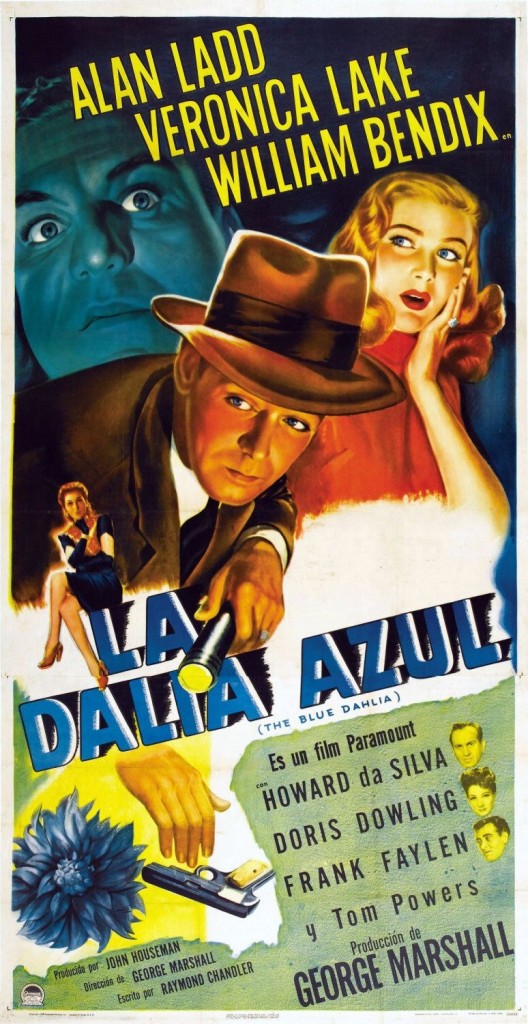
They had Beth’s name, and they also had a nickname: “The Black Dahlia.” During the summer of 1946, a movie starring Alan Ladd, Veronica Lake, and William Bendix, titled The Blue Dahlia, played around town. She got the nickname from acquaintances in Long Beach. She frequently wore black and sometimes tucked a large flower behind her ear.
Los Angeles has a history of murders named after flowers: Gardenia, Orchid, Red Rose. Now it added Black Dahlia to the deadly bouquet.
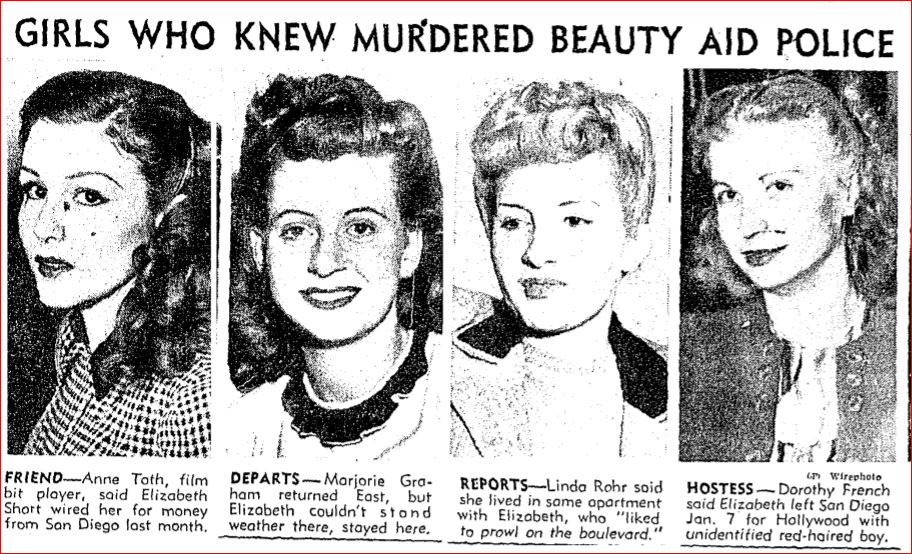
For background on Beth, detectives talked to former roommates and others who knew her and might be familiar with her habits.
Lynn Martin, 16 going on 30, and Marjorie Graham, 24, lived with Beth in Hollywood. They may have lived with her, but they knew little about her private life.
Tracking Beth’s movements in post-war Los Angeles presented a unique challenge. The war had ended almost 18 months earlier, but the housing shortage remained critical. If you didn’t have a fixed address, you could stay in a hotel for only 5 days. People were constantly on the move.
The population skewed young and transient. Veterans, mentally broken by their war experiences, drank in the same clubs as Beth and her friends.
The city was more dangerous than they knew. It could have been any of them who ended up dead in a vacant lot. But a monster chose Beth.
NEXT TIME: The red-haired man surrenders.