I’m delighted to be returning as a docent for the Art Deco Society of Los Angeles’ 43rd Annual Hollywood Forever Cemetery Tour on October 4, from 9–11 AM.
Hollywood Forever is the final resting place of some of the people who made early Hollywood—and Los Angeles—what it became: stars, movie moguls, pioneers, and plenty of fascinating characters whose stories deserve another telling.
If you enjoy old Hollywood, Los Angeles history, beautiful Art Deco, and spending a Sunday morning in a cemetery with people who are entirely too enthusiastic about dead people, you’ll be among friends.
I hope to see some Deranged L.A. Crimes readers there!
In February 1972, when the California Supreme Court ruled that capital punishment violated the state constitution’s ban on “cruel or unusual punishments,” it gave the 102 men and 5 women on death row a reason to hope. And something else they never dreamed they would have. A future. Their sentences became life with the possibility of parole.
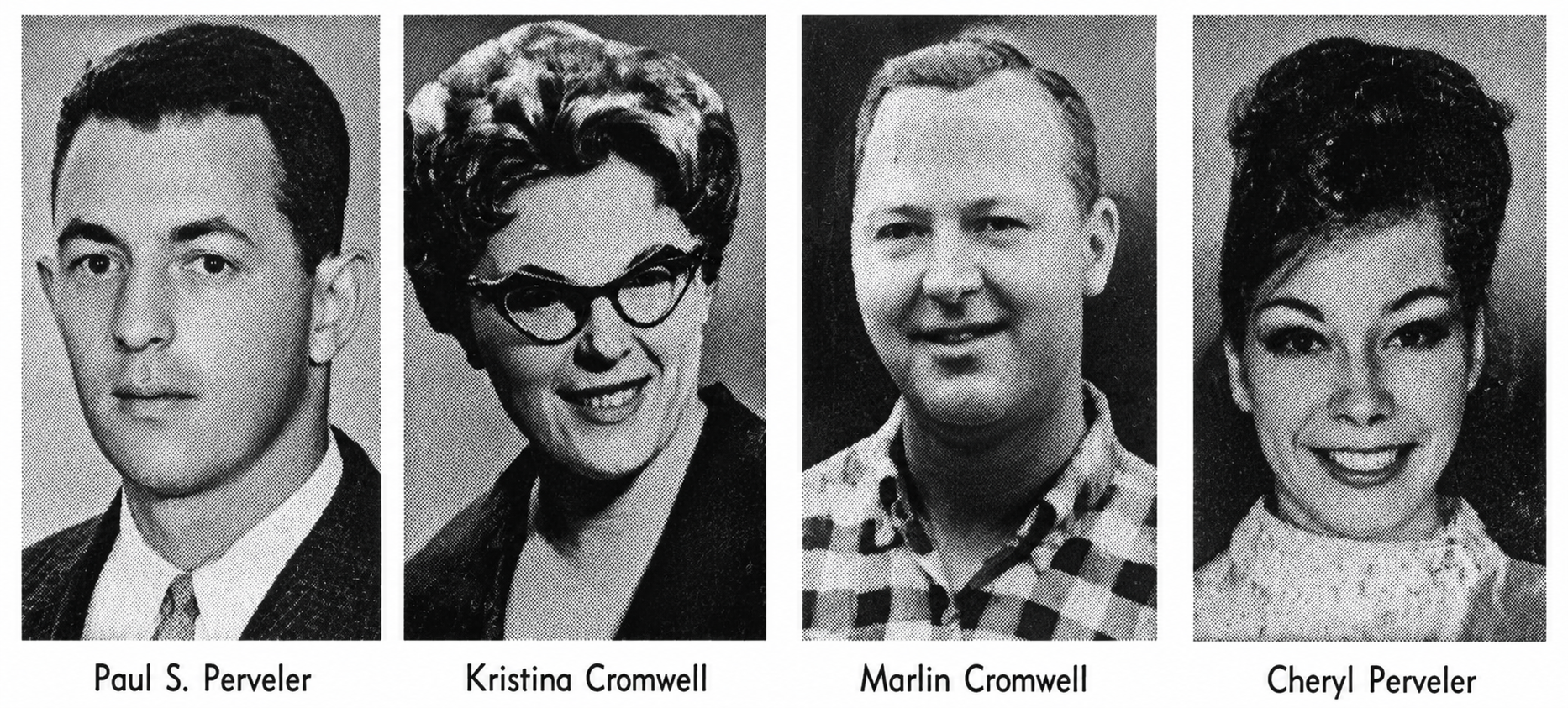
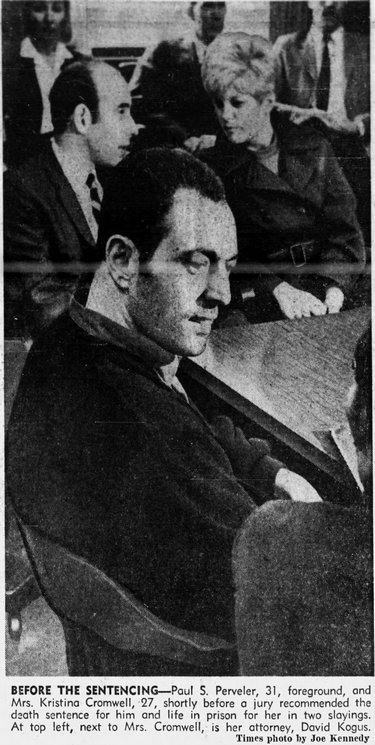
Paul S. Perveler was one of the lucky ones. Over the next several years, he was a model prisoner. In 1982, impressed with his institutional record, the Board of Prison Terms gave him a parole date of August 6, 1985. He’d spent a few years on death row, and over a decade in the general population. He longed to begin a life beyond the walls.
Outside the prison was someone who knew Paul’s history in a way the Board of Prison Terms never could. His former wife, Lela Halverson. Unlike the others whose lives Paul disrupted, Lela survived—and remembered.
Lela turned to Assemblyman Patrick Nolan for help. Nolan initiated a statewide petition drive to keep Paul incarcerated. He called Paul “a cold, calculating killer.”
Lela told reporters that after Paul’s conviction he told his minister that “someday, some way, he would get out of prison and kill me.” She believed him. Paul had remarried in prison, and his wife had made inquiries about Lela’s whereabouts—and that frightened her. But her fear wasn’t enough to silence her.
Public opinion is a powerful tool. Lela and Nolan announced the petition drive from the corner of McCarthy Drive and Caledonia Way in Glendale. Lela spoke about the significance of the location. She recalled that in June 1966, “I was coming home from a meeting and he got in front of my car. He started beating me inside the car, then he dragged me out and started pounding my head against the pavement.” Later that year, hit-and-run autos struck her twice. She didn’t believe in coincidence. She divorced Paul that same year.
In 1982, after news of Paul’s parole date broke, Lela spoke out, “I try not to dwell on it, but it’s always in the back of my mind. I have this great fear. It’s almost like going through that trial again, but this time it’s worse because I know of the brutality he is capable of. During the trial, I didn’t know everything.”
The reason for Lela’s fear lay in two murders Paul had committed years earlier.
In early December 1966, the Los Angeles County Fire Department responded to a routine call at a home on the 2700 block of Ballard Street in El Sereno.
After they extinguished the blaze, they discovered the charred body of Marlin Cromwell sprawled on the couch in the living room. At first, it appeared he had died in the fire. A closer look revealed multiple gunshot wounds inflicted by a small-caliber gun. Kristina, accompanied by the couple’s four-year-old son, was visiting with friends in Twenty-Nine Palms when the murder occurred.
About midnight on April 20, 1968, Cheryl Perveler pulled her convertible Jaguar into the carport of the Burbank apartment where she lived with Paul. A few minutes later, neighbors reported hearing three gunshots. Apartment manager John E. Miller went out to the carport and found Cheryl in the driver’s seat unconscious and bleeding. An ambulance was called and rushed her to Burbank Hospital. They later transferred her to County General where she died without regaining consciousness. She had been married to Paul for about six weeks.
The sixteen-month gap between the murders obscured the relationship between the two crimes. Had the deaths occurred close together, investigators would likely have examined Paul and Kristina’s affair much sooner.
Paul might never have been caught if he had not confided in a co-worker at the Auto Club details of Marlin’s murder. It was a serious miscalculation. The co-worker went to the police.
It took about two weeks for detectives to unravel the murder plot. On May 1, 1968, the police jailed Paul and Kristina. Detectives booked both Paul and Kristina on suspicion of murder in the deaths of their spouses.
At the time of Paul and Kristina’s arrest, detectives told reporters that Paul’s ex-wife, Lela, was deliberately run down by a car in 1965 and was the target of a car which jumped a curb in 1966. Paul would have received $32,000 in double indemnity insurance if she had died.
Juries prefer a case with an understandable motive. Sometimes they don’t get one. But here the D.A. offered them a common one, and one they could comprehend—greed. According to the prosecution, Paul committed the murders so he and Kristina could cash in on two hefty double-indemnity life insurance policies.
In fact, Marlin’s policy paid Kristinia $75,000. She and Paul used most of the money to purchase another Burbank cocktail bar—Paul already owned one.
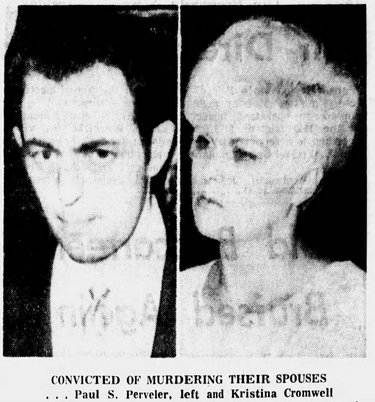
A jury convicted Kristina Cromwell for her role in the murders, and she served 7 years of a life sentence before being released in 1976.
Paul received the death penalty for the murders and for the attempted murder of Lela.
Paul’s death sentence gave Lela breathing room. The change in his sentence shattered her peace. Once free, he could make good on his pledge to kill her. Would she have to look over her shoulder for the rest of her life?
Lela continued to pressure the parole board. She requested a hearing, and in June 1983, she presented the board with 20,000 signatures from residents of Patrick Nolan’s district, where the murders occurred. As the only survivor of Paul’s murder for money plots, Lela revealed more about him than was in his prison file.
The parole board only saw his exemplary record, college education, self-awareness groups for prisoners, favorable psychiatric reports, praise from prison staffers, and a 1978 marriage that offered him new stability.
Paul opted out of the hearing, which gave Lela the perfect opportunity to speak. “I’m thrilled and delighted we’ve finally been heard and that we have a chance for justice.” She spoke of the severe beating at Paul’s hands. “He tried six times to kill me. I will never forget the feeling of the bones of my face crunching, the smashing of my head against the pavement and the taste of my own blood in my throat while he was choking me. I knew I was going to die.”
She said he had lain in wait for her before the attack and had doused himself with alcohol afterward so he could claim he attacked her in a drunken, jealous rage and that he wasn’t trying to kill her.
Kristina Cromwell confirmed Lela’s testimony and offered her own perspective into Paul’s plans. She described how he intended to commit the murders over a three-year period.
She said in 1965, Paul shot his father from a passing car on Baja Highway south of Tijuana. “We were going to overtake them on a road where there were cliffs, and he was going to shoot out of the back window.” A bullet struck Joseph Perveler on the right side of his nose. His father recovered and died later of other causes. The shooting was never reported to U.S. authorities.
Kristina told of Paul’s plot to murder Lela while on a Memorial Day outing in the San Gabriel Mountains and make it look like an accident.
She told the parole board that three other times Paul had struck Lela with his car.
Paul planned to kill Marlin while he and Kristina vacationed in Mexico in 1966, but she refused to cooperate and fled to Los Angeles. “He told me if he had caught me on the way back to the border, he would have killed me.” He said if she refused to cooperate in her husband’s murder again, he would kill her son.
Kristina revealed that she and Paul were going to kill Lela and described the plan. She was to wait in her car and honk the horn as Lela’s VW neared the house. Paul would emerge from his hiding place, attack Lela until she was unconscious, and stuff her body in the back seat. But after the attack, Paul ran to Kristinia in a panic. Kristina convinced him to pour alcohol on his clothes and tell police he’d been drinking.
Asked why she never reported Paul to the police. She said she loved him and did whatever he wanted.
The board was convinced by the women to rescind Paul’s parole. Lela said: “Our system worked as it should have worked. It’s just unfortunate that I had to go through all that I have.”
Paul showed little emotion as he heard the ruling. Asked how he felt, he said, “Tired, wiped out and gutted.”
At least for a time Lela could rest easy; but the fight would begin again in six months when his parole status would be reviewed.
Paul’s persistence in pursuit of a goal was evident from his continued attempts to kill anyone who stood between him and a large insurance payout.
Lela was persistent, too. But hers wasn’t destructive—it was restorative. She wanted the truth to become part of the permanent record.
Over the next decade, she had to summon her strength repeatedly to keep Paul behind bars.
Lela prevailed.
In 1992, in the landmark case Perveler v. Estelle (1992), the Ninth Circuit affirmed that California’s parole board acted within its legal rights when it rescinded Paul’s parole date based on newly uncovered evidence of his dangerous past. Paul would remain in prison.
For years, Paul Perveler tried to persuade parole authorities that they misunderstood him. In the end, it was Lela Halverson and Kristina Cromwell who persuaded them that indeed they had.
NOTE: My thanks to Blake Leung for introducing me to this case. He pointed me to an extraordinary story hidden in the archives.
Sources
This story was researched using contemporary newspapers, court records, parole proceedings, archival collections, and other primary and secondary sources.
Research Note
The historical record is never complete. This narrative reflects the best available evidence at the time of publication. Any errors or omissions are my own.
If you’re interested in one of Southern California’s most significant criminal I’ll be attending this event at Steven’s Steak House on August 8 and thought my friends might enjoy it as well. Detective Gil Carrillo, author Glynn Martin, and Rosalinda Juarez will discuss the Night Stalker investigation from their unique perspectives. It should be an informative evening, and I’m looking forward to it.investigations, this promises to be a fascinating evening.
On Saturday, August 8, Steven’s Steak House will host Dinner & Dialogue: An Evening Inside the Night Stalker Investigation, featuring retired LAPD Detective Gil Carrillo, who helped lead the investigation that identified and captured Richard Ramirez; author Glynn Martin, whose book Satan’s Summer in the City of Angels examines the case; and Rosalinda Juarez, whose family was directly affected by the crimes.
The evening includes dinner, a live discussion, audience Q&A, and a book signing. I’ll be attending and look forward to hearing firsthand perspectives on an investigation that had a profound impact on Los Angeles.
If you’re interested in attending, the event details are included in the poster below.
Los Angeles never had a mob like those that ran the streets in Chicago, New York, Detroit or Kansas City. Corruption in the City of Angels was a top-down affair—overseen by politicians in City Hall. Local vice kings, Charlie Crawford,Albert Marco, and Bob Gans managed illegal liquor, gambling and prostitution and shared profits with the politicians. Crooked members of the Los Angeles police force supplied the muscle. As a cabal, some called “The City Hall Gang,” they had vice in the city sewed up with no room for outsiders.
(1928) – View of Los Angeles City Hall decorated with banners for its opening ceremony. Photo courtesy Water & Power.
Eastern mobsters attempted on several occasions to get a toehold in Los Angeles. Infamous Chicago mob boss, Al Capone, visited Southern California in December 1927. He traveled by train south to San Diego, and stopped in Orange County on his way back. When he returned to the Biltmore Hotel, LAPD kept a close watch on him. On December 13th, LAPD detective Edward “Roughhouse” Brown escorted him and his entourage to the Santa Fe station to board an eastbound train.
The only successful mob-backed racket to gain power in Los Angeles was through the International Alliance of Theatrical Stage Employees (IATSE). IATSE was weak, struggling to protect its members against powerful studio heads like Louis B. Mayer of Metro-Goldwyn-Mayer and Harry Warner of Warner Bros. The workers wanted fair pay and safe conditions, but they lacked the leverage to fight the studio bosses.
Premiere of “Morocco” at Grauman’s Chinese, 1930.
It was 1935, and the mob’s timing could not have been better. The Great Depression gripped America. Hollywood seemed safe at first. But then, theater attendance dropped. Studios cut wages. Workers grew angry and desperate. The mob realized competing with the entrenched local vice lords, with support from the mayor’s office and police, was a non-starter. However, they found a lucrative backdoor. Hollywood.
In 1935, the mob sent William “Willie” Bioff, a Chicago mob associate, as the West Coast representative of IATSE. He seemed to the workers like an answered prayer. He vowed to get them the money and working conditions they wanted.
A Vulnerable Industry
Bioff joined George Browne, an ambitious IATSE official. They realized the movie industry was vulnerable, and those vulnerabilities presented them with the perfect way to make money. If a single projectionist stopped working, a theater could not show a movie. If the stagehands walked off a set, filming stopped.
With Frank “The Enforcer” Nitti backing him, Browne had won the presidency of IATSE in 1934. He then appointed Bioff as his personal representative for West Coast operations.
The Price of Peace
Bioff did not care about union pride or worker rights. The first thing he did when he arrived in Los Angeles was to meet with the top studio executives. He gave them a choice. They could pay him, or he would call a strike that would shut down every movie studio in Hollywood.
Studio moguls knew that a strike meant losing thousands of dollars a day.
The extortion system was well-organized. Bioff demanded fifty thousand dollars a year from smaller studios and one hundred thousand dollars a year from the major studios. He collected the money in cash, often packed into brown paper bags or briefcases. For the studios, it was a cheap way to keep the cameras rolling.
To make sure the studio bosses knew he was serious, Bioff occasionally ordered small, sudden strikes. He would shut down a soundstage for a few hours as a demonstration of his power. The studio heads learned to pay on time.
While Bioff was getting rich, he had to keep the union members happy so they would not rebel. He used his power to win a major victory for them in 1936. He negotiated a huge wage increase and a closed-shop agreement. This meant that the studios could only hire IATSE members for technical jobs.
To the average stagehand making a few dollars a week, Bioff was a hero, the tough guy who stood up to the multi-millionaire studio bosses and won.
With the union firmly under his control, Bioff lived like a king in Southern California. He bought a massive estate in the San Fernando Valley. He raised prize cattle, drove luxury cars, and wore expensive jewelry.
He mingled with movie stars and studio executives. Even though everyone knew he was a gangster, he was a welcome guest at exclusive parties. Hollywood stars have always had a thing for bad guys. The frisson of proximity to danger, without the consequences, was intoxicating. Benjamin “Bugsy” Siegel enjoyed the same treatment when he moved to Los Angeles. He dined with stars and considered an acting career like his childhood friend from the old neighborhood, George Raft.
Bioff ruled the Hollywood labor scene with an iron fist, crushing any internal dissent. If a union member questioned where their dues were going, Bioff’s thugs would beat them up or kick them out of the union, which meant they could never work in Hollywood again.
The Pen and the Prosecutor
By the late 1930s, the first cracks in Bioff’s empire revealed themselves. Early signs of trouble came from within the labor movement itself. Other unions and independent worker groups grew tired of IATSE’s monopoly and Bioff’s thuggish methods.
A group of Hollywood actors, writers, and progressive workers began to look closely at the union’s finances. They noticed that millions of dollars in union dues were missing, and that Bioff seemed to be working closer with the studio bosses than with the workers.
The most damaging blow outside the studios came from the press. A crusading, syndicated journalist named Westbrook Pegler started a fierce, one-man media campaign against Bioff. Writing for the New York World-Telegram and other papers across the country, Pegler used his widely read column, Fair Enough, to dig into Bioff’s dark past.
Pegler discovered that before coming to California, Bioff was a low-level thug and pimp in Illinois. Most importantly, Pegler uncovered an old 1922 Chicago conviction against Bioff for pandering—operating a brothel and taking money from a prostitute. Bioff had served only a few days of his six-month sentence before skipping town.
Pegler famously mocked Bioff in print, calling him a “panderer” and a “cheap thug” who was holding the entire movie industry hostage.
Pegler’s explosive columns ran week after week, exposing how a fugitive criminal was living in a California mansion while running a major American labor union. The public outcry from Pegler’s work was so loud that California authorities could no longer look the other way.
Bioff was arrested and forced to return to Illinois to finish his old prison sentence. This bad publicity shattered Bioff’s image as a legitimate labor leader and gave federal investigators the perfect opening.
Federal Trial
A determined federal prosecutor named Boris Kostelanetz stepped in to build a major tax evasion and extortion case against Bioff and George Browne. Investigators meticulously traced the paper trail of the studio bribes. Federal agents convinced studio executives to testify about the secret payments.
In 1941, Willie Bioff and George Browne were put on trial for federal racketeering in a New York courtroom. The trial exposed the deep rot in Hollywood’s labor system. One of the most important witnesses was Nicholas Schenck, the powerful president of Loew’s Inc., the company that owned Metro-Goldwyn-Mayer (MGM).
Schenck sat in the witness chair and described his first meetings with Bioff. He told the jury that Bioff did not make requests; he made threats. Schenck testified that Bioff looked him in the eye and said, “Your business is a fragile one. A strike would ruin you.”
Schenck explained the exact mechanics of the payments to the court. The money had to be paid in cash, and no checks or receipts were allowed. To get the cash, studio executives had to falsify their own company expense records. They hid the bribe money under fake ledger entries like “publicity expenses” or “legal fees” to keep their accounting books clean.
Other studio executives, like Leo Spitz of RKO, testified about how Bioff showed off his power. Spitz told the court that if a payment was even a day late, Bioff would call a sudden strike on a movie set. The stagehands would drop their tools and walk off, costing the studio thousands of dollars an hour.
This testimony ruined the defense. Bioff’s lawyers tried to argue that the money was just a voluntary gift for helping keep labor peace. But the raw, detailed stories from the studio heads proved it was flat-out extortion.
The jury took less than two hours to find Bioff and Browne guilty. Bioff was sentenced to ten years in prison, while Browne received eight years.
Bioff Makes a Deal
Faced with a long prison sentence in a maximum-security penitentiary, Bioff chose to talk. He became a government witness and testified against his former masters in the Chicago Outfit.
Willie Bioff in front of Judge Fricke’s court.
In a sensational 1943 trial, Bioff took the stand and explained exactly how the mob controlled IATSE and extorted the Hollywood studios. His testimony led to the conviction of top Chicago gangsters, including Paul Ricca, Phil D’Andrea, and Frank Nitti. Nitti was deathly afraid of confined spaces. Knowing that a federal prison cell would elevate his claustrophobia to an intolerable level, he committed suicide rather than face prison because of Bioff’s betrayal.
Bioff’s cooperation earned him an early release from prison in 1945. He knew the mob would be looking for him, so he changed his name to William Nelson. He moved to Phoenix, Arizona. He lived a quiet, normal life. But he also took a calculated risk and worked in the casino business in Las Vegas. He relied on his old connections to stay afloat while trying to maintain a low profile.
The Battle of Black Friday
Bioff’s removal from IATSE led to a new, incredibly violent struggle known as the Hollywood Jurisdictional Strikes. This was a bitter war between IATSE and a more progressive union called the Conference of Studio Unions, or CSU, led by Herbert Sorrell. The CSU represented painters, carpenters, and decorators, and they accused IATSE of still being a puppet for the studio bosses.
The battle for control of Hollywood film crews reached a breaking point on October 5, 1945. This day became known as “Black Friday.” Over one thousand CSU strikers and their supporters formed a tight line across the entrance of the Warner Bros. studio in Burbank, aiming to block anyone from entering the lot to work.
Hollywood strike. Photo courtesy UCLA Special Collections.
When IATSE members and studio replacement workers arrived, a massive fight broke out. The studio guards and the Burbank police stepped in to break up the crowd, but things quickly got out of hand. Men fought with clubs, heavy iron pipes, chains, and brass knuckles.
The scene became chaotic. Studio guards on top of the Warner Bros. walls pumped tear gas into the crowd. They also turned high-pressure fire hoses on the strikers, knocking people down on the slick pavement. Striker sympathizers overturned cars in the street to block police vehicles from entering the fray.
By the end of the day, dozens of people were badly hurt. Over forty people had to go to the hospital with broken bones and deep cuts. The police arrested more than three hundred strikers over the course of the week. This violent riot shocked the public and forced the state government to step in.
The studios used the violence to label the CSU as dangerous radicals and communists. Apparently, the CSU was more terrifying to Hollywood than a group of out-of-town gangsters.
The studio bosses helped IATSE win the labor war. By the end of the 1940s, the CSU was destroyed. IATSE secured its position as the dominant union for Hollywood film crews, a position it still holds today.
Bye-bye, Bioff
On November 4, 1955, Bioff’s past caught up with him. He walked out of his home in Phoenix and got into his pickup truck. When he turned the key in the ignition, a bomb wired to the starter exploded.
The blast destroyed the truck and killed Bioff instantly. It was a classic mob hit. Delayed punishment for his testimony a decade earlier. The mob did not forget or forgive. Nobody was ever charged in the case.
The story of William Bioff and IATSE remains one of the darkest chapters in the history of American labor and the entertainment industry. It showed how easily a union meant to protect working people could be captured by organized crime. It also shaped the future of Hollywood.
The systems of bargaining and the division of labor created during Bioff’s reign of extortion set the rules for how movies were made for decades to come. The stagehands and technicians finally got their strong union, but the cost was a legacy of violence, corruption, and fear that took Hollywood a generation to forget.
On January 18, 1931, a sixty-year-old Whittier man went to see his doctor. He complained of stomach cramps, nausea, vomiting, and severe diarrhea. Unable to diagnose the patient, the doctor sent him to the local hospital for tests. The lab tested him for amebic and bacillary dysentery—both were negative. They administered a Wasserman test for syphilis and he tested negative.
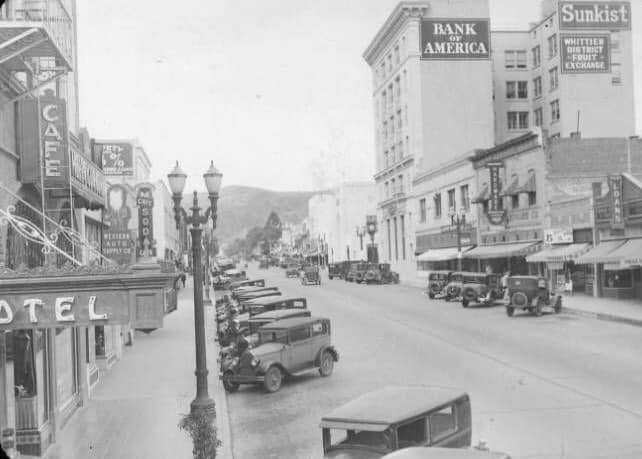
Greenleaf Blvd, downtown Whittier c. 1931
The hospital kept him under observation without arriving at a definitive diagnosis. Maybe he had caught a seasonal influenza. After three days, his symptoms had almost entirely cleared, so they released him and he returned home.
About ten days later he developed muscle soreness in his calves, and stiffness and numbness in his toes. The symptoms worsened. He had difficulty walking and suffered a bilateral foot drop. When he tried to walk on his own, he was forced to hold on to something for support.
His doctor reported the case to another Whittier physician, Dr. Frank G. Crandall, as suspected poliomyelitis. Polio would be devastating. There was no vaccine or cure for the disease. A patient could die or spend years in bed without recovering.
Within days, he lost the use of his fingers. His wrists dropped. His hands atrophied. Doctors transferred him to County General Hospital, where he remained confined to bed—unable to walk, stand, dress, or feed himself.
Dr. Crandall consulted with Dr. George H. Roth of the Los Angeles County Health Department. The polio virus was too small to be seen with the available technology, so doctors manually checked for muscle weakness or “physical defects.” Drs. Crandall and Roth agreed that the patient did not have polio.
If not polio, then what else could render a man helpless in such a short period of time?
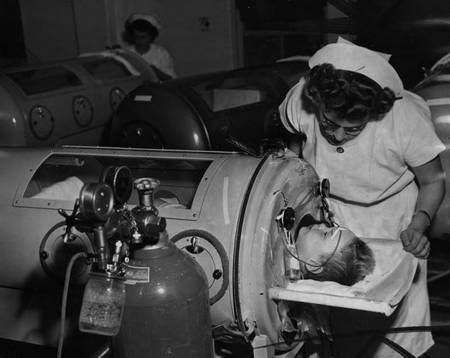
Young polio victim in iron lung c. 1948. Photo courtesy of Los Angeles Public Library Photo Collection.
They had heard reports from the Midwest and South of a malady caused by drinking adulterated Jamaica Ginger. During the summer of 1930, 10,000 cases of the disease were reported in the South.
Jamaica Ginger was a patent medicine in continuous use since the 1820s used to treat everything from flatulence to upper respiratory infections and menstrual disorders. It was a common household remedy, which made its poisoning even more monstrous. The victims in some cases were children.
The extract typically contained 70% to 90% ethanol by weight, which was necessary to keep the ginger oleoresin in solution. Not only did Jake, as it was called, have a kick, as a medicine it was legal to purchase during Prohibition. That was a huge plus for people who couldn’t afford to frequent local speakeasies or buy from a bootlegger. When compared to standard whiskey, which contains 40% to 50% alcohol, a two-ounce bottle of Jake, costing about fifty cents, was a cheap high.
As soon as the government learned about the legal loophole, it was determined to close it. They did it by requiring manufacturers of Jamaica Ginger to include a high concentration of bitter ginger solids to make it too disgusting to drink.
The government’s solution worked for a while until some manufacturers and distributors bypassed the regulations. They experimented with various substances that would fool government tests and finally found a cheap industrial plasticizer called tri-orthocresyl phosphate (TOCP). A powerful neurotoxin.
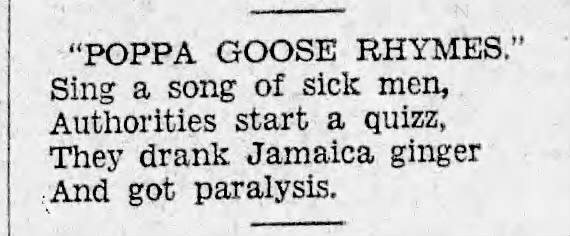
Following the Whittier case, two men in Los Angeles, J. D. Hoagland (46) of 1129 ½ Mignonette Street, and David Grant (66) of 403 Court Street, sought treatment for Jake paralysis. Dr. John S. Fox, assistant city health officer, supervised their treatment. The victims admitted to consuming the ginger extract. One of them drank a bottle a day for 15 days, and the other downed five bottles a day for five days.
Dr. Fox issued a warning against the use of the extract as a beverage. He said a single drink could result in paralysis. But even with Dr. Fox’s warning, four new cases were reported from the North Bunker Hill district. One man not only suffered from “drop foot,” a defining characteristic of drinking the poison, but his face and limbs were also paralyzed. Another victim permanently lost their sight.
City laboratories analyzed samples of the extract sold in drug and grocery stores on Bunker Hill. The labs found TOCP.
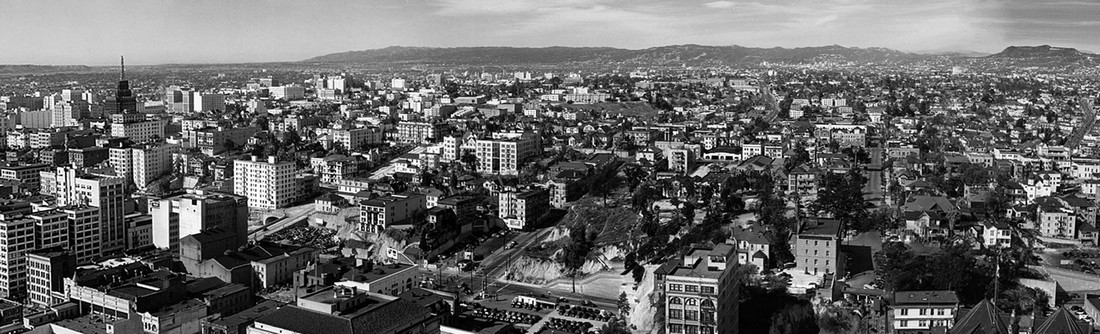
(ca. 1939)- Panoramic view of Bunker Hill as seen from City Hall. The intersection of Hill and First Streets is visible at lower right. Photo courtesy of the Los Angeles Department of Water & Power collection.
The number of victims continued to rise. Many of them lived in cheap hotel rooms in the vicinity of Seventh and Central and San Pedro Streets. They said they obtained their extract from drug stores in the area. Many cases went unreported and the health department asked physicians to submit reports so they could track the spread the disease—which was fast becoming an epidemic.
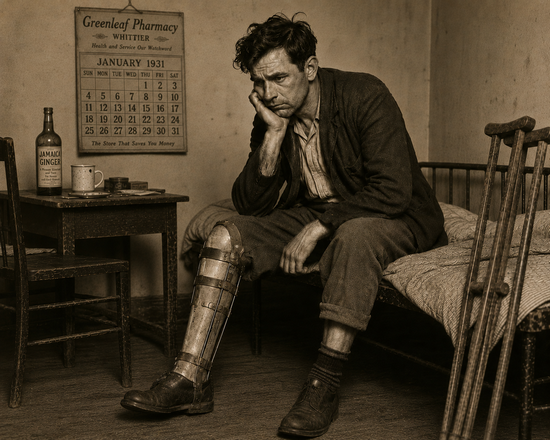
Image created using AI
Reporters heard from one health official that the Jamaica ginger blamed for the paralysis cases arrived in the city in barrel lots. They had no way of knowing how much of it had been sold, and the situation was further complicated because the paralysis did not develop until ten days to two weeks after consumption.
Dr. J. L. Pomeroy, Los Angeles County Health Officer, investigated each of the cases and found the source of the poisoned extract was a New York firm operating under the name of Jordan Brothers. A local man, Jacob Rosenbloom, his wife, and sons, bottled, labeled, and distributed locally two-ounce bottles of the extract through their company, California Extract Company.
One thing became evident early on. The victims of Jake paralysis were among the most vulnerable of the city’s residents. They were poor, some of them were pensioners living in rooms in the faded Victorian mansions on Bunker Hill. The same was true of the thousands of victims in the Midwest and South. They were not people of means. Ginger Jake was the poor man’s way of getting a drink of liquor. During Prohibition, sellers could still offer products with high alcohol content if they classified them as medicinal, culinary, industrial, or cosmetic. People drank vanilla extract, cologne, medicinal bitters, and Jamaica ginger.
Managing the Jake crisis fell largely to local officials. The Federal Hygienic Laboratory—the underfunded precursor to the National Institutes of Health—had fewer than a dozen physicians and little authority. The only federal agency with real jurisdiction was the Treasury Department’s Bureau of Prohibition, whose agents carried badges, tommy guns, and responsibility for anything involving alcohol.
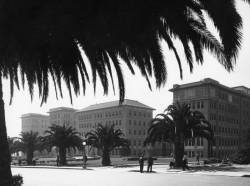
Veterans Home Photo coutesy Los Angeles Public Library
The horror of awakening to find you could no longer get out of bed was made even worse when in early March 1931, thirty-seven veterans in the Soldiers Home in Sawtelle (West Los Angeles) were struck down after drinking Jake. All of them were in critical condition, except for two who died.
The victims in the Soldiers Home were already dependent upon institutions. They were likely dealing with disability, poverty, trauma, or alcoholism.
Promises were made to find and prosecute those responsible for the manufacture and sale of the lethal ginger concoction. The Pure Food and Drug Act of 1906 was invoked, but the consequences were laughable. A first offense was punishable by a fine not to exceed $500 and/or up to one year in prison. Subsequent offenses were punishable by a fine of not less than $1000 and/or up to one year in prison. Even the violations involving interstate commerce were light.
Jake paralysis was killing people, or letting them survive with no hope, and the worst punishment a violator could receive was a fine and a sentence that could be served in the county jail. One wonders if the poison had been added to bonded liquor smuggled in from Canada and served to the swells who could afford it if the outcome would have been different.
There were attempts made to find a cure. Researchers at the University of Oklahoma claimed they had not found “a single case of a Negro being affected.” They suspected Black Americans had a natural immunity. To test their theory, the dosed black and white chickens with known paralytic ginger extract because they believed that the black feathered chickens were the genetic equivalent of Black Americans.
The chickens, black and white, fell ill indiscriminately. Researchers concluded that “color plays no part” in the disease.
Long before historians and toxicologists explained how TOCP ravaged the nervous system, ordinary people understood the epidemic through the language available to them: limber leg, numbness, shame, failed romance, neighborhood gossip, and song.
The most heartfelt commentary on Jake came from blues musicians. Jake paralysis entered blues music because it had already become a part of everyday life. The lyrics spoke of the effects of the paralysis in ways that weren’t reported in newspapers.
In 1930, Willie Ray wrote “I Got the Jake Leg Blues”
“I woke up this morning,
I couldn’t get out of my bed,
This stuff they call jake leg,
Had me nearly dead.”
The mostly male sufferers did not just lose their ability to walk without evidence of “Jake Leg,” they were just as often made impotent by the disease.
“I’m a Jake walk papa
I’m a Jake walk papa
And the Jake walk’s got me now
Can’t eat, can’t sleep
Can’t even make my woman smile.”
Willie Lofton, “Jake Walk Blues,” 1930
In May of 1931, some Oklahomans organized United Victims of Jamaica Ginger Paralysis. They claimed 30,000 to 50,000 members. Oklahoma Governor William “Alfalfa Bill” Murray said, “There are three kinds of people I haven’t much use for. One is the man with Jakeitis; another is the investor on the stock exchange, and the other I won’t mention.” Sadly, many others shared his low opinion of the victims. With their characteristic walk, sufferers were physically and mentally abused in their communities.
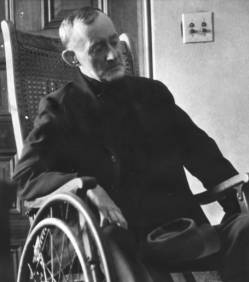
Ed McGoldrick on the witness stand– his wheelchair. Photo dated: April 25, 1931. Courtesy Los Angeles Public Library, Herald Collection.
Iron leg braces worn by some victims were called “Jake Socks.” Temperance advocates and preachers joked about the physical twitching and shuffling. Some suggested God was forcing sinners to do a “forbidden dance” as a warning to anyone who contemplated breaking Prohibition Laws.
Law suits went nowhere. Activists lobbied Congress for years, but it never passed a bill for victims’ relief.
The suffering of Jake victims became a source of ridicule for temperance advocates and preachers, many of whom interpreted the paralysis as moral punishment for violating Prohibition.
At every stage, the Jake epidemic exposed the brutal realities of class in America. The victims were overwhelmingly poor, vulnerable, and disposable in the eyes of institutions that failed to protect them. Their suffering became a source of ridicule long before it became a source of public responsibility.
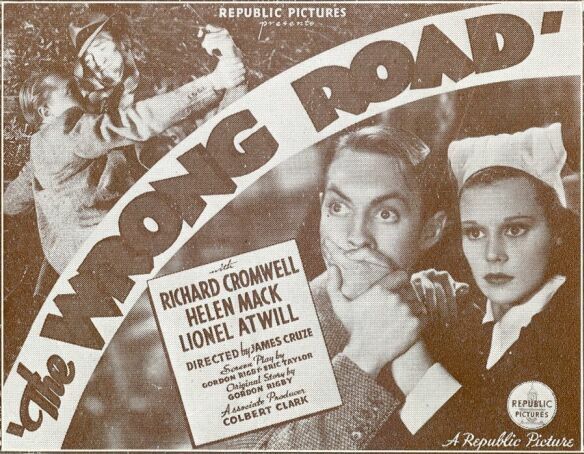
Welcome! The lobby of the Deranged L.A. Crimes theater is open! Grab a bucket of popcorn, some Milk Duds and a Coke and find a seat. Tonight’s feature is THE WRONG ROAD, starrng Richard Cromwell, Helen Mack, and Lionel Atwill.
Enjoy the movie!
IMDB says:
Bank teller Jimmy Caldwell and his fiance, Ruth Holden, grow weary of struggling to make ends meet and decide to rob Jimmy’s bank. The selfish young couple agree that even if they spend ten years in prison, it will not matter because they will have the money when they are released. During what appears to be a normal transaction, Jimmy gives Ruth $100,000 that he has taken from the vault, and after they hide the money in a music box, which they mail to Ruth’s Uncle Billy for safekeeping, they turn themselves in. Mike Roberts, a detective for the bank’s insurance company, tries to convince them to lighten their sentence by returning the money, but they consider the money rightfully theirs and refuse.
Not every prison pet lives up to the example set by Mr. Jingles, the hyperintelligent field mouse in Stephen King’s The Green Mile. In the novel, Mr. Jingles becomes the companion of inmate Eduard Delacroix, performing tricks and bringing moments of wonder to prisoners and guards alike. The small mouse represents hope, joy, and the possibility of miracles.
The film adaptation is set in 1935, in a fictional Southern prison. Across the country that same year, a real prison pet roamed the old block at Folsom Prison: a cat named Rusty.
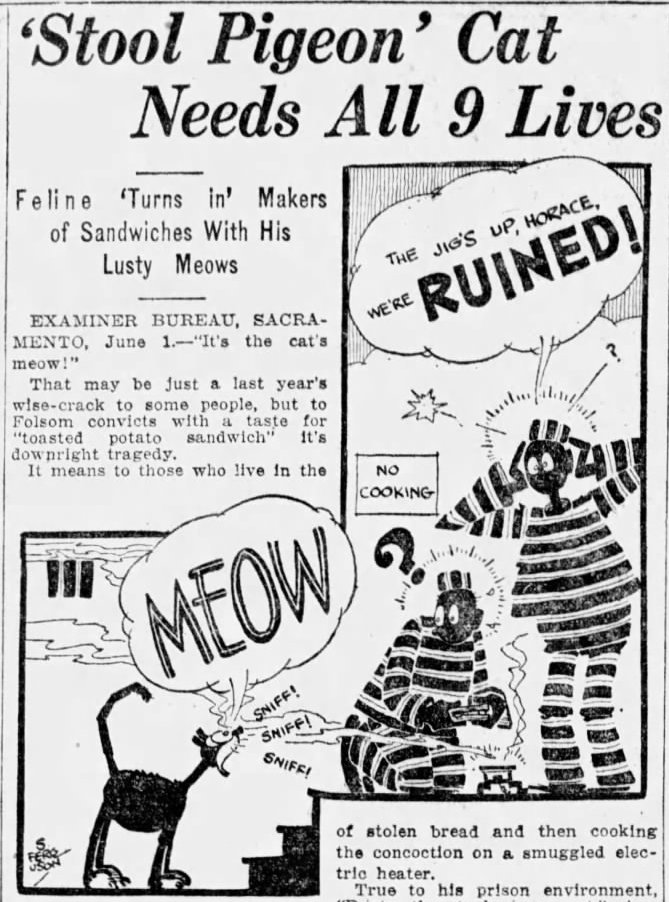
Born at Folsom in 1922, Rusty quickly endeared himself to guards with his ability to sniff out contraband food in prisoners’ cells. At the time, all food preparation was strictly forbidden. If an inmate were discovered roasting a potato or heating a sandwich on a smuggled device, he could be sent to solitary confinement.
Rusty made enforcement easier.
On the trail of forbidden treats, creeping low to the ground, the end of his tail twitching slightly, Rusty stalked the aptly named catwalk until he caught the scent of food. Once he had the location, he planted himself in front of an offender’s cell and meowed loudly until a guard arrived. Like today’s police dogs trained to detect bombs or narcotics, Rusty rarely failed. If guards found Rusty in front of a cell, they knew they had a righteous bust.
A decade or more into Rusty’s career as a professional snitch, guards found a kitten they believed to be his son. They named him Blue.
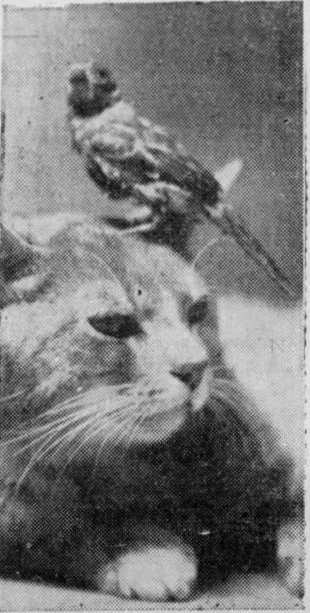
Soon afterward, guards discovered a tiny finch perched atop a wall, alone in a nest and apparently abandoned by its mother. They named the foundling Chirp. Guards nursed Blue and Chirp during their convalescence, and the pair quickly bonded. After that, no one ever saw one without the other. They ate together, and often, while Blue napped in front of Warden Court Smith’s office, Chirp perched comfortably on his head.
Blue showed none of his father’s aptitude as a snitch. He seemed content to wander the prison with a bird on his head.
Occasionally, Rusty, Blue, and Chirp made the news. Then, in 1937, Rusty suffered a stroke. He survived but was forced to retire. He spent his final months in well-earned leisure.
On January 28, 1938, after sixteen years of faithful service, Rusty passed away. Clerk Joseph H. Doherty of the warden’s staff eulogized the departed cat:
“He would go to a cell door and sit there if he detected the odor of food until a guard came. He couldn’t be bribed either. He wouldn’t have a thing to do with anybody in convict clothes.”
Befitting his stature, prison guards planned to bury Rusty in a bed of flowers on a nearby hillside.
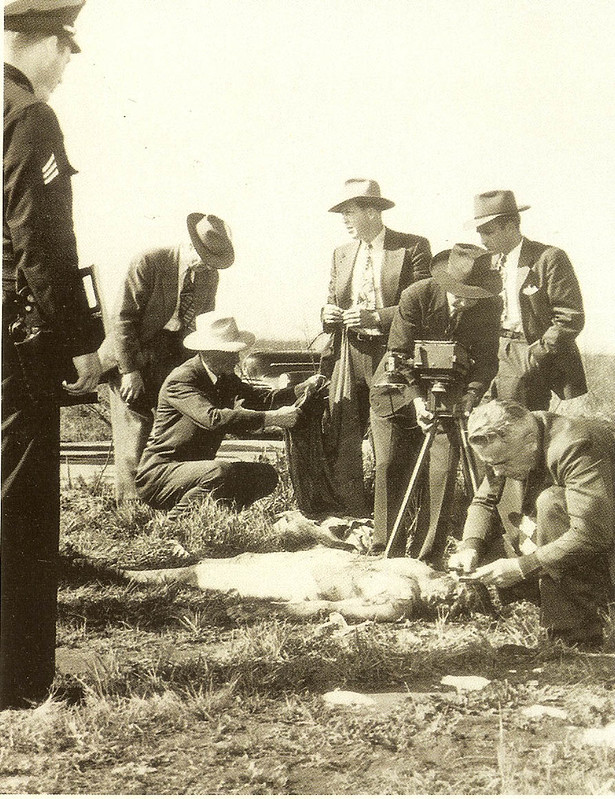
Less than a month after housewife Betty Bersinger discovered Elizabeth Short’s bisected body in a Leimert Park vacant lot, another horror surfaced. On this day, Hugh C. Shelby, a bulldozer operator, found the nude, brutally beaten body of a woman dumped in a field near the Santa Monica Airport.
The Herald rushed out an extra edition:
“WEREWOLF STRIKES AGAIN! KILLS L.A. WOMAN, WRITES B.D. ON BODY.”
Within hours, LAPD identified the victim as 45-year-old Jeanne French.
Detectives surround Jeanne French’s body.
She had suffered blows to the head from a blunt instrument. But those weren’t the fatal wounds. Her killer stomped on her chest, crushing ribs and inflicting internal injuries that caused her to die slowly from hemorrhage and shock. Heel prints were left on her body.
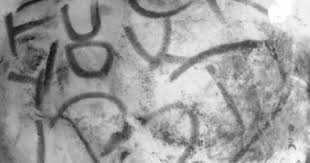
Mercifully, investigators believed Jeanne was unconscious after the initial head trauma. She likely never saw her killer reach into her purse for her lipstick—never felt the pressure as he scrawled on her lifeless body in crude, angry letters:
“FUCK YOU, B.D.” “TEX.”
Detectives immediately looked for links between Jeanne’s murder and Elizabeth Short’s. The initials. The mutilation. The proximity in time. But nothing solid connected them. Just another woman dead in the City of Angels.
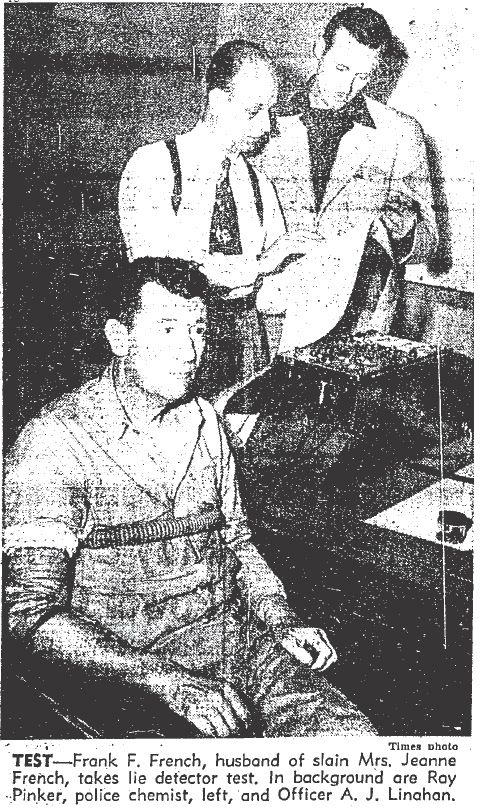
The night before her death, Jeanne visited her estranged husband, Frank, at his apartment. They fought. Frank claimed she was drunk, struck him with her purse, then left. Jeanne’s 25-year-old son, David, was questioned. Upon leaving the station, he confronted Frank:
“I’ve told them the truth. If you’re guilty, there’s a God in heaven who will take care of you.”
Frank replied: “I swear to God; I didn’t kill her.”
Police arrested him. But his alibi held—his landlady saw him at home during the time of the murder, and his shoe prints didn’t match those on Jeanne’s body. He was released.
Witnesses last saw Jeanne at the Pan American Bar on West Washington Place, sitting at the first stool by the door. The bartender noted she was with a small, dark-complexioned man. They left together at closing.
Her stripped-down 1929 Ford roadster was found parked at the Piccadilly Drive-In at Washington Place and Sepulveda. It had been there since at least 3:15 a.m. A night watchman saw a man leave it there. But Jeanne wasn’t found until hours later. Her time of death was estimated at 6 a.m.—what happened in those three missing hours remains unknown.
Police, ever industrious in the way that gets women nowhere, rounded up the usual suspects—“sex degenerates”—and checked Chinese restaurants after the autopsy revealed Jeanne had eaten Chinese food before she died. None of it led anywhere.
The case, dubbed the Red Lipstick Murder, went cold.
Three years later, amid public outrage and a grand jury probe into the mounting pile of unsolved women’s murders, the D.A. assigned two investigators—Frank Jemison and Walter Morgan—to reopen Jeanne’s case. They worked it for eight months. One painter who had done work for the Frenches and had dated Jeanne emerged as a promising suspect. He wore the same shoe size as the killer and had conveniently burned several pairs. But in the end, he too was cleared.
Like Elizabeth Short, Jeanne French faded into the backlog of cold cases.
Their names are part of a long list: Elizabeth Murray, Georgette Bauerdorf, Dorothy Montgomery, Laura Trelstad, Rosenda Mondragon, Lillian Dominguez, Gladys Kern, Louise Springer, Jean Spangler, Mimi Boomhower.
Some were murdered. Others vanished without a trace. They became headlines, case numbers, toe tags.
We remember them here—not as victims, but as women who once lived, with hopes and dreams they had every right to pursue.
Once Beth was identified, investigators raked through the ashes of her life, searching for clues to her killer.
Their search led them to Pacific Beach and the French family, where Beth had overstayed her welcome. It was from them that detectives first heard about a redhead who had dated her a few times.
They knew him only as Red—25 years old, 175 pounds, blue eyes, fair complexion. He drove a tan Studebaker coupe with a “Huntington Park” sticker on the rear window.
This was their first solid lead.
Police, and hordes of reporters, followed each tip they received. It was exhausting and fruitless.
On Sunday, January 19, 1947, Robert “Red” Manley, a salesman for a pipe clamp company, surrendered to police after returning from a sales trip to San Francisco. Until he returned to Los Angeles, he was unaware that police were looking for him.
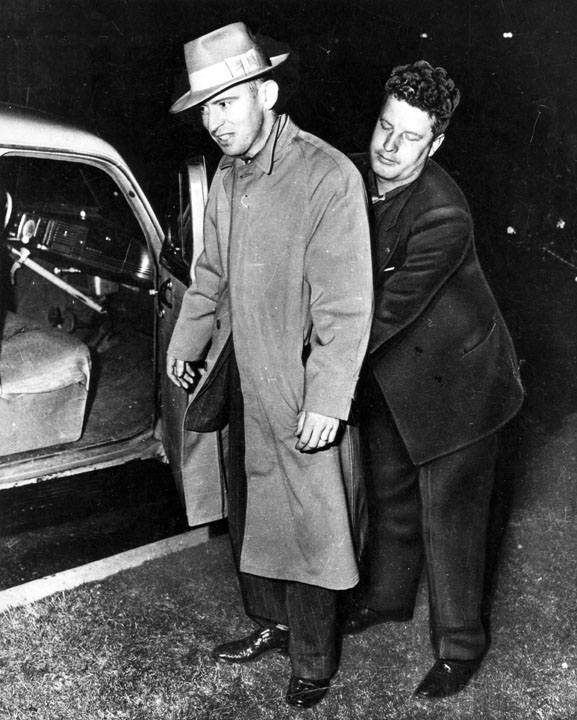
Red Manley being frisked prior to being held for questioning in the Black Dahlia case. [Photo is courtesy of LAPL.]
He willingly submitted to a lie detector test, but the results were “confused.” Manley was so exhausted from the trip and the stress that it made it impossible to get a reliable reading. Captain Donohoe said, “We’ll try again later. He’s tired out now and so are we.”
Manley’s wife, Harriet, met him at the jail before he was booked. Heads together, they spoke quietly. He had a lot of explaining to do, and not just to the police.
Because of her police connections, Evening Herald & Express reporter, Agness Aggie Underwood, scored an exclusive interview with Manley.
Underwood was known to police as a reporter with the instincts of a veteran investigator. She had a reputation for “solving” cases. Police respected and trusted her.
When she entered the interview room, she intuitively knew how to begin. She said to him, “You look as though you’ve been on a drunk.” Manley replied, “This is worse than any drunk I’ve ever been on. I’ll never pick up another dame as long as I live.”
Good news for Harriet, but not enough to convince police. Underwood continued the interview. Manley told her about picking Beth up on the street in San Diego. And then he made the most surprising admission. He said, “I decided to pick her up and make a test for myself and see if I loved my wife or not.”
The test was simple. If he didn’t succumb to the charms of the dark-haired beauty, then his marriage was meant to be. It was a crackpot idea—one that suggests a man already searching for an exit.
At 25, his life was not what he had planned. He was a musician. He played in an Army band and stayed in the U.S. for the duration. He would rather have pursued music, but instead found himself a married salesman with a four-month-old child.
He told Underwood about their uneventful night at a Pacific Beach motel. He described their arrival in downtown Los Angeles on January 9th. He said Beth asked him to take her to the Greyhound Bus Station so she could check her bags before meeting her sister.
He asked where she was going to meet her, and without waiting for an answer, he said, “The Biltmore?” She said yes.
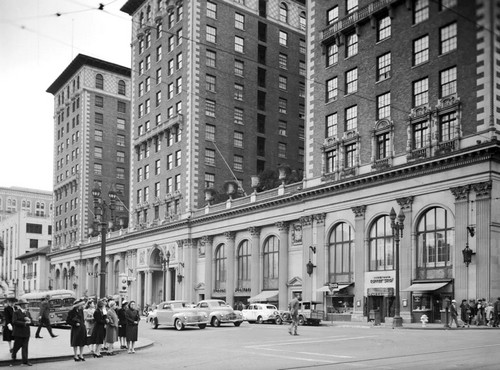
Biltmore Hotel at 5th and Olive
It was a lie. Her nearest sister, Virginia, lived with her husband hundreds of miles north in Oakland. It seems likely Beth was eager to rid herself of her traveling companion and hustle a place to spend the night.
Manley waited with her in the lobby of the Biltmore for a long time before he finally said he had to leave. Beth told him she had to wait. He told Underwood, “That is the last time I saw Betty Short. I’ll take the truth serum or anything they want to give me. And, I’ll swear on a stack of Bibles and tell my minister, too, that was the last time I ever saw Betty Short.”
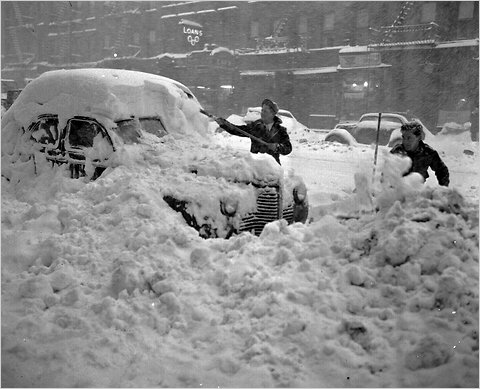
The LAPD was frustrated in its attempt to send Jane Doe #1’s fingerprints to the FBI in D.C. A massive snowstorm had grounded aircraft, and it would take days for the affected areas to clear.
The Hearst-owned Examiner offered LAPD a workaround. The paper had a Soundphoto, an early facsimile (fax) machine. They had never used it to transmit fingerprints, but felt it could be done. They agreed to send the victim’s fingerprints to the FBI in exchange for exclusives in the case. Knowing the investigation could not formally begin without an identification, LAPD Captain Jack Donohoe agreed to the arrangement.
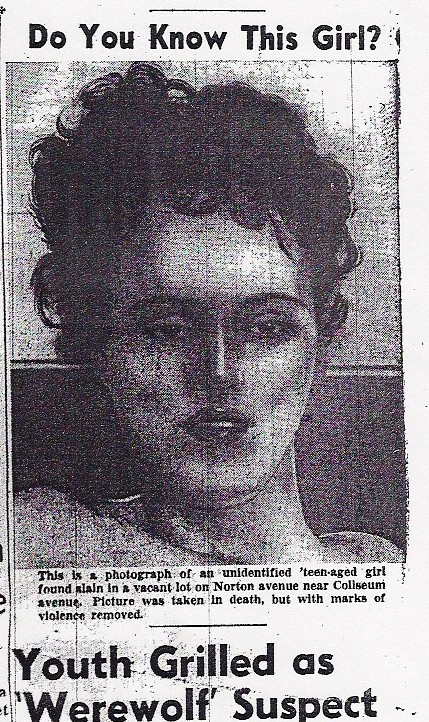
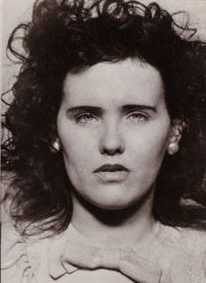
The FBI identified the prints as belonging to Elizabeth Short, a 22-year-old Massachusetts native. Santa Barbara police arrested her for underage drinking at a local restaurant in 1943 when she worked at the Camp Cooke PX. And there was a mugshot.
Beth Short mugshot
By January 17, the hauntingly beautiful mugshot was on the front page of newspapers across the country.
Her mother, Phoebe Short, and three of her sisters, who still lived in Massachusetts, arrived in Los Angeles to attend the inquest. Her sister Virginia, and Virginia’s husband, came from Oakland. It was a grim reunion.
Beth’s father, Cleo, refused to identify his daughter. He wanted nothing to do with her, the family, or the murder.
To spare Phoebe and Beth’s sisters, Virginia’s husband confirmed Beth’s identity at the morgue.
A murder victim, especially a beautiful young woman, dies twice. First at the hands of her killer. Next, in the newspapers.
The Daily News reported that homicide detectives were probing Beth’s “reckless career that ended under a sadist’s knife.” The judgement was unmistakable. Beth’s “reckless career” made her complicit. No one beat, slaughtered, and dumped nice girls like garbage.
Described as popular, Beth and her girlfriends were often seen in Hollywood night spots in the company of servicemen. It wasn’t an explicit condemnation of her lifestyle. It didn’t have to be.
Round-ups of sex offenders and other shady characters police believed might be responsible for the murder yielded nothing of value. However, they got information that Beth was last seen with a handsome red-headed man. The man had picked her up at the French home in Pacific Beach on January 8th. He had dated her a few times while she stayed there.. He answered to Bill or Red. No one knew anything more.
To detectives, he may have been the last person to see Beth alive.
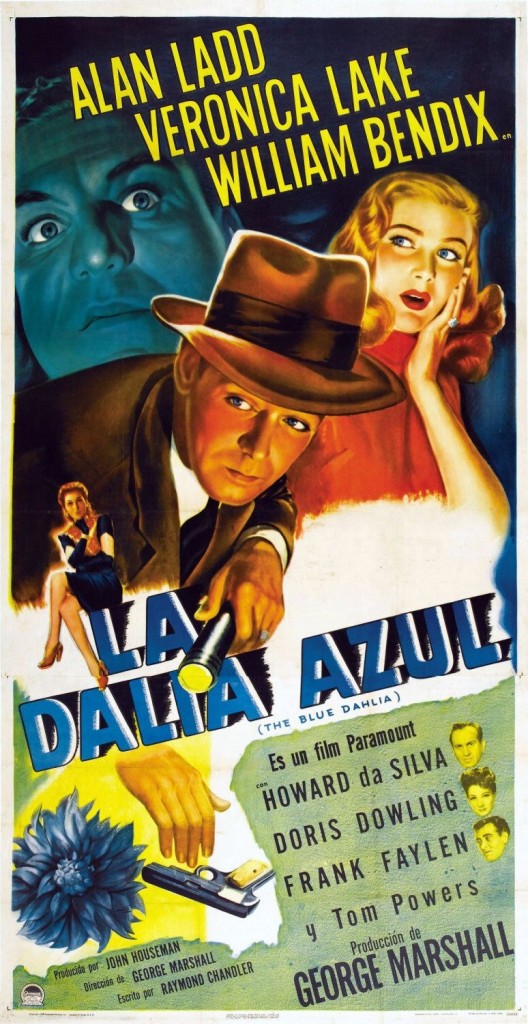
They had Beth’s name, and they also had a nickname: “The Black Dahlia.” During the summer of 1946, a movie starring Alan Ladd, Veronica Lake, and William Bendix, titled The Blue Dahlia, played around town. She got the nickname from acquaintances in Long Beach. She frequently wore black and sometimes tucked a large flower behind her ear.
Los Angeles has a history of murders named after flowers: Gardenia, Orchid, Red Rose. Now it added Black Dahlia to the deadly bouquet.
For background on Beth, detectives talked to former roommates and others who knew her and might be familiar with her habits.
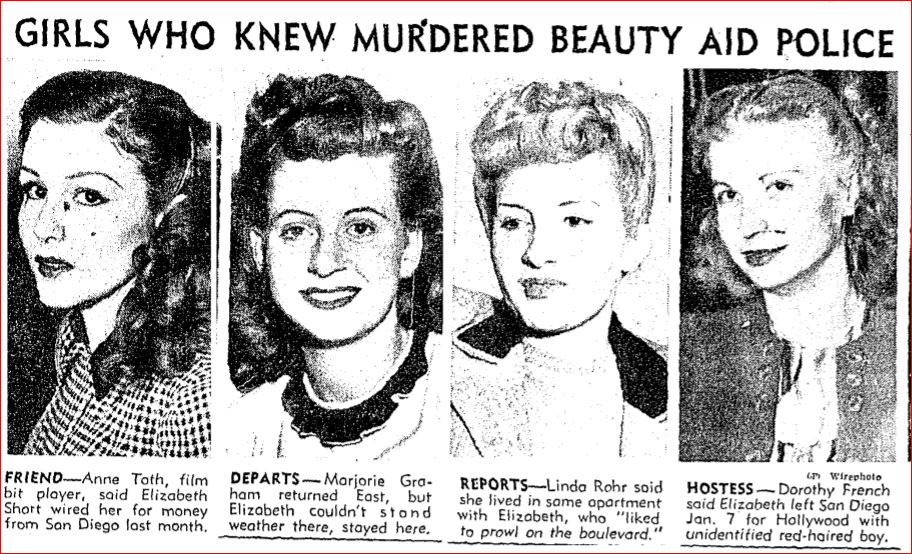
Lynn Martin, 16 going on 30, and Marjorie Graham, 24, lived with Beth in Hollywood. They may have lived with her, but they knew little about her private life.
Tracking Beth’s movements in post-war Los Angeles presented a unique challenge. The war had ended almost 18 months earlier, but the housing shortage remained critical. If you didn’t have a fixed address, you could stay in a hotel for only 5 days. People were constantly on the move.
The population skewed young and transient. Veterans, mentally broken by their war experiences, drank in the same clubs as Beth and her friends.
The city was more dangerous than they knew. It could have been any of them who ended up dead in a vacant lot. But a monster chose Beth.