Thanksgiving and a Revolver

The holidays aren’t joyful for everyone. Family gatherings, liquor, and year-long grudges can combust over anything—from the TV remote to the last slice of pie. Holiday homicides often boil down to too much booze and too much togetherness.

For the Thorpes, the trigger wasn’t a turkey leg or a slice of pie—it was the uninvited arrival of an ex-husband.

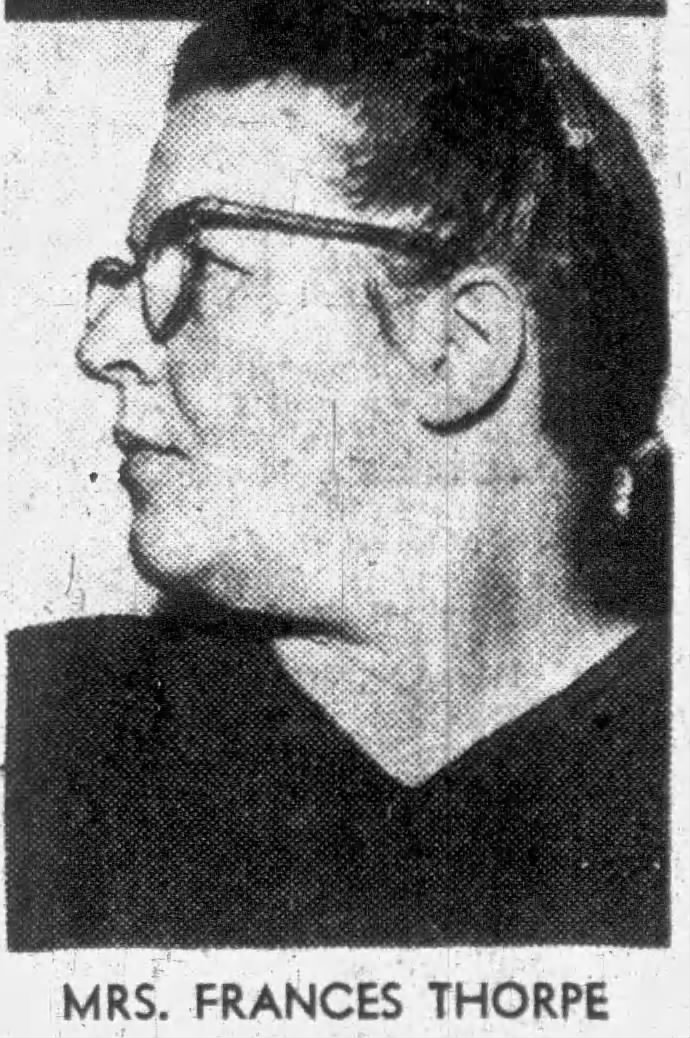
On Thanksgiving evening, November 27, 1952, Seal Beach officers rolled to 131 6th Street after a call from Frances Conant Thorpe. She told police that her ex-husband, Al McNutt, had stopped by to offer holiday greetings to her and her current husband of eight months, Herman. Frances and Herman had been drinking and arguing all day. McNutt’s appearance pushed things over the edge. A struggle followed, and Herman wound up dead.

Frances offered three incompatible versions of the shooting.
First, she told Officer William Dowdy that Herman had committed suicide.
Then, she told Deputy Coroner Walter Fox that she shot him twice during a scuffle.
Finally, she told District Attorney Investigator M.D. Williams that Herman had tried to shoot her; she fell, hit her head on a case of root beer, blacked out for hours, and awoke to find him dead on the bedroom floor.

The facts shredded all three stories.
Herman’s autopsy revealed nothing consistent with suicide. The position of the weapon beneath his body and the trajectory of the fatal chest wound made self-infliction impossible. There was no gunshot residue on his hands and no powder burns on his skin. But there were traces of gunpowder on Frances’ bathrobe and on her left hand.

Investigator Williams noted that Frances’ attitude was evasive, and her stories “didn’t hold together.”

Dr. Raymond Brandt’s autopsy established Herman’s time of death as 1:30 p.m.—a full hour earlier than Frances claimed. Doctors dismissed her blackout story outright. One said it would be “medically impossible to be blacked out so long, even if she was intoxicated.”

The jury rejected her stories, too. After six hours and twenty-eight minutes of deliberation, they found Frances guilty of manslaughter. She was sentenced to up to ten years in prison.

Thanksgiving in Seal Beach didn’t end with dessert—it ended with a revolver, a bad lie, and a dead husband.

Thanksgiving Dinner and a Revolver

The holidays are not a joy for everyone. Family gatherings and booze can be a volatile, and sometimes deadly, mix. Petty grievances which have festered for months occasionally erupt into violence; but whether it is a long-standing feud, a dispute over who is in charge of the remote, or an argument over who can claim the last slice of pumpkin pie, holiday homicides are often the result of too many cocktails and too much togetherness.

In the case of the Thorpes the catalyst for violence wasn’t a piece of pie or a drumstick, it was the visit by a former spouse that caused a fatal argument.

thorpe_arraignedOn November 27, 1952, Thanksgiving evening, Seal Beach cops received a telephone call from forty-one year old Frances Conant Thorpe. She said that she and her husband, fifty-two year old Garden Grove businessman Herman T. Thorpe, had spent the day drinking and arguing and she had shot him as they wrestled for possession of a revolver. According to Frances the argument started after her ex-husband, Al McNutt, had dropped by to extend Thanksgiving greetings to the newlywed couple — the Thorpes had been married just eight months.

When questioned by investigators Frances offered serveral different versions of the shooting. She told Officer William Dowdy of the Seal Beach Police Department that Herman had committed suicide, she told Deputy Coroner Walter Fox that she shot Herman twice during a scuffle. Finally she told District Attorney Investigator M.D. Williams that Herman had tried to shoot her and she fell, striking her head on a box, and when she revived several hours later Herman was dead on the bedroom floor.

thorpe_arraignedHerman’s autopsy revealed nothing to suggest that the bullet wounds to his chest and left forearm were self-inflicted. Investigators determined that the position of the weapon found under Herman’s body and the trajectory of the fatal round made it virtually impossible for his death to have been a suicide.There wasn’t a speck of gunshot residue on the dead man’s hands, nor were there any powder burns on his chest or arm. However there were traces of gun powder on Frances’ bathrobe and on her left hand.

Frances was held to answer for the slaying.

thorpe_convictedThe jury deliberated for six hours and twenty-eight minutes before finding Frances Thorpe guilty of manslaughter.

The Los Angeles Times did not report on Frances’ sentencing hearing.

NOTE:  On this Thanksgiving I ask you to remember, you only have to cope with that particularly annoying relative once a year so leave the gun at home.  Best wishes for a safe holiday!