A Mobster in Hollywood

The Mob Comes to Hollywood

Los Angeles never had a mob like those that ran the streets in Chicago, New York, Detroit or Kansas City. Corruption in the City of Angels was a top-down affair—overseen by politicians in City Hall. Local vice kings, Charlie Crawford, Albert Marco, and Bob Gans managed illegal liquor, gambling and prostitution and shared profits with the politicians. Crooked members of the Los Angeles police force supplied the muscle. As a cabal, some called “The City Hall Gang,” they had vice in the city sewed up with no room for outsiders.

(1928) – View of Los Angeles City Hall decorated with banners for its opening ceremony. Photo courtesy Water & Power.

Eastern mobsters attempted on several occasions to get a toehold in Los Angeles. Infamous Chicago mob boss, Al Capone, visited Southern California in December 1927. He traveled by train south to San Diego, and stopped in Orange County on his way back. When he returned to the Biltmore Hotel, LAPD kept a close watch on him. On December 13th, LAPD detective Edward “Roughhouse” Brown escorted him and his entourage to the Santa Fe station to board an eastbound train.

The only successful mob-backed racket to gain power in Los Angeles was through the International Alliance of Theatrical Stage Employees (IATSE). IATSE was weak, struggling to protect its members against powerful studio heads like Louis B. Mayer of Metro-Goldwyn-Mayer and Harry Warner of Warner Bros. The workers wanted fair pay and safe conditions, but they lacked the leverage to fight the studio bosses.

Premiere of “Morocco” at Grauman’s Chinese, 1930.

It was 1935, and the mob’s timing could not have been better. The Great Depression gripped America. Hollywood seemed safe at first. But then, theater attendance dropped. Studios cut wages. Workers grew angry and desperate. The mob realized competing with the entrenched local vice lords, with support from the mayor’s office and police, was a non-starter. However, they found a lucrative backdoor. Hollywood.

In 1935, the mob sent William “Willie” Bioff, a Chicago mob associate, as the West Coast representative of IATSE. He seemed to the workers like an answered prayer. He vowed to get them the money and working conditions they wanted.

A Vulnerable Industry

Bioff joined George Browne, an ambitious IATSE official. They realized the movie industry was vulnerable, and those vulnerabilities presented them with the perfect way to make money. If a single projectionist stopped working, a theater could not show a movie. If the stagehands walked off a set, filming stopped.

With Frank “The Enforcer” Nitti backing him, Browne had won the presidency of IATSE in 1934. He then appointed Bioff as his personal representative for West Coast operations.

The Price of Peace

Bioff did not care about union pride or worker rights. The first thing he did when he arrived in Los Angeles was to meet with the top studio executives. He gave them a choice. They could pay him, or he would call a strike that would shut down every movie studio in Hollywood.

Studio moguls knew that a strike meant losing thousands of dollars a day.

The extortion system was well-organized. Bioff demanded fifty thousand dollars a year from smaller studios and one hundred thousand dollars a year from the major studios. He collected the money in cash, often packed into brown paper bags or briefcases. For the studios, it was a cheap way to keep the cameras rolling.

To make sure the studio bosses knew he was serious, Bioff occasionally ordered small, sudden strikes. He would shut down a soundstage for a few hours as a demonstration of his power. The studio heads learned to pay on time.

While Bioff was getting rich, he had to keep the union members happy so they would not rebel. He used his power to win a major victory for them in 1936. He negotiated a huge wage increase and a closed-shop agreement. This meant that the studios could only hire IATSE members for technical jobs.

To the average stagehand making a few dollars a week, Bioff was a hero, the tough guy who stood up to the multi-millionaire studio bosses and won.

With the union firmly under his control, Bioff lived like a king in Southern California. He bought a massive estate in the San Fernando Valley. He raised prize cattle, drove luxury cars, and wore expensive jewelry.

He mingled with movie stars and studio executives. Even though everyone knew he was a gangster, he was a welcome guest at exclusive parties. Hollywood stars have always had a thing for bad guys. The frisson of proximity to danger, without the consequences, was intoxicating. Benjamin “Bugsy” Siegel enjoyed the same treatment when he moved to Los Angeles. He dined with stars and considered an acting career like his childhood friend from the old neighborhood, George Raft.

Bioff ruled the Hollywood labor scene with an iron fist, crushing any internal dissent. If a union member questioned where their dues were going, Bioff’s thugs would beat them up or kick them out of the union, which meant they could never work in Hollywood again.

The Pen and the Prosecutor

By the late 1930s, the first cracks in Bioff’s empire revealed themselves. Early signs of trouble came from within the labor movement itself. Other unions and independent worker groups grew tired of IATSE’s monopoly and Bioff’s thuggish methods.

A group of Hollywood actors, writers, and progressive workers began to look closely at the union’s finances. They noticed that millions of dollars in union dues were missing, and that Bioff seemed to be working closer with the studio bosses than with the workers.

The most damaging blow outside the studios came from the press. A crusading, syndicated journalist named Westbrook Pegler started a fierce, one-man media campaign against Bioff. Writing for the New York World-Telegram and other papers across the country, Pegler used his widely read column, Fair Enough, to dig into Bioff’s dark past.

Pegler discovered that before coming to California, Bioff was a low-level thug and pimp in Illinois. Most importantly, Pegler uncovered an old 1922 Chicago conviction against Bioff for pandering—operating a brothel and taking money from a prostitute. Bioff had served only a few days of his six-month sentence before skipping town.

Pegler famously mocked Bioff in print, calling him a “panderer” and a “cheap thug” who was holding the entire movie industry hostage.

Pegler’s explosive columns ran week after week, exposing how a fugitive criminal was living in a California mansion while running a major American labor union. The public outcry from Pegler’s work was so loud that California authorities could no longer look the other way.

Bioff was arrested and forced to return to Illinois to finish his old prison sentence. This bad publicity shattered Bioff’s image as a legitimate labor leader and gave federal investigators the perfect opening.

Federal Trial

A determined federal prosecutor named Boris Kostelanetz stepped in to build a major tax evasion and extortion case against Bioff and George Browne. Investigators meticulously traced the paper trail of the studio bribes. Federal agents convinced studio executives to testify about the secret payments.

In 1941, Willie Bioff and George Browne were put on trial for federal racketeering in a New York courtroom. The trial exposed the deep rot in Hollywood’s labor system. One of the most important witnesses was Nicholas Schenck, the powerful president of Loew’s Inc., the company that owned Metro-Goldwyn-Mayer (MGM).

Schenck sat in the witness chair and described his first meetings with Bioff. He told the jury that Bioff did not make requests; he made threats. Schenck testified that Bioff looked him in the eye and said, “Your business is a fragile one. A strike would ruin you.”

Schenck explained the exact mechanics of the payments to the court. The money had to be paid in cash, and no checks or receipts were allowed. To get the cash, studio executives had to falsify their own company expense records. They hid the bribe money under fake ledger entries like “publicity expenses” or “legal fees” to keep their accounting books clean.

Other studio executives, like Leo Spitz of RKO, testified about how Bioff showed off his power. Spitz told the court that if a payment was even a day late, Bioff would call a sudden strike on a movie set. The stagehands would drop their tools and walk off, costing the studio thousands of dollars an hour.

This testimony ruined the defense. Bioff’s lawyers tried to argue that the money was just a voluntary gift for helping keep labor peace. But the raw, detailed stories from the studio heads proved it was flat-out extortion.

The jury took less than two hours to find Bioff and Browne guilty. Bioff was sentenced to ten years in prison, while Browne received eight years.

Bioff Makes a Deal

Faced with a long prison sentence in a maximum-security penitentiary, Bioff chose to talk. He became a government witness and testified against his former masters in the Chicago Outfit.

Willie Bioff in front of Judge Fricke’s court.

In a sensational 1943 trial, Bioff took the stand and explained exactly how the mob controlled IATSE and extorted the Hollywood studios. His testimony led to the conviction of top Chicago gangsters, including Paul Ricca, Phil D’Andrea, and Frank Nitti. Nitti was deathly afraid of confined spaces. Knowing that a federal prison cell would elevate his claustrophobia to an intolerable level, he committed suicide rather than face prison because of Bioff’s betrayal.

Bioff’s cooperation earned him an early release from prison in 1945. He knew the mob would be looking for him, so he changed his name to William Nelson. He moved to Phoenix, Arizona. He lived a quiet, normal life. But he also took a calculated risk and worked in the casino business in Las Vegas. He relied on his old connections to stay afloat while trying to maintain a low profile.

The Battle of Black Friday

Bioff’s removal from IATSE led to a new, incredibly violent struggle known as the Hollywood Jurisdictional Strikes. This was a bitter war between IATSE and a more progressive union called the Conference of Studio Unions, or CSU, led by Herbert Sorrell. The CSU represented painters, carpenters, and decorators, and they accused IATSE of still being a puppet for the studio bosses.

The battle for control of Hollywood film crews reached a breaking point on October 5, 1945. This day became known as “Black Friday.” Over one thousand CSU strikers and their supporters formed a tight line across the entrance of the Warner Bros. studio in Burbank, aiming to block anyone from entering the lot to work.

Hollywood strike. Photo courtesy UCLA Special Collections.

When IATSE members and studio replacement workers arrived, a massive fight broke out. The studio guards and the Burbank police stepped in to break up the crowd, but things quickly got out of hand. Men fought with clubs, heavy iron pipes, chains, and brass knuckles.

The scene became chaotic. Studio guards on top of the Warner Bros. walls pumped tear gas into the crowd. They also turned high-pressure fire hoses on the strikers, knocking people down on the slick pavement. Striker sympathizers overturned cars in the street to block police vehicles from entering the fray.

By the end of the day, dozens of people were badly hurt. Over forty people had to go to the hospital with broken bones and deep cuts. The police arrested more than three hundred strikers over the course of the week. This violent riot shocked the public and forced the state government to step in.

The studios used the violence to label the CSU as dangerous radicals and communists. Apparently, the CSU was more terrifying to Hollywood than a group of out-of-town gangsters.  

The studio bosses helped IATSE win the labor war. By the end of the 1940s, the CSU was destroyed. IATSE secured its position as the dominant union for Hollywood film crews, a position it still holds today.

Bye-bye, Bioff

On November 4, 1955, Bioff’s past caught up with him. He walked out of his home in Phoenix and got into his pickup truck. When he turned the key in the ignition, a bomb wired to the starter exploded.

The blast destroyed the truck and killed Bioff instantly. It was a classic mob hit. Delayed punishment for his testimony a decade earlier. The mob did not forget or forgive. Nobody was ever charged in the case.

The story of William Bioff and IATSE remains one of the darkest chapters in the history of American labor and the entertainment industry. It showed how easily a union meant to protect working people could be captured by organized crime. It also shaped the future of Hollywood.

The systems of bargaining and the division of labor created during Bioff’s reign of extortion set the rules for how movies were made for decades to come. The stagehands and technicians finally got their strong union, but the cost was a legacy of violence, corruption, and fear that took Hollywood a generation to forget.
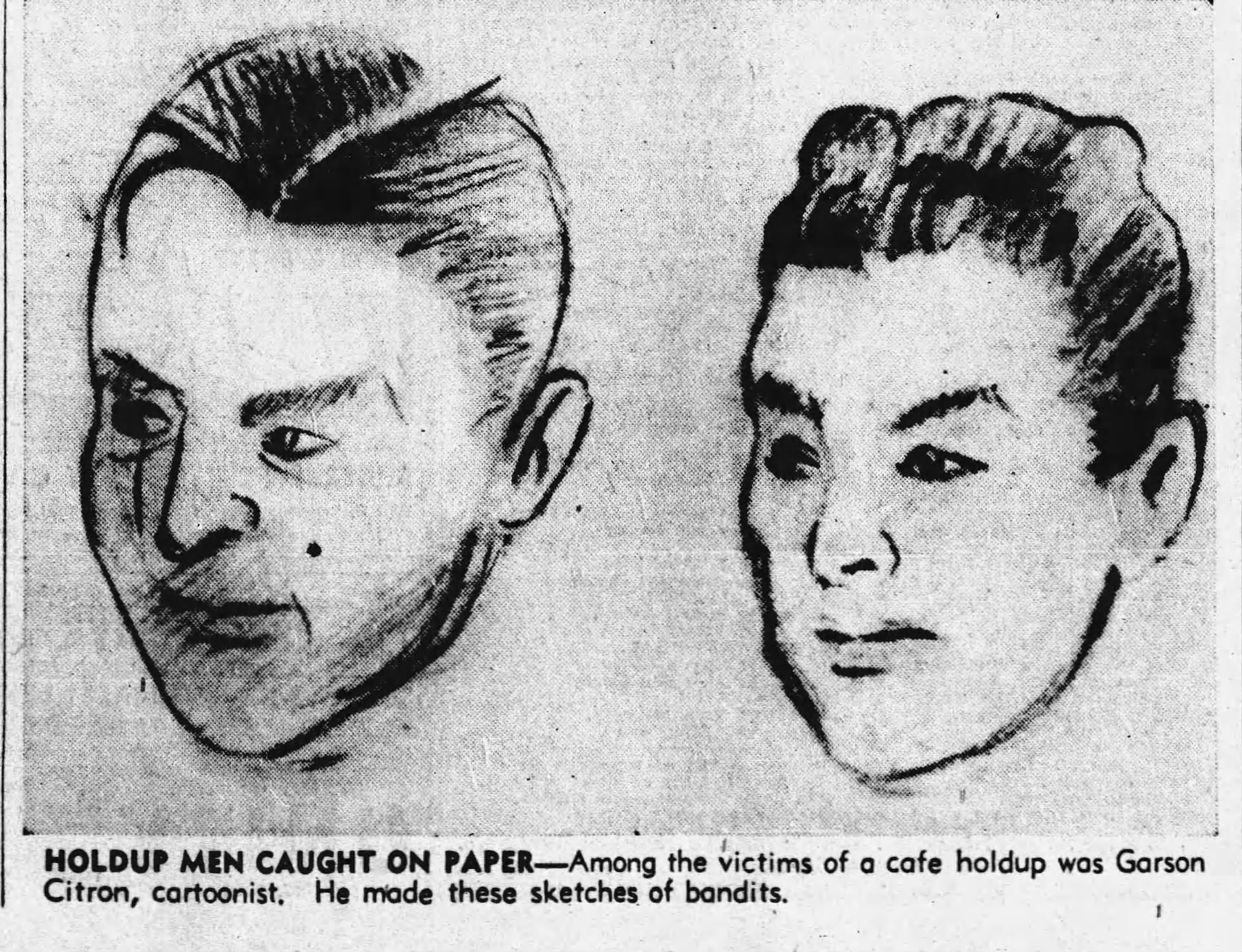
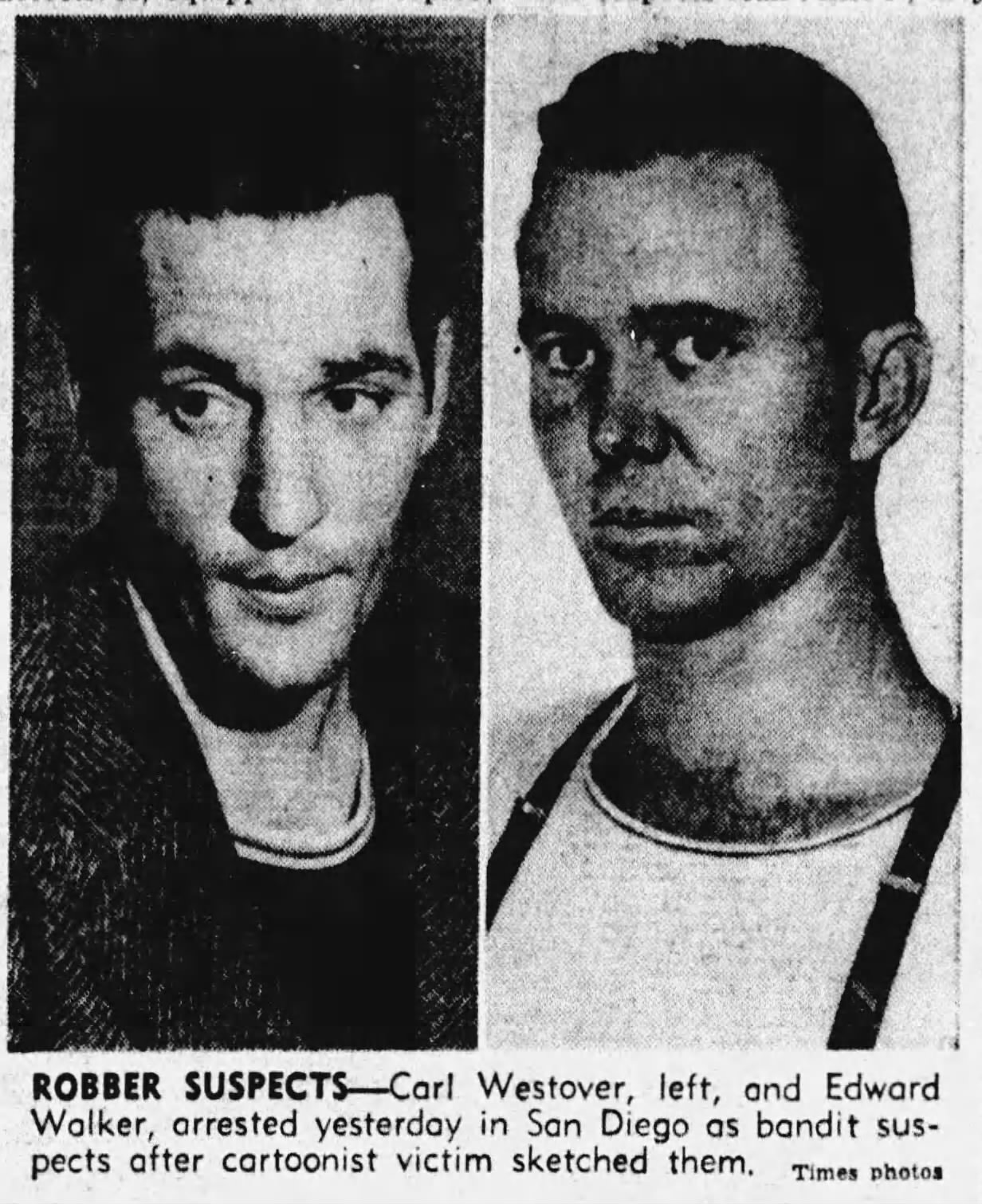
The Cartoon Bandits

Not everyone celebrates the 4th of July with fireworks and a BBQ.

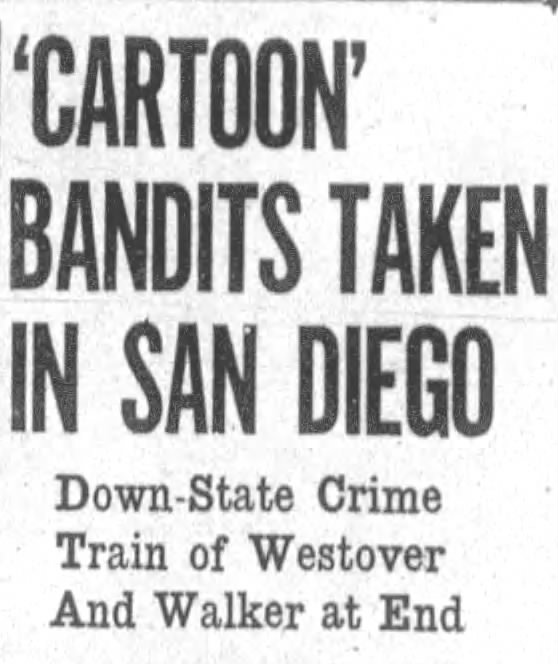
On Friday, July 4, 1941, two men armed with a sawed-off shotgun entered the California Kitchen cafe at 410 Glendale Boulevard and held staff and patrons at gunpoint while they stole $67.50 from the register and $35 from their victims. As soon as they left, twenty-year-old Carson Citron, a talented cartoonist who sketched visitors to the 1939 New York World’s Fair, called for a pencil, grabbed a paper bag, and drew realistic likenesses of the robbers.

Jerry Towslee, manager of the Kitchen, and all the patrons, attested to the accuracy of Citron’s art work. The police immediately reproduced the sketches for circulation.

Over the next week, the Cartoon Bandits continued their spree of robberies, car thefts and kidnappings stretching from LA to Oakland and back to LA. They carjacked Paul Ashbrook and his date, Katherine Dietz, in Oakland. They drove the couple 80 miles east to Stockton, where they tied them up and left them in a cemetery. Ashbrook told police one of their captors said, “We’ve got to scram out of here now, but we’re going back and get that cartoonist!”

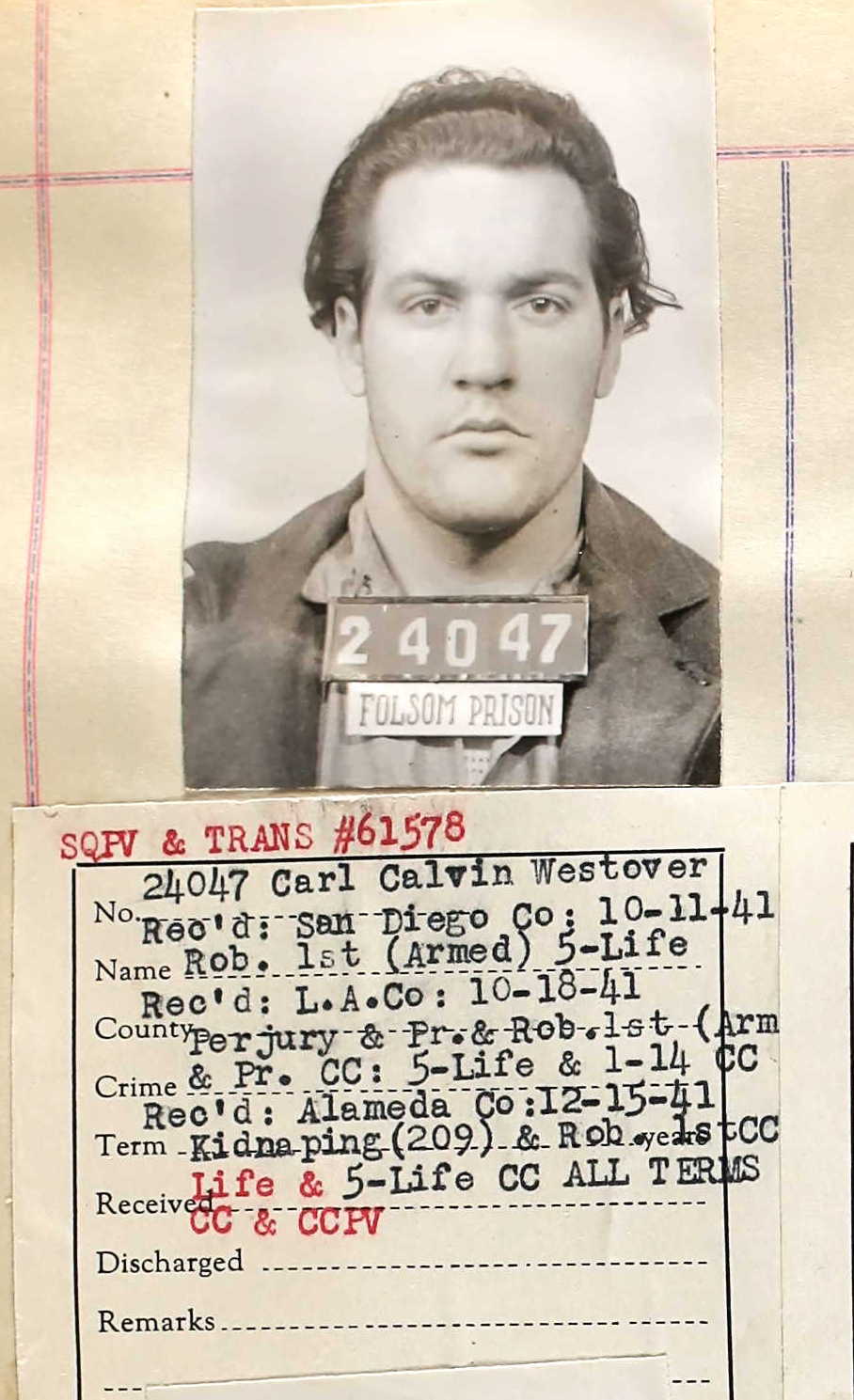
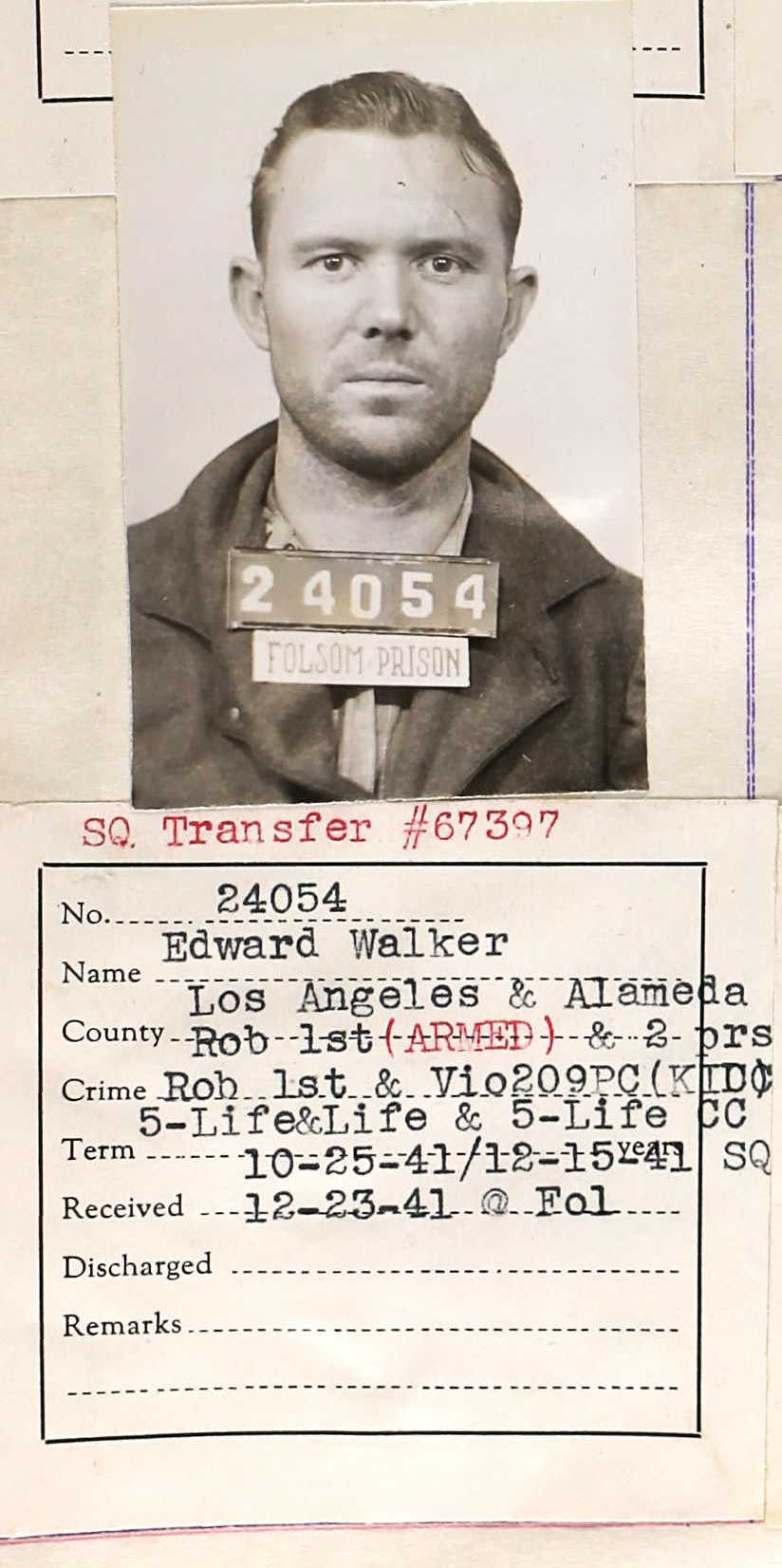
Police had victims of the bandits compare Citron’s sketches to mug shots and they identified the suspects as Edward Walker, a twenty-six-year-old robber paroled from Folsom Prison, and twenty-two-year-old Carl Westover, a San Quentin alum.

Early on the morning of July 10th, the gunmen abandoned a car in a lot at 450 S. Spring Street. They kept the lot attendant, Fred Hunt, at bay while they transferred a suitcase to another vehicle, which they drove off in.

For the next few hours, the bandit pair added new names to their roster of victims. Alvin Marshall lost $40 in a liquor store on Whittier. They took $8 from Ray Eckenroth at a gas station on W. Washington Blvd. Then they pulled into a gas station at 3251 Eagle Rock Blvd., bought gas and soft drinks, then pulled guns on the attendant, O. R. Bates and relieved him of $40. Evidently proud of their newfound fame, they boasted, “We’re the cartoon bandits. You can tell those—Los Angeles policemen we’re back in town and going to be plenty of grease in their hair.”

The bandits headed south.

Later in the day, as San Diego patrolmen Earl Myrick and Thomas Hays cruised in their radio car, they recognized a stolen sedan. They followed the car for four blocks, then drew up alongside it with their revolvers drawn. Westover had a.38 caliber revolver in the pocket of his pants. All the way from Los Angeles to San Diego, he held a sawed-off shotgun in his lap. He said, “But we decided to go to the Grant Hotel garage, so I broke the shotgun down and put it in a handbag in the back of the car.” Then he sneered, “If I could have got my gun, I’d have blown you cops all over the place.”

On July 11th, Detective Lieutenants Claude Thaxter and H. C. Henry drove down to San Diego to take the bandits into custody. Westover, the younger of the two and a former San Diego schoolboy, admitted to Municipal Judge Philip Smith how he and Walker robbed a liquor store.

The bandits also confessed they’d staked out Citron’s home and planned to beat but not shoot him, but there were police cars out front and they changed their minds. That is when they left for San Diego.

Westover claimed responsibility for a $3000 supermarket robbery, but it was quickly determined he was still in prison at the time of the crime. Called to the stand and asked about committing perjury, Westover mused, “Well, I committed so many stick-ups I can’t remember them all, and won’t be able to serve out all my time anyhow!”

In October, the Cartoon Bandits pleaded guilty to one count each of robbery in Judge A. A. Scott’s courtroom. Each of them received a sentence of five years to live in Folsom.

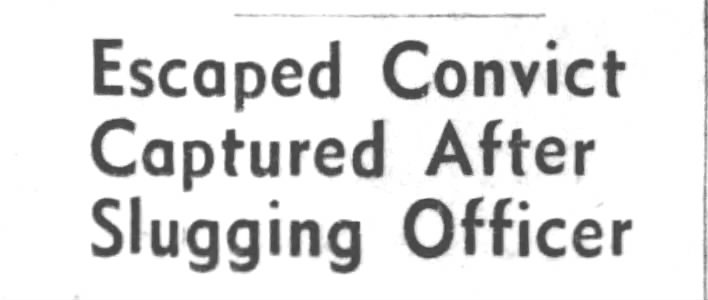
In 1957, Carl Westover, serving his life sentence as an honor worker in the San Quentin prison dairy, escaped. Oceanside policeman Ray Wilkerson captured him as he attempted to break into a car. Westover attacked Wilkerson with a screwdriver and ice pick, fracturing his skull, but two other officers arrived in time to subdue him. A career criminal, it appears Westover may have died in prison in 1998 at age 79.

As for Walker, he, like Westover, began his criminal career as a juvenile. The 1950 Federal Census shows him incarcerated in Folsom. I don’t know what happened to him after that. If anyone has information on Walker, please share.

Film Noir Friday: The Face Behind the Mask [1941]

Welcome! The lobby of the Deranged L.A. Crimes theater is open. Grab a bucket of popcorn, some Milk Duds and a Coke and find a seat. Tonight’s feature is THE FACE BEHIND THE MASK. The film stars Peter Lorre and Evelyn Keyes.

Enjoy the movie!

IMDB says:

Janos Szaby is a kind, innocent immigrant to America. Just after he arrives though, he is caught in a fire and his face is horribly burned and disfigured. Although a skilled craftsman his hideous features make it impossible for him to get work, and driven by despair he is forced to turn to crime to live. He finds himself very proficient at that, and soon makes enough money to buy a very lifelike mask to hide his scars behind. He hates what he does, but is he in too deep to get out?


Film Noir Friday: Shadow of the Thin Man [1941]

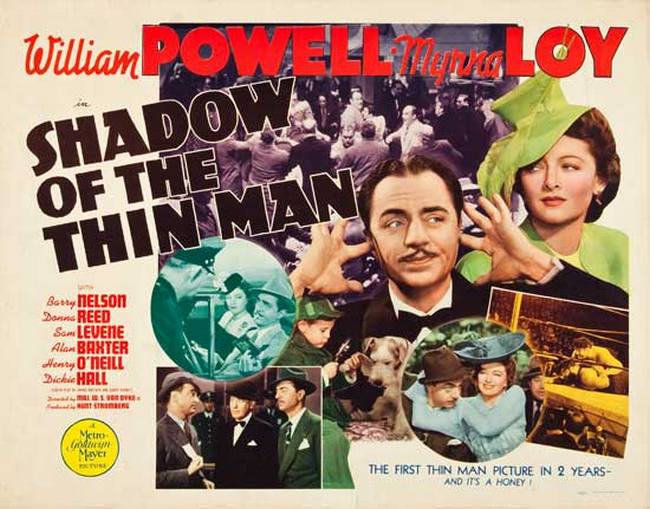
shadow-of-the-thin-man-half-sheet-a-small

Welcome! The lobby of the Deranged L.A. Crimes theater is open. Grab a bucket of popcorn, some Milk Duds and a Coke and find a seat. Today’s feature is SHADOW OF THE THIN MAN starring Myrna Loy, William Powell, Donna Reed, Barry Nelson and Asta (his real name was Skippy).

Imagine my delight when I found this on YouTube today.  The person(s) providing the film say they couldn’t find a copyright for it.  I believe they may be mistaken — so watch this immediately!  The Thin Man series always makes me smile, and this particular entry in the series is one I absolutely adore (especially Myrna’s hat!)

If you miss this showing for any reason you’ll be pleased to know that TCM is showing it on December 31st.

Enjoy the movie!

TCM says:

In San Francisco, former private detective Nick Charles enjoys a peaceful retirement with his attractive wife Nora, their young son Nick, Jr., and their wire-haired terrier, Asta. One afternoon, when Nick and Nora go to the races, they learn from Nick’s old friend, Lieutenant Abrams, that a jockey named Gomez has just been fatally shot. In the jockey room, Nick’s police and reporter friends think that he is on the case, but he insists that his detective days are over, even when one of the jockeys piques his curiosity by saying that Gomez was killed because he refused to throw a race.

https://youtu.be/JRbj7urKAqU

Film Noir Friday-Saturday Matineee: I Wake Up Screaming!

i wake up screaming

Welcome! The lobby of the Deranged L.A. Crimes theater is open. Grab a bucket of popcorn, some Milk Duds and a Coke and find a seat. Today’s feature is I WAKE UP SCREAMING starring Betty Grable, Victor Mature, Carole Landis, Laird Cregar and William Gargan.

Enjoy the movie!

TCM says:

After beautiful Vicky Lynn is killed, New York City police question Frankie Christopher, a promoter who sponsored Vicky, “glamorized” her and got her jobs as a model. Especially tough on Frankie is obsessed inspector Ed Cornell, who has never failed to get his man. Jerry MacDonald, a more sympathetic policeman, asks Frankie to tell them how he met Vicky, and Frankie tells his story.


https://youtu.be/sfuDimsTkrk

Film Noir Friday: Meet John Doe [1941]

meet-john-doe-poster

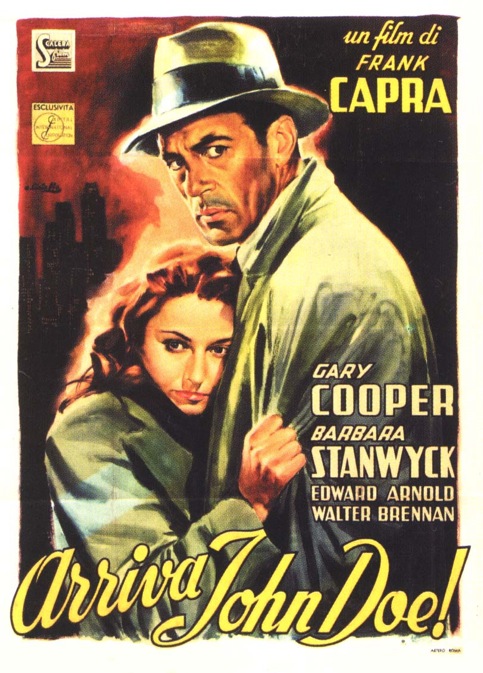
Welcome! The lobby of the Deranged L.A. Crimes theater is open! Grab a bucket of popcorn, some Milk Duds and a Coke and find a seat. Tonight’s feature is MEET JOHN DOE starring Gary Cooper, Barbara Stanwyck, Edward Arnold, and Walter Brenannan. While this film may not be an obvious choice for Film Noir Friday it’s a very dark look at pre-WWII America.  Enjoy the movie!

TCM says:

When the metropolitan newspaper The Bulletin is bought by publisher D. B. Norton, he changes its name to The New Bulletin and replaces its motto, “A free press for a free people,” with “A streamlined newspaper for a streamlined era.” As part of the new streamlining efforts, managing editor Henry Connell fires “sob-sister” columnist Ann Mitchell because she does not produce enough “fireworks” to bring up the paper’s circulation. However, Ann resolves to fight for her job by writing a phony letter to her column, claiming to have received it from a man protesting the degenerated state of affairs in the world and announcing his plans to jump from the roof of City Hall at midnight on Christmas Eve.

No Hands on the Clock [1941]

NoHandsontheClockLobby

Welcome! The lobby of the Deranged L.A. Crimes theater is open! Grab a bucket of popcorn, some Milk Duds and a Coke and find a seat. Tonight’s feature is NO HANDS ON THE CLOCK starring Chester Morris and Jean Parker.  Enjoy the movie!

TCM says:

Private detective Humphrey Campbell informs his harried boss that not only has he tracked down the missing girl from his last case, but also married her. Before they can start their honeymoon, Campbell is dragged into another missing person case, which develops into a kidnapping related to a plague of bank robberies. By investigating a skein of blondes, redheads and brunettes, he invokes the suspicions of the Feds, as well as his jealous new bride.

https://youtu.be/KTM-QaltYdM

Nothing to Live For, Part 1

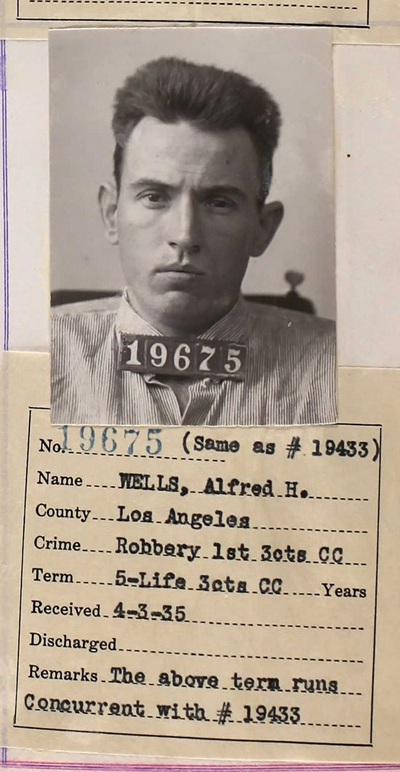
By May 1941 Alfred Wells had been in trouble with the law for most of his 31 years. In 1927 he was sentenced to from 18 months to three years in Pittsburgh, PA for robbery, and in September, 1934, he was arrested while robbing a gas station in Fullerton, CA. He served five years of a five to life sentence in San Quentin before he was paroled on November 24, 1939. Over the next couple of years he was busted for vagrancy and various other petty crimes, but nothing big enough to send him back to prison.

wells_mug 1935_resize_cropAlfred was neither the brightest guy, nor was he the most articulate, so his go-to behaviors for problem solving were threats and violence. He had learned his people skills at home as a kid. His stepfather used to restrain him while his half-brother, Ray, savagely beat him. He was the perfect size for a punching bag (4′ 10 3/8″ according to his prison records), and he was slightly hunchbacked. He was described as having “very dark brown or black hair, a knot on back just above waist, very pronounced hunchback, limps when walks, leans forward and to left when walks, knife wounds left side of abdomen, left hip and back.” With no report of a traumatic injury to his spine, Alfred’s hump may have been the result of congenital kyphosis. If there was any medical help available for the condition at the time neither Alfred nor his family could have afforded it.

Not long after his parole Alfred moved to San Bernardino. Most of his family lived there and no matter what they had done to him at least they were blood.  He asked his stepmother, Violet Wells Davis, if his 19 year old half-sister, Violet, could work as his live-in housekeeper. She agreed and when Violet went to live with Alfred nobody thought anything of it. None of the family knew that Alfred had become obsessed with Violet and that he immediately coerced her into a sexual relationship. Alfred threatened to kill family members and/or himself if Violet ever left him. The incestuous relationship was kept a secret for nearly a year before relatives finally became aware of what was happening and, without saying a word to Alfred, spirited away the object of his obsessive lust to her parent’s home in Escondido. When he learned that Violet had disappeared, and nobody would admit to knowing where she had gone, Alfred went berserk.

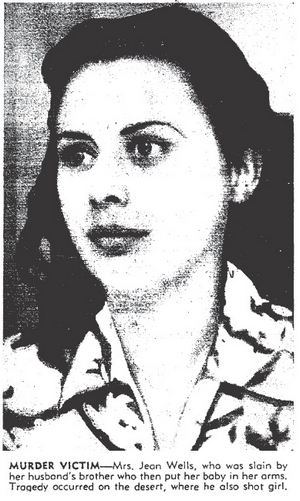
On May 7, 1941Jean Wells, Ray’s wife, their 13 month old daughter, Hester Violet, and a house guest, 17 year old Rose Destree, drove Alfred out to the Devore brush lands, ostensibly for a job at a chicken ranch. When they arrived at a secluded spot Alfred forced the two women from the car  and then confronted them with a gun. He demanded to know the whereabouts of Violet, but neither woman would talk. Alfred then demanded that Jean write a note to Ray–it read: “Honey, Al is holding Rosie and the baby and me. He wants Violet returned to him. I think it is better that you do what he says and go with him, and then you can come to us.” Jean must have sensed she had little time left so she added a postscript: “Don’t forget our slogan, Dear–I love you always.”wells_jean_picAlfred pocketed the note and held the baby in the crook of his left arm. Then he jammed his .32 caliber revolver against Jean’s chest and pulled the trigger. She died where she fell. He turned the weapon on Rose and fired. She collapsed on the hard, sandy ground, just as Jean had done. Altogether Alfred fired four shots, two into each of his victims. He placed Hester on Jean’s chest. Even if she lived through the night, Hester faced a horrible death the next day–the temperatures were expected to reach triple digits.

Satisfied with his handiwork Alfred turned away from his victims, got into the car, and drove away. He was determined to locate Violet.

NEXT TIME: Alfred’s search for Violet, and his deadly rampage, continues.

Film Noir Friday: Gangs Inc. [1941]

Paper_Bullets_AKA_Gangs_Inc_AKA_Gang_War-300845333-large

Welcome! The lobby of the Deranged L.A. Crimes theater is open. While I am working on the final installment of COPS BEHAVING BADLY: THE DEATH OF STANLEY BEEBE, why don’t you take a film break.

Grab a bucket of popcorn, some Milk Duds and a Coke and find a seat.

Tonight’s feature is GANGS, INC. (aka PAPER BULLETS) starring Alan Ladd, Joan Woodbury, Jack LaRue and Linda Ware.

TCM says:

At a playground, little Rita Adams is enjoying a reunion with her ex-convict father when he is suddenly shot to death. Rita is sent to an orphanage, where her closest playmates are Bob Elliot and Mickey Roma. Her father’s prison record continues to haunt Rita as an adult, and she loses her factory job when she cannot get bonded. Rita’s roommate, aspiring singer Donna Andrews, secretly calls Bob, now an aerospace engineer, hoping he can help his old friend find work. Bob has always loved Rita, but she is involved with Harold DeWitt, the dissolute son of the powerful Clarence DeWitt, who disapproves of their relationship. While they are driving one night, the intoxicated Harold hits and kills a pedestrian. Acting on the advice of his father’s attorney, Bruce King, Harold persuades Rita to take the blame for the accident, promising to marry her and assuring her that she will not have to serve time.

Is it just me or does Harold’s promise to marry Rita strike a false note?  Sounds to me like another big lie along the lines of: “The check is in the mail”, or “I’ll always love you.”  I’m sure I’ll be shouting at the TV telling Rita not to believe him, but I don’t imagine she’ll take my advice.

Enjoy the film!

http://youtu.be/lriOlfncYzU

Film Noir Friday: Confessions of Boston Blackie [1941]

ConfessionsofBostonBlackieLobbyBest

Welcome!  The lobby of the Deranged L.A. Crimes theater is open. Grab a bucket of popcorn, some Milk Duds and a Coke and find a seat. I confess, I’m a sucker for crime dramas with a little comic relief in the mix,  and I’m particularly fond of Boston Blackie, so tonight’s feature is CONFESSIONS OF BOSTON BLACKIE starring Chester Morris and Harriet Hilliard (Mrs. Ozzie Nelson).

Leonard Maltin says:

Delightful second entry in the series finds Blackie, trying to smash a murderous art forgery racket, being chased by the killers as well as the relentless Inspector Farraday. George E. Stone joins the cast as Blackie’s sidekick ”Runt” (replacing Charles Wagenheim), providing ample comic relief.

http://youtu.be/s5joiPN8sjY