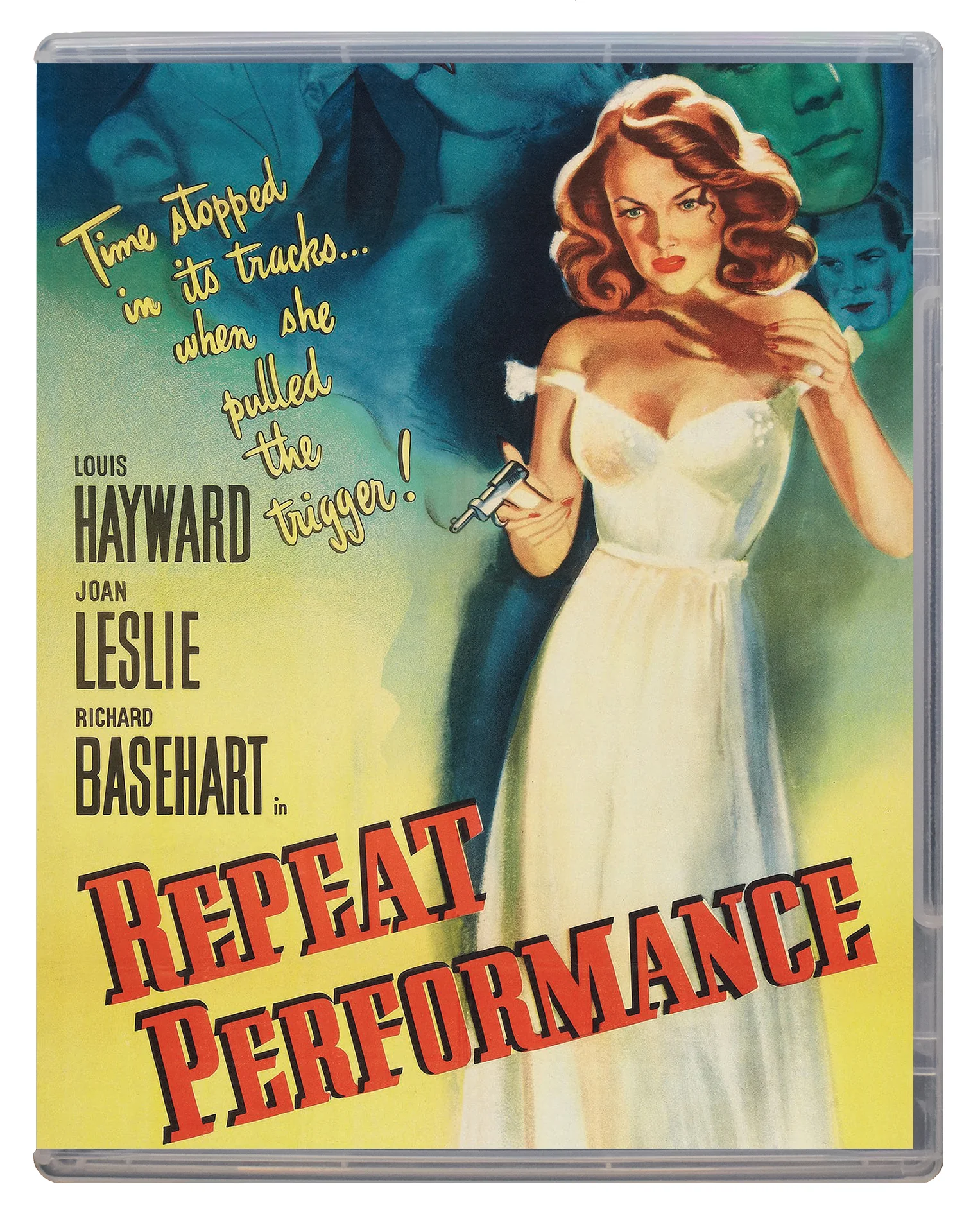
Welcome! The lobby of the Deranged L.A. Crimes theater is open! Grab a bucket of popcorn, some Milk Duds and a Coke and find a seat. Tonight’s feature is REPEAT PERFORMANCE (1947), starring Louis Hayward, Joan Leslie, and Richard Basehart.
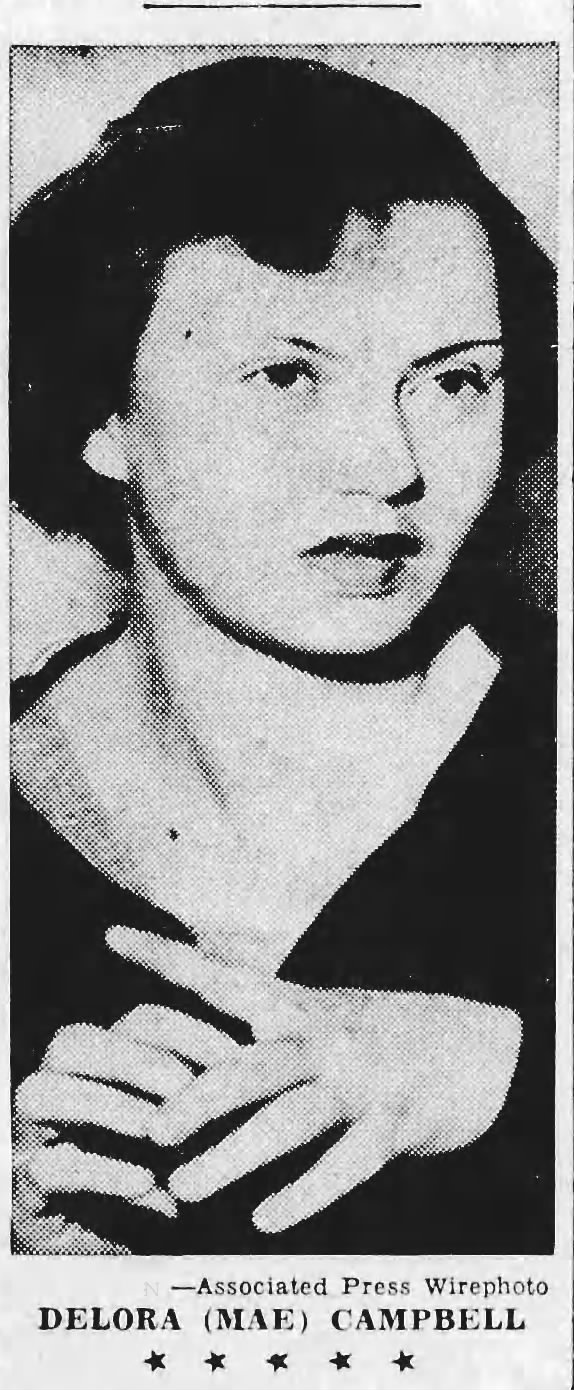
This is the film that Southern California teenager Delora Mae Campbell watched on the night of December 29, 1951. It inspired a dangerous IRRESISTIBLE IMPULSE in her. Click on the title for Part 1 of Delora’s story.
Enjoy the movie!
TCM says:
Just before midnight on New Year’s Eve, 1946, Broadway actress Sheila Page shoots her husband Barney and then rushes to see her friend, William Williams. After a distressed Sheila confesses her deed to William, he suggests they talk to John Friday, Sheila’s producer. As Sheila and William, an oddball poet, are walking up to John’s apartment, Sheila wishes that she could relive the past year, insisting that if she had it to do over, she would not make the same mistakes twice. Upon reaching John’s door, Sheila notices that William has disappeared and then gradually realizes that it is now New Year’s Day, 1946.
In Fort Lupton, Colorado, a fight with your mother could end in grounding. For Delora Campbell, it ended in something far darker. Life in post-war Fort Lupton revolved around church socials, 4-H clubs, and county fairs. Residents followed high school football with a passion, and the Fort Lupton Blue Devils were a source of pride. When the Blue Devils partied under the watchful eyes of adults, they danced to Patti Page’s soulful rendition of The Tennessee Waltz, or did a lively country swing to Hank Williams’ Lovesick Blues.
In the 1950s, no matter where she lived, girls had to adhere to a strict code of behavior. Delora didn’t just test boundaries — she unsettled people. According to her parents, Clem and Francis, they sometimes feared she might harm her siblings. Their fear went beyond the usual sibling squabbles — it sounded like a warning.
Was the pressure to conform to community standards too much for Delora? Or maybe it was one fight too many with her mother, or another battle with her younger brother, Dickie. Maybe she feared she would act on an impulse to harm a family member. Whatever her reasons, at fourteen she ran away from home for the first time.
The court intervened, and a juvenile judge placed her on probation.
Delora’s behavior alarmed everyone — from her parents to school authorities and local pastors. Even her peers may have found her behavior unsettling. One of the biggest fears for a girl Delora’s age was getting a reputation. No worse fate could befall her.
In postwar America, the specter of juvenile delinquency haunted dinner tables from coast to coast. It wasn’t the commie down the street that frightened people; it was their own kid — sulking in the next room, listening to Hank Williams, and thinking dark thoughts.
Historically, when teenage boys acted out, their activities were met with a nod and a wink — the old “boys will be boys” trope. If they committed a serious crime, they might be labeled thugs or delinquents, and could end up in juvenile hall.
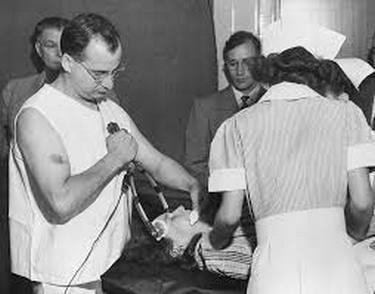
Girls faced a different kind of judgment. If they failed to measure up, they weren’t rebellious; they were hysterical, or morally compromised. Moral panic, a genuine fear in the 1950s, punished girls differently. Did Delora worry she might face serious punishment as had other girls who stepped outside expected norms? A girl who rebelled might not go to jail, but to a mental institution — until her hormones, doctors hoped, burned out the madness. Such a girl could count herself lucky if she was released without lasting damage from electroconvulsive therapy, heavy sedation, or ice baths. The belief that emotional instability was baked into the female brain dated back millennia. As one modern paper put it: “Hysteria is undoubtedly the first mental disorder attributable to women…”
Whatever was going on in Delora’s life, something caused her to run again. Was she concerned that she would harm herself or someone else? This time, she vanished for three weeks. Not knowing what else to do, her family sent her to live with her aunt and uncle in Long Beach, California. They may have wanted to spare her local infamy and give her a fresh start — or simply chose to quiet wagging small-town tongues.
The whispers in a small town can kill you.
On the surface, Delora appeared to thrive in her new environment. But was she genuinely happy, or just adapting to survive? On September 1, 1950, the Long Beach Press-Telegram listed her among a group of young people who attended a barbecue dinner where they played games and square danced.
Delora wrote home to tell her parents how much she enjoyed living in Long Beach and going to Woodrow Wilson High School. Francis was surprised — her daughter had never liked school in Fort Lupton.
Delora may have received an allowance, but sometimes when a girl needed extra cash, she took a job babysitting. For several weeks at the end of 1951, she babysat for six-year-old Donna Isbell and her eight-year-old brother, Roy.
On December 29, 1951, Delora walked a few blocks from her aunt and uncle’s home to the Isbell’s to sit with the kids. After the children went to bed, she stretched out on the sofa to watch television. The flickering light filled the room as she watched the 1947 film Repeat Performance.
The movie told the story of a Broadway actress who murders her husband on New Year’s Eve, 1946. As she’s leaving the crime scene, she wishes she could turn back the clock and do the year over — and suddenly finds herself transported to New Year’s Day, 1946.
Delora watched the film to its end, a little after 11 p.m. The house was still.; Donna and Roy were asleep. For a moment, Delora sat and reflected on the film she had watched.
Then the strangest thing happened. She had a vision in which she saw herself committing murder. The vision wasn’t terrifying — it was familiar. She had often felt like choking the life out of her siblings when she lived with her family in Fort Lupton, but she had resisted.
On this night, something inside her felt different—out of her control. She felt the tug of an irresistible impulse guide her as she calmly walked toward six-year-old Donna, sleeping snug in her bed. But first, she needed a necktie.
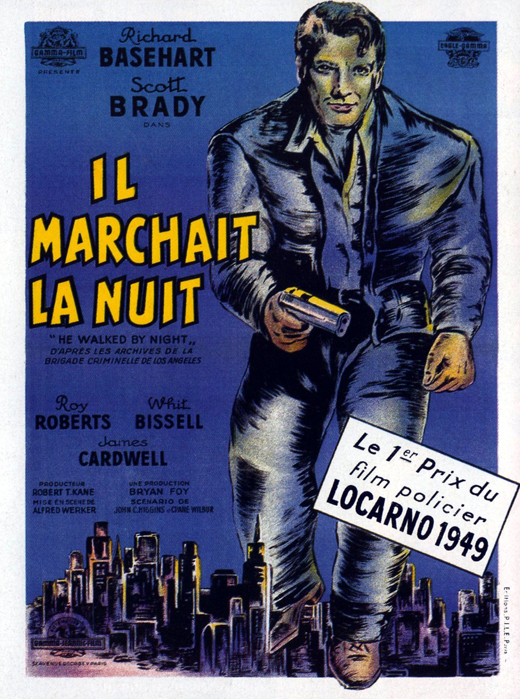
Welcome! The lobby of the Deranged L.A. Crimes theater is open! Grab a bucket of popcorn, some Milk Duds and a Coke and find a seat. Tonight’s feature is HE WALKED BY NIGHT starring Richard Basehart, Scott Brady, and Jack Webb. It was during the making of this film that Jack Webb got the idea for DRAGNET.
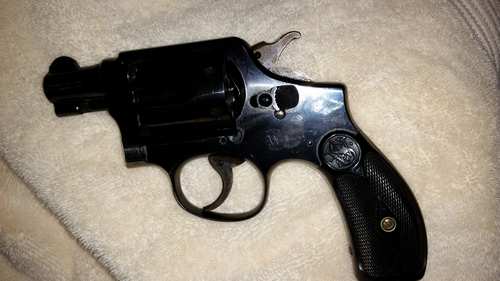
As of several years ago I have a personal connection to this movie. I was given the blue steel revolver that belonged to the screenwriter, John C. Higgins — it was a gift from his nephew, Eric, and I’m honored to own it. Higgins wrote the screenplays for T-MEN and RAW DEAL, two terrific films.
Welcome! The lobby of the Deranged L.A. Crimes theater is open. Grab a bucket of popcorn, some Milk Duds and a Coke and find a seat.
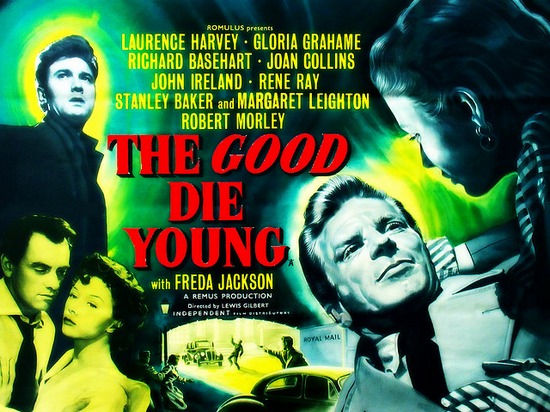
Tonight’s feature is THE GOOD DIE YOUNG [1954], the film stars Laurence Harvey, Gloria Grahame, Richard Basehart, Joan Collins and John Ireland.
Enjoy the movie!
TCM says:
Three good men – a broken boxer, an American veteran trying to win back his mother-dominated wife, and an air force sergeant married to a faithless actress – are corrupted by Miles Ravenscourt, an amoral “gentleman.” Because they need money, they let Miles lure them into his scheme to rob a postal van with a large cash cargo.
The 1948 film HE WALKED BY NIGHT starring Richard Basehart was loosely based on the 1946 crime spree of William Erwin “Machine Gun” Walker.
Jack Webb played a forensics specialist in HE WALKED BY NIGHT, and while filming the movie he had an epiphany — what if there was a radio show based on real life police work? Webb’s brainstorm would become a radio show, TV series, and a film (two films actually, one in 1954 starring Webb, and a comedy remake in 1987 starring Dan Ackroyd). The radio program debuted on June 2, 1949 with an episode entitled ROBBERY.
Episode two, HOMICIDE – THE NICKEL PLATED GUN, aired on June 10, 1949. This digitally remastered copy is courtesy of the National Archives.
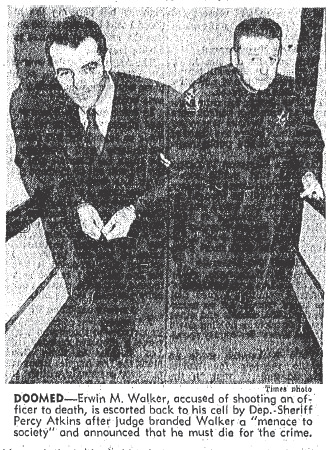
Who was the real Erwin Walker? He had been a civilian employee of the Glendale Police Department prior to being drafted into the U.S. Army. He was very near-sighted, and would have been classified as unfit for service if not for his remarkable skills in electronics. Walker was sent to the Philippines where his non-combat unit ended up in a three day fight for their lives with a contingent of Japanese army paratroopers.
Walker survived the war physically, but mentally he was broken. His crime spree began even before his release from the army. In August 1945, he entered an Army Ordnance warehouse at night, stealing seven 45-caliber Thompson sub-machine guns, twelve .45-caliber pistols, six .38-caliber revolvers, ammunition, holsters, and magazines.
On April 25, 1946, Walker was on his way to sell some stolen motion picture equipment to a man named William Starr. Starr had suspected that Walker (who was calling himself Paul C. Norris) had stolen the equipment and he phoned the cops. As Walker approached Starr’s home he was confronted by two LAPD Hollywood Division detectives, Lt. Colin C. Forbes, and his partner Sgt. Stewart W. Johnson. Walker opened fire — he wounded both cops and then he disappeared into the subterranean storm drains of Los Angeles.
Walker managed to evade capture, and early on Wednesday, June 5, 1946, he drove to a meat market at the corner of Los Feliz Boulevard and Brunswick Avenue in Glendale, where he was rousted by a suspicious California Highway patrolman, Loren Cornwell Roosevelt. Instead of producing his I.D when Roosevelt asked to see it, Walker pulled out a weapon and fired. Then the cop killer once again vanished into the storm drains of the city.
Walker would later testify that he’d fired at Roosevelt only after the cop had shot at him first. It was a lie. Walker also stated that he fired twice — but Roosevelt had died in the hospital with nine slugs in him. The investigation revealed that the fatal rounds had likely been fired from one of the Thompson sub-machine guns Walker kept with him.
A psychopath, his dog, and a gun — from HE WALKED BY NIGHT
LAPD was tipped off that Walker was living in a duplex at 1831 1/2 N. Argyle Avenue. In the early morning hours of December 20, 1946, using a key provided by the landlord, detectives Wynn, Donahue, and Rombeau entered Walker’s apartment.
Walker came up quick and reached for the Thompson he kept on the bed beside him. He struggled with the cops, but they shot him twice in the shoulder and finally subdued him by cracking his skull with the butt of a pistol. Walker was in custody at last.
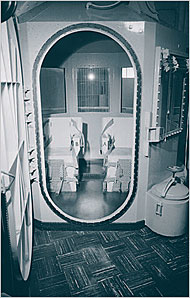
Walker entered a plea of not guilty by reason of insanity, but the trial judge found him sane. Walker was tried and convicted for Officer Roosevelt’s murder and sentenced to death in the gas chamber.
While on death row awaiting execution, a shrink diagnosed Walker with paranoid schizophrenia. Thirty-six hours before his scheduled execution Walker was found unconscious with a length of radio headphone cord wrapped around his neck. He was revived and his execution was postponed indefinitely while he underwent an extensive psych evaluation.
Walker was declared insane and committed to the Mendocino State Hospital where he received electroshock therapy, and spent his free time reading chemistry textbooks.
During the early 1970s Walker attempted to get his conviction overturned, but the courts denied his petitions. However, he did manage to get a ruling that deleted the portion of his life sentence that excluded any possibility of parole.
Walker had managed to successfully work the system and cheat the executioner. The convicted cop killer was paroled in 1974! Upon his release he legally changed his name, got a job as a chemist, and disappeared from public view.
Walker died in 2008. He had never once expressed remorse for the anguish he had caused the victims of his crimes. If there is a hell, he is certain to burn for eternity.
HE WALKED BY NIGHT is in the public domain and if you have never seen it, here’s your chance.