Irresistible Impulse–Conclusion

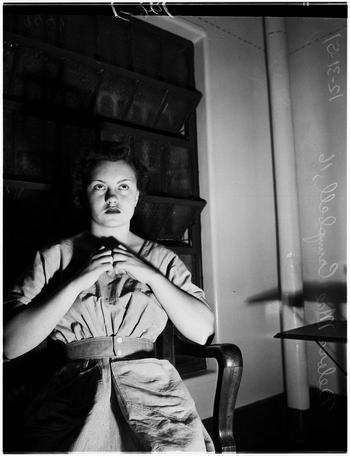
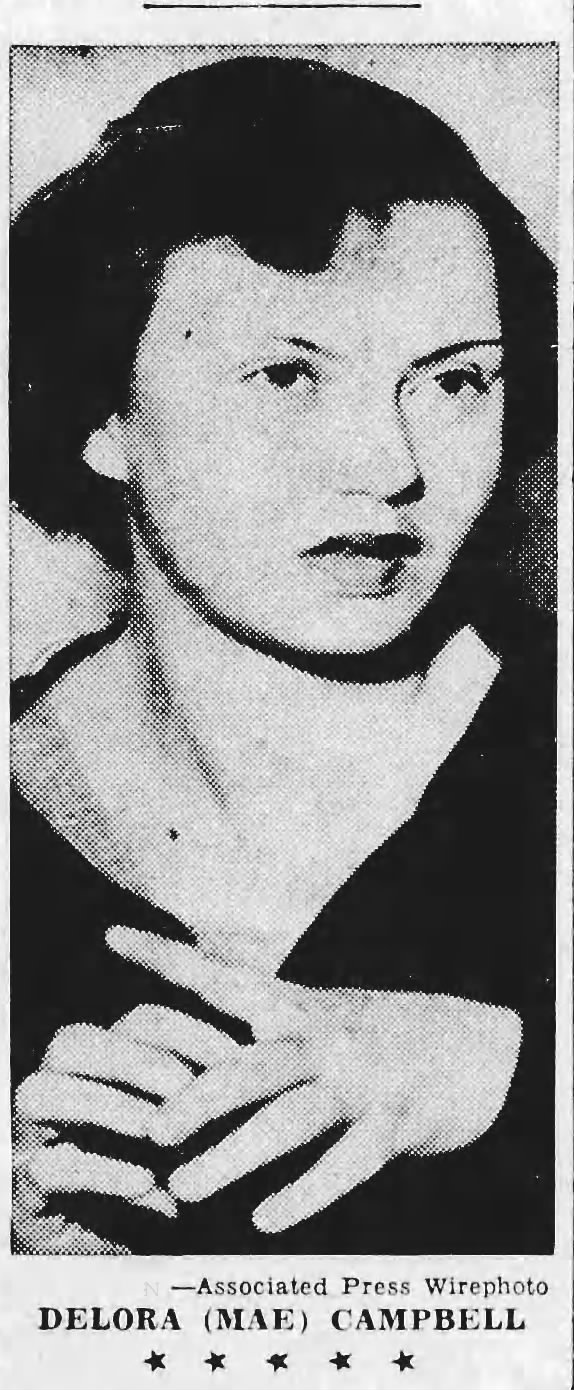
Delora Mae Campbell didn’t cry, tremble, or ask for her parents when accused of strangling six-year-old Donna Isbell. She just stood there.

Pending her hearing, authorities held her in isolation in the County Jail rather than Juvenile Hall. Sgt. Frances Cardiff, a jail matron, reported that Delora slept eight hours straight and woke at 5 a.m. on December 31st, quiet and indifferent to both her surroundings and the killing.
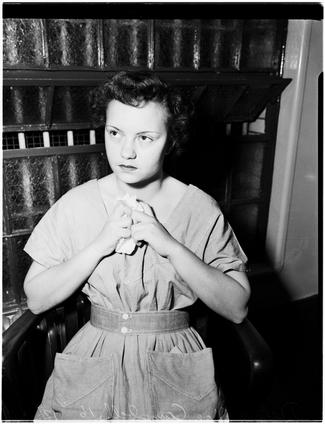
When reporters pressed her, Delora couldn’t—or wouldn’t—explain the impulse she claimed had driven her. Maybe it was a vision. Maybe she acted knowingly. “I could have been awake and actually aware of what I was doing,” she said. “I’m not sure.” Asked if she would strangle Donna again, she answered the same way: “I’m not sure.” She said she liked Donna and her older brother, Roy.

What, then, made her do it?

Donna’s parents struggled with their loss, and with a smaller heartbreak of their own. They couldn’t afford the doll Donna wanted so badly for Christmas, but they’d told her Santa would bring it for her February birthday. After the murder, a Marine, Sgt. William Thornton, and his wife, Paula, read about the unfulfilled promise and bought the doll themselves. The Isbells buried it with Donna.

Delora’s father, Clem Campbell, a truck driver from Fort Lupton, Colorado, visited her in County Jail. “We could hardly believe it,” he said. “I guess it was one of those things that just had to happen.” A strange remark from a father whose child had killed another. Not just a strange remark, but a potential window into a family culture of emotional dislocation, which may echo in Delora’s flat affect and her own comment: “I’m not sure.”

Dr. Marcus Crahan submitted a psychiatric report declaring Delora legally sane. Had he found her insane, she might have avoided adult prosecution; instead, she was nudged toward it.

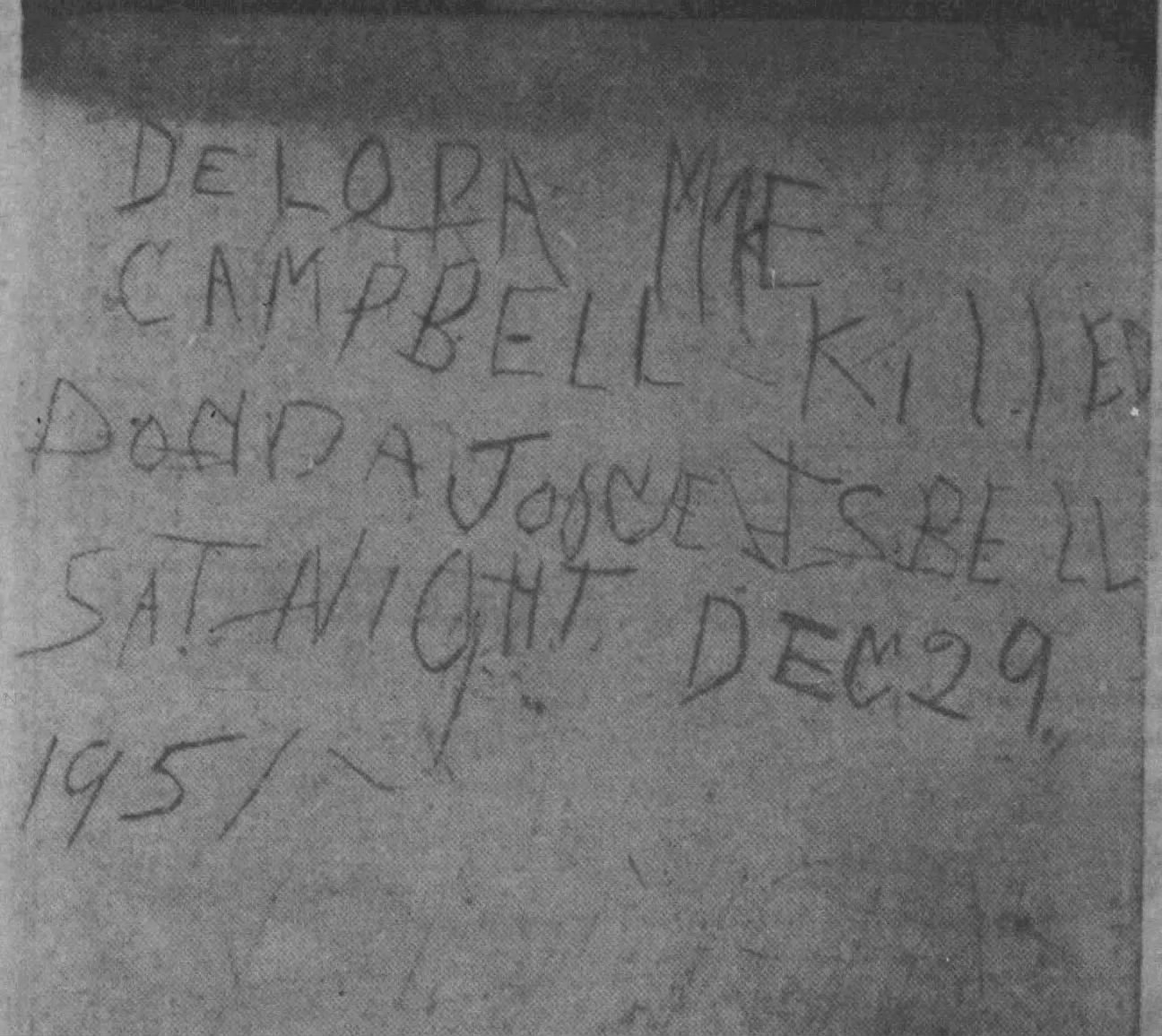
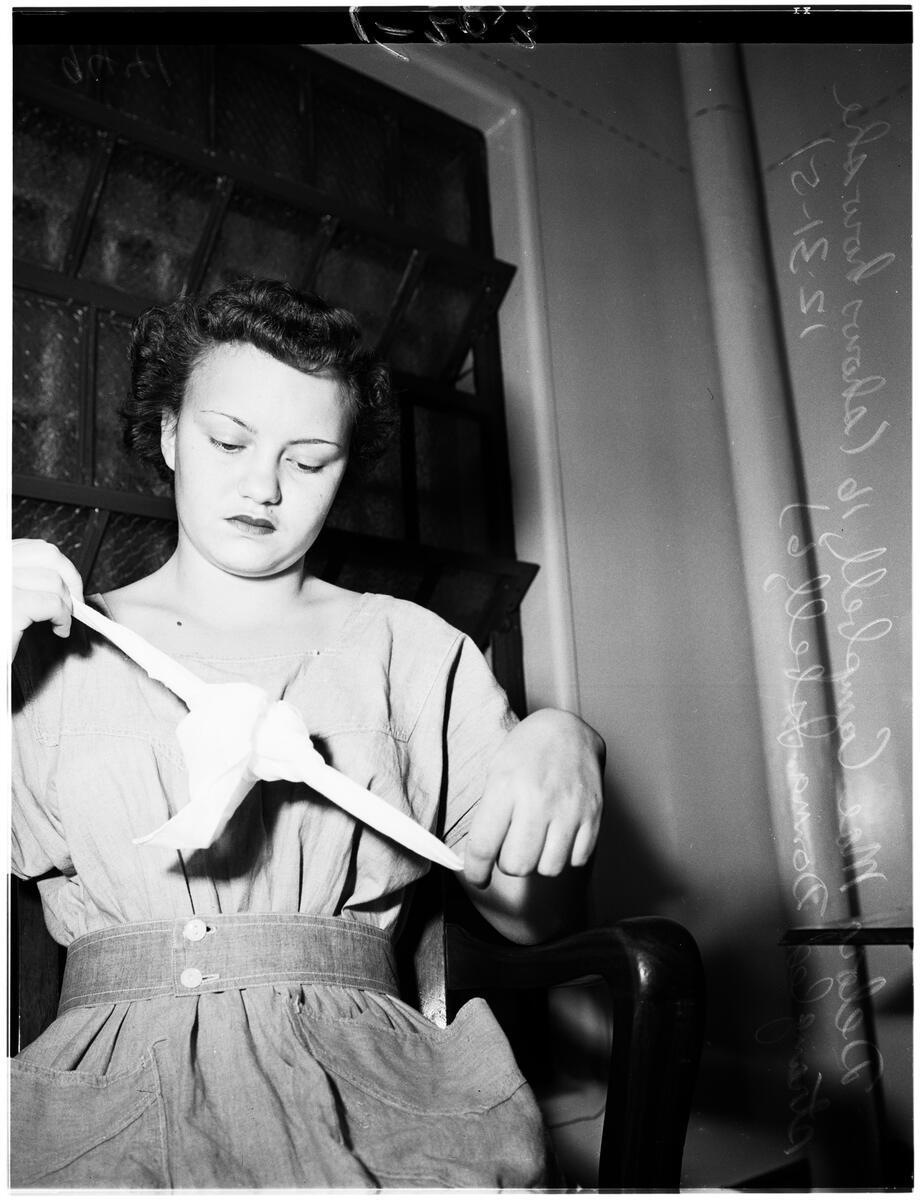
At the coroner’s inquest, Delora took the stand only long enough to say that, on advice of counsel, she would not testify. She didn’t need to. During her isolation, she took a bobby pin and scratched a confession into the enamel of her face-powder compact. No one heard the faint scrape of metal on metal as she wrote:

“DELORA MAE CAMPBELL KILLED DONNA JOYCE ISBELL SATURDAY NIGHT, DEC. 29, 1951.”

Sheriff’s Capt. William Barron asked what prompted her to carve the inscription. “Things got to bothering me a lot,” she said. “I couldn’t talk to anyone, and I felt satisfied about writing—the same as if I talked about it to someone.”
A coroner’s jury found Donna’s death homicidal and Delora probably criminally responsible. The court ordered her to Camarillo State Hospital for a 90-day observation. Afterward, Clem petitioned to have her declared insane and in need of continued care. Two court psychiatrists agreed she was mentally depressed and showed signs of a “disturbed family relationship” and “emotional illness,” but believed she might improve with treatment.
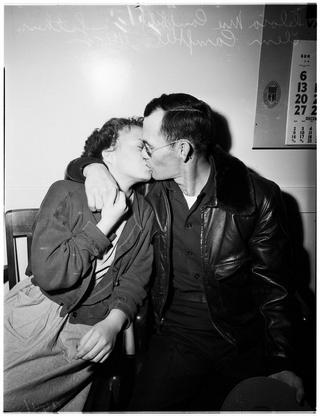
Delora’s father, Clem, visits her after her arrest.

In the early 1950s, psychiatric care for juvenile girls leaned heavily on Freudian interpretation and moral rehabilitation, supported by sedatives and occupational therapy. Whatever treatment Delora received, she followed the rules, and was rewarded with small perks.

Nobody heard anything more about her until April 1954, when she walked away from the hospital. She’d been trusted with grounds privileges for months. With about $70 earned from hospital work, she traveled by bus to Bakersfield, wandered for a few days, then grew tired of “being a fugitive.” She contacted her aunt and uncle in Long Beach—the same relatives she lived with at the time of the murder. They offered to pick her up. When she stepped off the bus at the designated spot, Los Angeles County Sheriff’s deputies were waiting. They returned her to Camarillo.
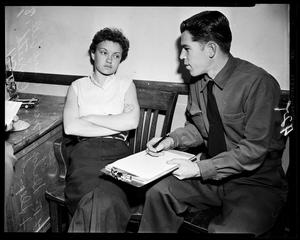
Delora returned to Camarillo after running away.

Sometime in 1956, Delora was quietly released. She returned to Colorado, married twice, had two children, and—so far as anyone can tell—never reoffended. She led a normal life.

Her case leaves behind more questions than answers. No one ever determined what tipped her into violence that December night. In photos, she often appears older than her years—haunted, guarded, carrying something she never named. It’s only an impression, but sometimes an impression is all a case like this leaves.

In the 1940s and 1950s, adolescent girls who committed serious violence often came from chaotic or emotionally barren homes, or from environments marked by humiliation, neglect, or unspoken harm. Whether Delora carried any of that with her is impossible to say. The official record confirms no abuse. It doesn’t rule it out.

Whatever drove her—trauma, dissociation, rage with no safe outlet—remains locked in the silence she maintained after her confession on the compact.
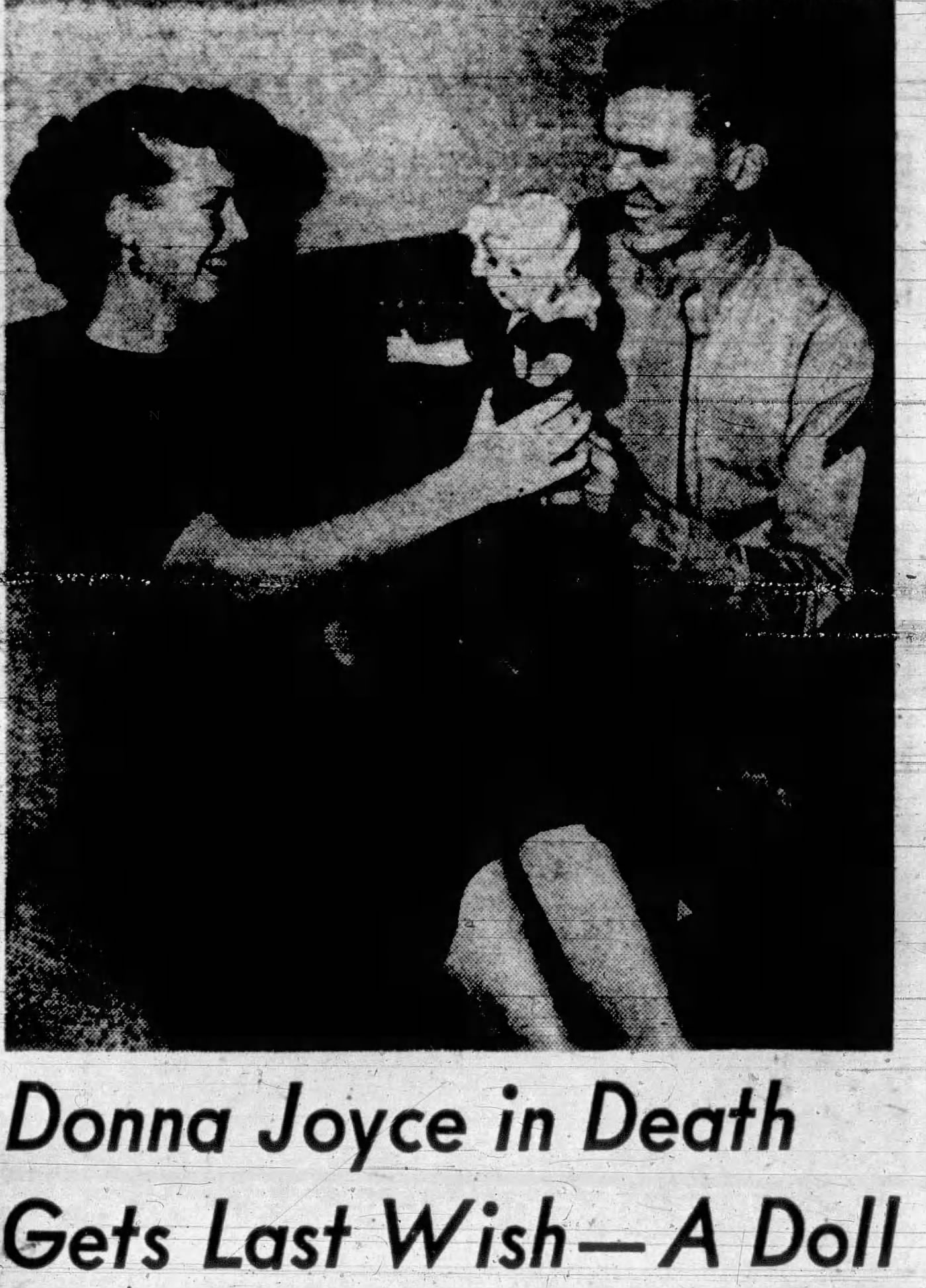
Donna was buried with the doll she longed for. Delora carried only her compact. Between them lies a single moment she called an impulse—irresistible or otherwise—and the truth of it went with her.

NOTE: This narrative draws on newspaper archives, court transcripts, and mid-century psychiatric evaluations. The official record of Delora Campbell is thin, fractured, and filtered through the lens of 1950s ideas about girls, crime, and mental disturbance. I’ve followed the trail where it leads and respected the silences where it stops. In a case built on impulse and uncertainty, the gaps are part of the truth.

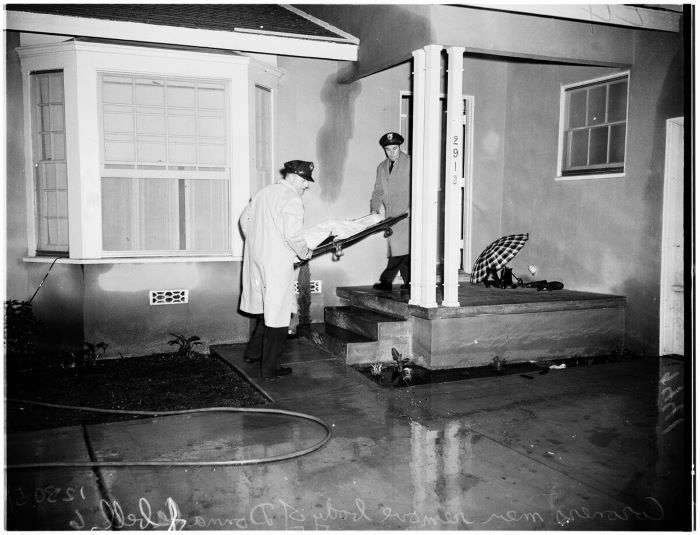
Photographs are from the USC Digital Library. Los Angeles Examiner Photographs Collection
Irresistible Impulse, Part 2

In the grip of an irresistible impulse, Delora saw a girl laid out like a doll, arms crossed, a green necktie cinched tight. The girl in the vision, six-year-old Donna Isbell, slept in the next room. Her eight-year-old brother Roy Jr., was asleep nearby. Their parents, Roy Sr., a petty officer at Los Alamitos Naval Station, and Garnett, who worked nights at Douglas Aircraft, weren’t home.

Unable to find a green necktie, Delora took one of Mr. Isbell’s black socks. That would have to do. She tore the sheet from Donna’s bed, stuffed a corner into the girl’s mouth, then wound the sock around her neck and pulled.

Donna didn’t cry out. She lifted her arms once, then went still.

Delora waited, then pulled again.

Roy, asleep just feet away, didn’t stir.

Delora obeyed the impulse that had tormented her for a long time. Maybe now it would end.

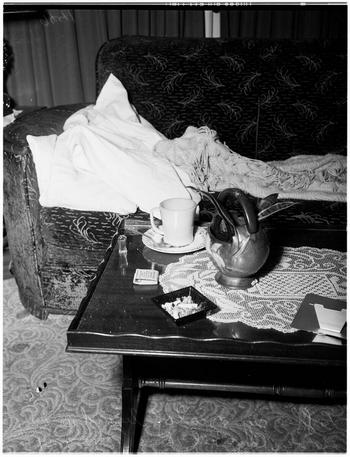
She sat on the living room sofa and lit a cigarette. The smoke steadied her for a moment, then the fear crept in—cold and absolute. She couldn’t explain what she had done—not even to herself.

She walked barefoot to the house next door and knocked. No answer. A few doors down, she found Dr. Sidney G. Willner.  “Something’s wrong… at the house. Come with me,” she said. Then, almost to herself: “I must have done it. There was no one else there.”

They walked in silence. Dr. Willner wondered what she meant. Even if she had told him, nothing could have prepared him for what he found.

Dr. Willner called the Sheriff’s Department.

Deputies took Delora to the nearest substation for questioning. Because Delora was a teenage girl, the department brought in Detective Sergeant Lena Barner to assist Captain J.M. Burns with the questioning.

 As investigators questioned the high school sophomore, they noticed her emotional distance. Sergeant Barner said when she asked Delora why she did it, “She just sat there and stared.”

The only times she showed emotion were when she saw Donna’s body at the scene and when Roy and Garnett Isbell entered the substation. Roy and Garnett were devastated.

Delora babysat Donna and Roy, Jr. several times before the murder, and she and the children got along well. The family had no reason to fear her.

As Donna’s parents tried to process their grief, Delora answered investigators’ questions.

She said quietly, “I often felt like strangling my brothers and sisters.”

She harbored violent impulses toward her siblings for a long time. Her feelings, coupled with her constant fights with her mother, were the reasons she was allowed to move from Colorado to Southern California two years earlier.

Women and girls rarely commit murder—especially in 1951. The story made headlines across the country. It was horrifying. And strange.

Was it a movie? A psychotic break? Something older and darker inside her? Could someone commit such a brutal act… and not be evil?

NEXT TIME: Wrapping up Delora’s story.

Photographs courtesy USC Digital Library. Los Angeles Examiner Photographs Collection
Irresistible Impulse, Part I

In Fort Lupton, Colorado, a fight with your mother could end in grounding. For Delora Campbell, it ended in something far darker. Life in post-war Fort Lupton revolved around church socials, 4-H clubs, and county fairs. Residents followed high school football with a passion, and the Fort Lupton Blue Devils were a source of pride. When the Blue Devils partied under the watchful eyes of adults, they danced to Patti Page’s soulful rendition of The Tennessee Waltz, or did a lively country swing to Hank Williams’ Lovesick Blues.

In the 1950s, no matter where she lived, girls had to adhere to a strict code of behavior. Delora didn’t just test boundaries — she unsettled people. According to her parents, Clem and Francis, they sometimes feared she might harm her siblings. Their fear went beyond the usual sibling squabbles — it sounded like a warning.

Was the pressure to conform to community standards too much for Delora? Or maybe it was one fight too many with her mother, or another battle with her younger brother, Dickie. Maybe she feared she would act on an impulse to harm a family member. Whatever her reasons, at fourteen she ran away from home for the first time.

The court intervened, and a juvenile judge placed her on probation.

Delora’s behavior alarmed everyone — from her parents to school authorities and local pastors. Even her peers may have found her behavior unsettling. One of the biggest fears for a girl Delora’s age was getting a reputation. No worse fate could befall her.

In postwar America, the specter of juvenile delinquency haunted dinner tables from coast to coast. It wasn’t the commie down the street that frightened people; it was their own kid — sulking in the next room, listening to Hank Williams, and thinking dark thoughts.

Historically, when teenage boys acted out, their activities were met with a nod and a wink — the old “boys will be boys” trope. If they committed a serious crime, they might be labeled thugs or delinquents, and could end up in juvenile hall.

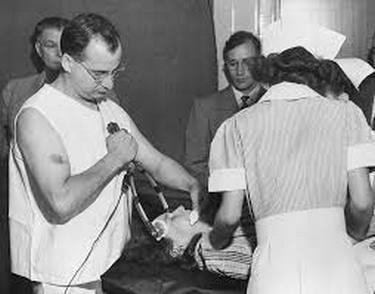
Girls faced a different kind of judgment. If they failed to measure up, they weren’t rebellious; they were hysterical, or morally compromised. Moral panic, a genuine fear in the 1950s, punished girls differently. Did Delora worry she might face serious punishment as had other girls who stepped outside expected norms? A girl who rebelled might not go to jail, but to a mental institution — until her hormones, doctors hoped, burned out the madness. Such a girl could count herself lucky if she was released without lasting damage from electroconvulsive therapy, heavy sedation, or ice baths. The belief that emotional instability was baked into the female brain dated back millennia. As one modern paper put it: “Hysteria is undoubtedly the first mental disorder attributable to women…”

Whatever was going on in Delora’s life, something caused her to run again. Was she concerned that she would harm herself or someone else? This time, she vanished for three weeks. Not knowing what else to do, her family sent her to live with her aunt and uncle in Long Beach, California. They may have wanted to spare her local infamy and give her a fresh start — or simply chose to quiet wagging small-town tongues.

The whispers in a small town can kill you.

On the surface, Delora appeared to thrive in her new environment. But was she genuinely happy, or just adapting to survive? On September 1, 1950, the Long Beach Press-Telegram listed her among a group of young people who attended a barbecue dinner where they played games and square danced.

Delora wrote home to tell her parents how much she enjoyed living in Long Beach and going to Woodrow Wilson High School. Francis was surprised — her daughter had never liked school in Fort Lupton.

Delora may have received an allowance, but sometimes when a girl needed extra cash, she took a job babysitting. For several weeks at the end of 1951, she babysat for six-year-old Donna Isbell and her eight-year-old brother, Roy.

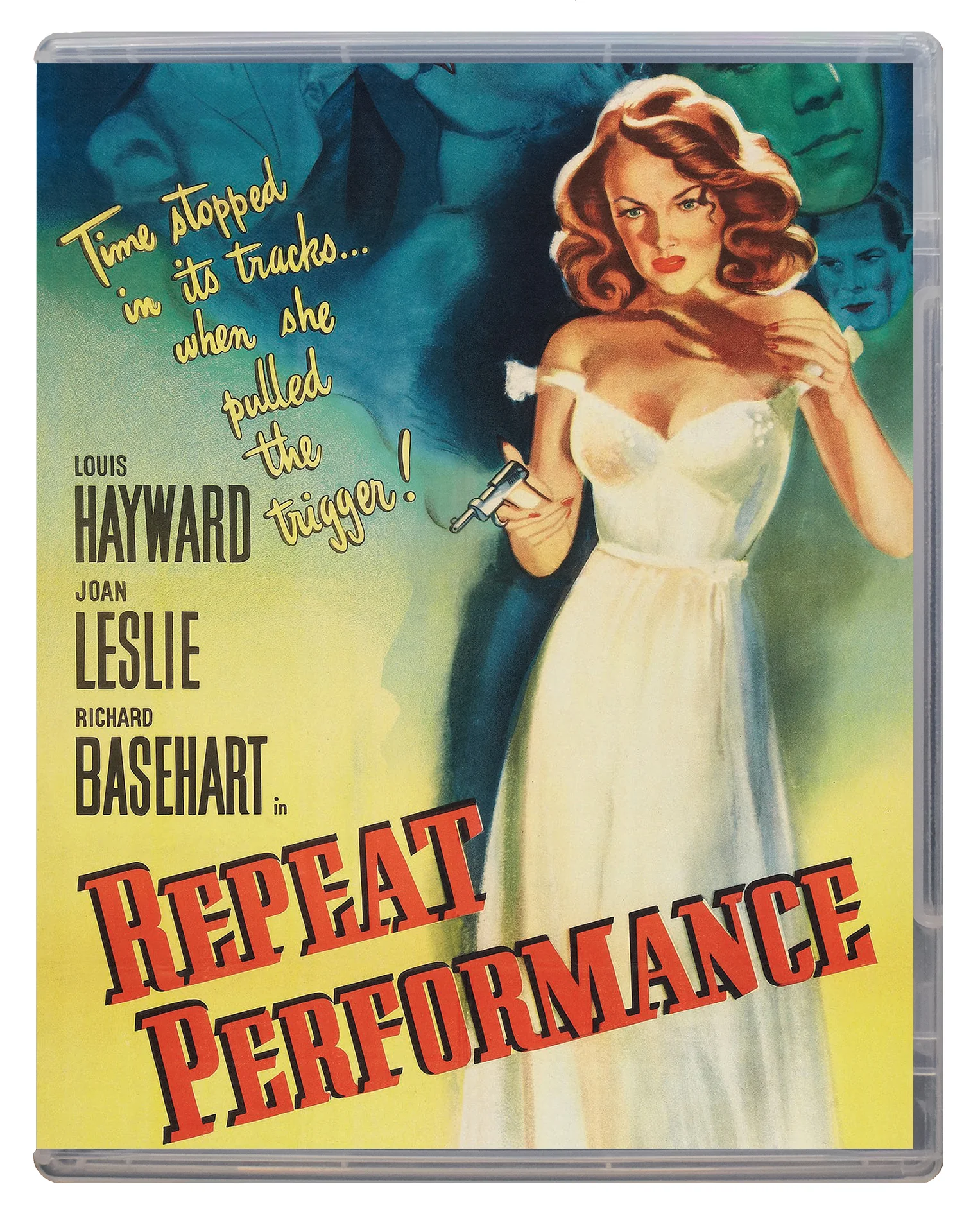
On December 29, 1951, Delora walked a few blocks from her aunt and uncle’s home to the Isbell’s to sit with the kids. After the children went to bed, she stretched out on the sofa to watch television. The flickering light filled the room as she watched the 1947 film Repeat Performance.

The movie told the story of a Broadway actress who murders her husband on New Year’s Eve, 1946. As she’s leaving the crime scene, she wishes she could turn back the clock and do the year over — and suddenly finds herself transported to New Year’s Day, 1946.

Delora watched the film to its end, a little after 11 p.m. The house was still.; Donna and Roy were asleep. For a moment, Delora sat and reflected on the film she had watched.

Then the strangest thing happened. She had a vision in which she saw herself committing murder. The vision wasn’t terrifying — it was familiar. She had often felt like choking the life out of her siblings when she lived with her family in Fort Lupton, but she had resisted.

On this night, something inside her felt different—out of her control. She felt the tug of an irresistible impulse guide her as she calmly walked toward six-year-old Donna, sleeping snug in her bed. But first, she needed a necktie.

NEXT TIME: Can Delora resist her impulse?