The Black Dahlia Case Goes Cold

Elizabeth Short’s murder dominated the front pages of the Evening Herald & Express for days following the discovery of her body.

Even in a murder case as well-publicized as the Black Dahlia, the more time that elapses following the crime, the fewer clues there are on which to report. That the case was going cold didn’t dampen the Herald’s enthusiastic coverage. The paper sought psychiatrists, psychologists, and mystery writers who would attempt, each in his/her own way, to analyze the case and fill column space in the paper as they, and the cops, waited for a break. Decades before the founding of FBI’s Behavioral Analysis Unit (BAU), shrinks and writers whose work appeared in the Herald engaged in speculative profiles of both the victim and her killer.

The Herald tapped Beverly Hills psychologist, Alice La Vere, to contribute her analysis of the victim and slayer. The paper introduced La Vere as “… one of the nation’s most noted consulting psychologists.” La Vere regularly spoke to various organizations about the problems of returning veterans. According to the newspaper, Miss La Vere would give readers, “an analysis of the motives which led to the torture murder of beautiful 22-year-old Elizabeth Short”. La Vere’s analysis is remarkably contemporary.

Here is an excerpt from her profile of Short’s personality:

“Some gnawing feeling of inadequacy was eating at the mind of this girl. She needed constant proof to herself that she was important to someone and demonstrates this need by the number of suitors and admirers with which she surrounded herself.”

La Vere described the killer.

“It is very likely that this is the first time this boy has committed any crime. It is also likely that he may be a maladjusted veteran. The lack of social responsibility experienced by soldiers, their conversational obsession with sex, their nerves keyed to battle pitch — these factors are crime-breeding.” She further stated: “Repression of the sex impulse accompanied by environmental maladjustment is the slayer’s probable background.”

How does La Vere’s profile of Elizabeth Short and her killer compare with the analysis of retired FBI profiler John Douglas? Douglas suggests Beth was “needy” and that her killer would have “spotted her a mile away.” He said that the killer “would have been a lust killer and loved hurting people.”

On the salient points, I’d say that La Vere and Douglas were of like minds regarding Elizabeth Short and her killer.

At the time of Elizabeth Short’s murder, mystery writer Craig Rice (pseudonym of Georgiana Ann Randolph Walker Craig) was one of the most popular crime writers in the country. In its January 28, 1946 issue, TIME magazine selected Rice for a cover feature on the mystery genre. Sadly, Rice is largely forgotten by all except the most avid mystery geeks (like me).

In late January 1947, the Herald invited Craig Rice to give her take on the Black Dahlia case. She summed it up this way:

“A black dahlia is what expert gardeners call ‘an impossibility’ of nature. Perhaps that is why lovely, tragic Elizabeth Short was tortured, murdered, and mutilated because such a crime could happen only in the half-world in which she lived. A world of—shadows.”

The police couldn’t catch a break. Not only couldn’t they locate the crime scene, false confessors, male and female, diverted critical resources and muddied the waters.

NEXT TIME: FALSE CONFESSORS

Black Dahlia: The Investigation Continues

LAPD detectives Harry Hansen and Finis Brown headed the investigation into Elizabeth Short’s murder. The case was challenging from the moment they arrived on Norton Street. The lack of physical evidence at the body dump site posed a problem.

A skillfully retouched photo of Elizabeth Short at the body dump site.

Police officers knocked on doors and interviewed hundreds of citizens to find the place where Beth was murdered, but they were unsuccessful.

The Herald-Express cruelly tricked Beth’s mother, Phoebe, into believing that her much loved daughter was a beauty contest winner, only to be told minutes later that she was a murder victim.

Phoebe Short at Beth’s inquest. Photo courtesy LAPL.

Murder victims lose their right to privacy; every secret revealed. To fill column space while reporters tracked multiple leads, the Herald looked to psychiatrists, Beth’s acquaintances, and even mystery writers, to speculate on the case, which they did with creative abandon.

The Herald sought the opinion of LAPD’s shrink. Dr. Paul De River. He wrote a series of articles for the paper in which he attempted to analyze the mind of the killer. De River wrote the killer was a sadist and suggested that: “during the killing episode, he had an opportunity to pump up effect two sources — from his own sense of power and in overcoming the resistance of another. He was the master, and the victim was the slave”.

Dr. J. Paul De River

In a chilling statement, De River hinted at necrophilia—he said: “It must also be remembered that sadists of this type have a super-abundance of curiosity and are liable to spend much time with their victims after the spark of life has flickered and died.”

Reporters interviewed people who had only a fleeting acquaintance with Beth. They weighed in on everything from her hopes and dreams to her love life. Beth was, by turns, described as “a man-crazy delinquent”, and a girl with “childlike charm and beauty”. Many people who claimed to be close to her said that she aspired to Hollywood stardom. The claim Beth longed to be a star is a myth, likely based on letters she wrote to her mother. Beth wanted to keep the truth of her life in Southern California from her mother; for instance accepting rides from strangers and moving constantly. No mother wants to hear that, so the Hollywood lie came easily. A believable fiction when you are young and pretty. The interviews yielded nothing of value in the hunt for the killer.

While working at Camp Cooke, Beth Short was voted “Camp Cutie.”

While the experts opined, Aggie canvassed Southern California for leads. She was twelve years into her career with the Herald-Express when the Black Dahlia case broke. In her 1949 autobiography, Newspaperwoman, she said she came across Elizabeth’s nickname when she checked in with Ray Giese, an LAPD homicide detective-lieutenant. According to Aggie, Giese said, “This is something you might like, Agness. I’ve found out they called her the ‘Black Dahlia’ around that drug store where she hung out down in Long Beach.” She immediately dropped the ‘Werewolf’ tag.

Aggie interviews a woman (unrelated to Dahlia case.)

A few days passed and police located the mystery man, Robert M. Manley, known by his nickname, Red. Early on the morning of January 20, 1947, Aggie interviewed the 25-year-old salesman. The first thing she said to him was, “You look as if you’ve been on a drunk.” Manley replied, “This is worse than any I’ve ever been on.”

Robert “Red” Manley busted in Eagle Rock. Note his wedding ring. I wonder if he wore it when he gave Beth a ride. Photo courtesy of LAPL.

Aggie told him he was in one hell of a spot and advised him to come clean. Harry S. Fremont, an LAPD homicide detective, looked over at Manley and said, “She’s right, I’ve known this lady for a long time, on lots of big cases, and I can tell you she won’t do you wrong.”

Manley told his story, and Aggie was smart enough not to interrupt him. Red said he picked Beth up on a San Diego street corner early in December. He confessed that the night he spent with Beth in a roadside motel was strictly platonic and concluded with, “I’ll never pick up another dame as long as I live.”

The story ran in the Herald with the headline: “Night In a Motel”, and Aggie got the byline. She was the only Los Angeles reporter to get a byline in the case.

Aggie’s Black Dahlia by-line

The morning following her interview with Red Manley, her editor yanked Aggie off of the case. She said, “… the city editor benched me and let me sit in the local room without a blessed thing to do.”

The no-assignment routine resumed the next day. Aggie said she sat for about three hours, then started on an embroidery project. Every person who saw Aggie with her embroidery hoop roared with laughter. She kept at it until quitting time.

Day three—Aggie prepared for more embroidery when the assistant city editor that told her that because of an overnight decision, she was to go back to LAPD homicide and continue working leads.

Aggie barely had time to pull out her notebook out of her handbag before management pulled her off the case again. This time, permanently. Aggie’s new assignment—city editor. Nobody was more shocked than Aggie. She deserved the promotion. With 20 years in the newspaper business, she possessed the necessary skill set to be an effective editor. She became one of the first women in the United States to hold a city editorship on a major metropolitan daily. She enjoyed running the editor’s desk, and did a phenomenal job, but she confessed she missed being in the field chasing a story.

One of the conspiracy theories that surrounds Beth’s murder involves Aggie. Some believe she got too close to a solution in the murder, and the killer(s) arranged to have her promoted out of the way. That means whoever murdered Beth had enough juice with the Herald to influence personnel decisions. I think that is nonsense. The paper’s owner, William Randolph Hearst, had no reason to tamper with Aggie’s successful coverage. Additionally, as city editor, Aggie handed out assignments and directed the activities of all the reporters in the newsroom. She knew everything they uncovered. The timing of Aggie’s promotion is a sidebar, not a conspiracy.

NEXT TIME: The Black Dahlia case goes cold — or does it?

Going Walkabout with Esotouric

After nearly three years, I am pleased, no, I am giddy, to announce that I will be reuniting with my Esotouric crime buddies, Kim Cooper and Richard Schave on Saturday, January 14, 2023, for their tour, HUMAN SACRIFICE: THE BLACK DAHLIA, ELISA LAM, HEIDI PLANCK & SKID ROW SLASHER CASES.

We won’t be on the bus as we were pre-pandemic. We will be stalking the mean streets of downtown Los Angeles (I’ll forego my vintage peep-toe pumps for something more suitable) to shine a light on unsolved mysteries, and heinous crimes.

One of the cases I’ll talk about is the 1943 murder of William Lederer, the owner of the Roseland Roof, a dime-a-dance hall on Spring Street. It is unhinged.

Please join us. Sign up HERE. I am so excited!

Black Dahlia—January 8, 1947

This post begins my annual coverage of the unsolved murder of Elizabeth Short, the Black Dahlia.

Seventy-six years ago, on January 8, 1947, Robert ‘Red’ Manley drove to the home of Elvera and Dorothy French in Pacific Beach, in the San Diego area, to pick up a young woman he’d met a month earlier. Her name was Elizabeth Short.

Red was a twenty-five-year-old salesman and occasional saxophone player, with a wife, Harriette, and 4-month-old baby daughter at home. The couple married on November 28, 1945. They lived in a bungalow court in one of L.A.’s many suburbs.

Red enlisted in the Army on June 24, 1942. He was 20 years-old. In January 1945, He entered a hospital for treatment of a non-traumatic injury, and the Army discharged him in April of the same year for medical reasons—but not for any residual condition.

Maybe his injury made it difficult for him to adjust to marriage and parenthood. He said that he and Harriette had “some misunderstandings.” Restless and feeling unsure about his decision to marry, Red decided to “make a little test to see if I were still in love with my wife.” The woman Red used to test his love was twenty-two-year-old Elizabeth Short.

Red traveled for his job and it was on a trip to San Diego that he met Elizabeth. She was standing on a street corner and appeared to need a ride. At first, she seemed reluctant to get into his car. But in an instant, she changed her mind and got in. She introduced herself as Beth Short, and they struck up a conversation. When Red returned to Los Angeles, the two corresponded.

Aztec Theater, San Diego

Dorothy French met Beth on the night of December 9, 1946 at the all-night movie theater, the Aztec, on Fifth Avenue. Dorothy worked as a cashier at the ticket window and she noticed Beth seemed at loose ends. When her shift ended at 3 a.m., Dorothy offered to take Beth back to the Bayview Terrace Navy housing unit she shared with her mother and a younger brother. Beth was glad to abandon the theater seat for a comfortable sofa.

Dorothy French

Weeks passed, and Elvera and Dorothy grew tired of Beth’s couch surfing and contributing nothing to the household. She didn’t even pay for groceries. She received a money order for $100 from a former boyfriend, Gordon Fickling, yet she spent much of her time compulsively writing letters, many of which she never sent.

One of the unsent letters was to Gordon. In the letter dated December 13, 1946, Beth wrote:

“I do hope you find a nice girl to kiss at midnight on new years eve. It would have been wonderful if we belonged to each other now. I’ll never regret coming West to see you. You didn’t take me in your arms and keep me there. However, it was nice as long as it lasted.”

The French family had another complaint about their house guest—despite her claims, there was no evidence that Beth ever looked for work. Beth wrote to her mother, Phoebe, that she was working for the Red Cross, or in a VA Hospital, but it was just one of her many lies. Her letters home never revealed her transient lifestyle—nothing about couch surfing, borrowing money to eat, or accepting rides from strange men.

Robert “Red” Manley. Photo likely taken by Perry Fowler. Courtesy LAPL.

Beth could have found a job if she wanted one. She worked in a delicatessen in Florida as a teenager and at the post exchange (PX) at Camp Cooke (now Vandenberg Air Force Base). Red arranged with a friend of his to get her a job interview—but she didn’t follow-up.

When Red heard from his friend that Beth was a no-show for the job interview, he wrote to her to find out if she was okay. She said she was fine but didn’t like San Diego; she preferred Los Angeles and wanted to return there. Red said he’d help her out.

The drive from San Diego to Los Angeles was Red’s love test. If nothing happened, then he would know that he and Harriette would stay together. Kismet. But if he and Beth clicked, he’d have a decision to make.

Beth and Red weren’t on the road for long before they stopped at a roadside motel for the night. They went out for dinner and drinks before returning to their room to go to bed. Did Red have butterflies in his stomach? How did he want the love test to turn out?

Red must have realized the decision was Beth’s. They never shared more than a kiss. She spent the night in a chair and he took the bed.

The pair left the motel at about 12:20 p.m. on January 9, 1947, for Los Angeles.

Next time: The Black Dahlia–Last Seen

Premature Burial

The following tale is especially terrifying for me. Maybe it was my childhood reading of the Edgar Allan Poe story, The Premature Burial, that has given me an absolute terror of being buried alive. Maybe I had a previous life in Victorian England where their fears of being buried alive reached hysterical levels.

Assuming I predecease him, I’ve instructed my husband to allow me ripen before disposing of my body. Seriously. I know that of the fates likely to befall me, premature burial is way down on the list. This is one of those fears that resists common sense.

I know I’m not alone because clever Victorians devised various methods to avoid premature burial, like the safety coffin. No. I am not making this up.

Some coffins, like the one below, allowed the incarcerated victim to wave a flag, ring a bell, and to speak through a tube that reached to the surface to let passersby know someone alive was inside. In fact, such a coffin may be the origin of the saying, “saved by the bell.”

Enough about my personal fears—and forgive my digression. Let’s get to the story of Marie Billings who faced my biggest terror and lived to talk about it.

Late in the afternoon of May 9, 1928, Marie Billings answered a knock on her front door. A man stood waiting for her. He was tall, about 6’ 4”, and wore a dark suit with a grey pinstripe. He said he was a real estate salesman and interested in purchasing the home she shared with her husband, Howard, a local manufacturer.

Marie and Howard didn’t plan to sell their home at 5911 Allston Street in Montebello. Even so, she figured that there was no harm in listening to the salesman’s pitch. The two began a conversation and he followed her in to the house.

Without warning he slugged her over the head with a club he must have had concealed. Marie struggled in vain. Her attacker ripped her clothing and bound her with an electrical cord. Rendered helpless, she felt a silk stocking wind around her throat as the man choked her into unconsciousness. The stocking was removed from her neck and used to gag her. She was wrapped in a blanket and carried to his car, a Ford coupe.  

1928 Ford coupe

He drove her about eight miles to Turnbull Canyon in Whittier. Marie lay unmoving in the dirt. The man bent down and felt her pulse. She was still alive, so he beat her with an iron bar to finish her off.

Satisfied that she was dead, he covered her with dirt, brush, and leaves. He drove away.

Map of route from Marie’s home to Turnbull Canyon

Marie awoke and realized she was in a grave. HER grave. She resisted the urge to scream. Unable to breathe, she fought her way to the surface. She had just enough strength to free herself.

Badly beaten, Marie crawled two hundred yards to a nearby road. In her arms she carried the bloody blanket in which she was wrapped by her kidnapper. Her restraints trailed behind her.

She reached the road and flagged down a car driven by by W. J. Collins, a taxi driver. Collins drove her to the Murphy Memorial Hospital in Whittier.

Murphy Memorial Hospital

Medical staff phoned the Los Angeles County Sheriff’s Department.

Under the direction of Captain William Bright, an investigation into Marie’s assault and attempted murder began.

Marie recovered enough to be interviewed by detectives. She gave a chilling account of her battering at the hands of a man she said seemed familiar. He was the same real estate agent who visited her home a year earlier.

Claude Peters of the homicide squad interviewed Mrs. Robert D. Ellis, who lived within a block of the Billings home.  Based on Marie’s description of her attacker, Mrs. Ellis thought she recalled seeing him. She said, “I saw a man leaving the Billings house two or three days before the attack. He was carrying a large package and got into a Ford coupe and drove away.”

Based on the scant evidence they possessed, the sheriff’s department introduced an interesting theory of the crime that included a second suspect. They suggested that two accomplices battled to the death over Marie’s $500 diamond ring.

Alternatively, a second man may have witnessed the crime and attempted a rescue, which ended in his own death and burial.

Howard, Marie’s husband, began his own investigation. He visited the makeshift grave and found a piece of torn clothing with a powder-burned bullet hole. He delivered the potential evidence to Captain Bright.

In a search of the Billings home, deputies found a length of pipe with one clear fingerprint on it. They hoped that it would lead them to a suspect—it did not. Tantalizing bits of evidence that led nowhere.

The case went cold. Detectives never found a second grave, and the identify of Marie’s attacker stayed a mystery.  

This is one of those cases that will remain an itch I can’t scratch. I can only imagine how much it bothered the investigators who worked it at the time.

The man who attacked Marie was a sadistic monster. Did he commit other crimes? We will never know.

One Hundred Forty Dollars a Day, Conclusion

Imagine being 31-years-old and looking at life in prison. Craig Coley didn’t have to imagine it.

There are few decent options for a man in prison, but dozens of opportunities for him to further screw up his life.  Craig faced a choice. He could involve himself in gangs, drugs and violence, or he could preserve his humanity.

Craig chose the latter.

He maintained his innocence from the moment of his arrest, and he never wavered.  But protestations of innocence are not evidence.  The guilty often shout the loudest about how they have been betrayed by the legal system.  

Craig adjusted to prison, as well as anyone can, but a part of him never gave up hope. Another lifer at Folsom taught him how to make jewelry. He placed his items in the gift shop and sent the proceeds to his mom to hire investigators.
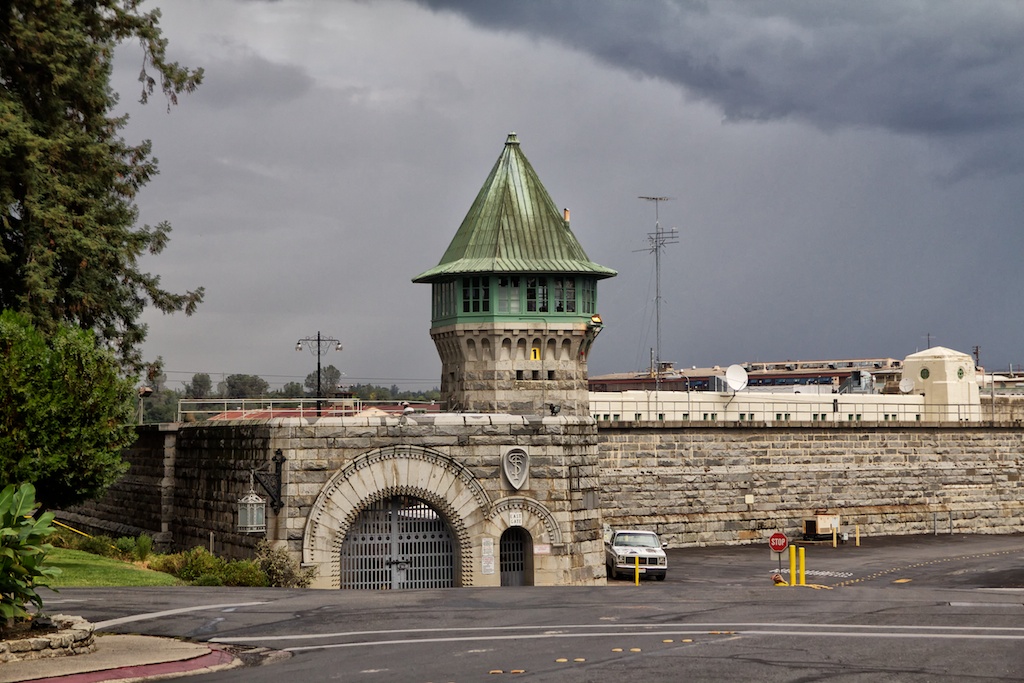
Folsom Prison

As Craig faced his tenth year in prison, a Simi Valley detective, Michael Bender, came across Craig’s case file. After reading it over he said, “. . . a real investigation hadn’t occurred.”

Mike Bender

Soon after reading the file, Mike went to visit Craig in prison.  He talked to Craig, and at the end of it he believed in Craig’s innocence.  He said, “In dealing with a lot of bad guys over the years, there are mannerisms and body language you come to know. He [Craig] didn’t have that.”

Craig had gained a tough advocate who understood the system.  Mike didn’t just appear tough. In 1985 he earned the title of Toughest Cop Alive. He competed against cops from the world over.

The competition is based on athletic prowess. When he won the world competition Mike was 450 points ahead of his nearest competitor. Mike earned the title several times.

To have even the slightest chance of winning Craig’s release, Mike needed every bit of physical and mental strength he possessed. He didn’t know it but he had entered a marathon.

Back at Simi Valley PD, Mike talked to his supervising lieutenant, the same man who was in charge of the original murder investigation. He was not interested in having the Coley case second guessed and possibly overturned.

Unwilling to give up, Mike took Craig’s case to the city manager, city attorney, a local congressman, the attorney general of the State of California, the ACLU and the FBI.

In 1991, Mike was ordered to stop pushing the case or face termination. Mike quit the police department and left Simi Valley. He took with him 16 boxes of files that Craig’s mother had amassed.

Every Saturday Mike and Craig talked on the phone. Mike visited the prison when he could. His daughter or Craig’s mother would often accompany him (Craig’s father passed away in 1989).

Rather than dwell on what seemed impossible, Craig put his energy into running a support program for incarcerated veterans. He was a mentor and a model prisoner.

Craig became a practicing Christian in 2005. He said it helped him “cut out all the nonsense.” He earned degrees in theology, Biblical studies and Biblical counseling.

Mike and his family moved to Northern California in 1991. They stayed there until 2003, when they relocated to Carlsbad near San Diego.

During all those years, Mike never stopped trying to get Craig’s case re-examined.

A turning point in the case came in September 2015 when then Gov. Brown agreed to conduct an investigation. In 2016, Mike met with David Livingstone, the new Simi Valley Police Chief, who began his own investigation with the Ventura County District Attorney’s office.

On November 11, 2017—the 39th anniversary of the crime—investigators went back to the apartment building where the crime occurred. They went to the apartment where the neighbor said she saw Coley’s truck and looked out the window at 5:30 a.m.—as she said she did. The investigators determined that the lighting conditions made it difficult to see any details on vehicles below and that it was impossible to see inside any vehicle.

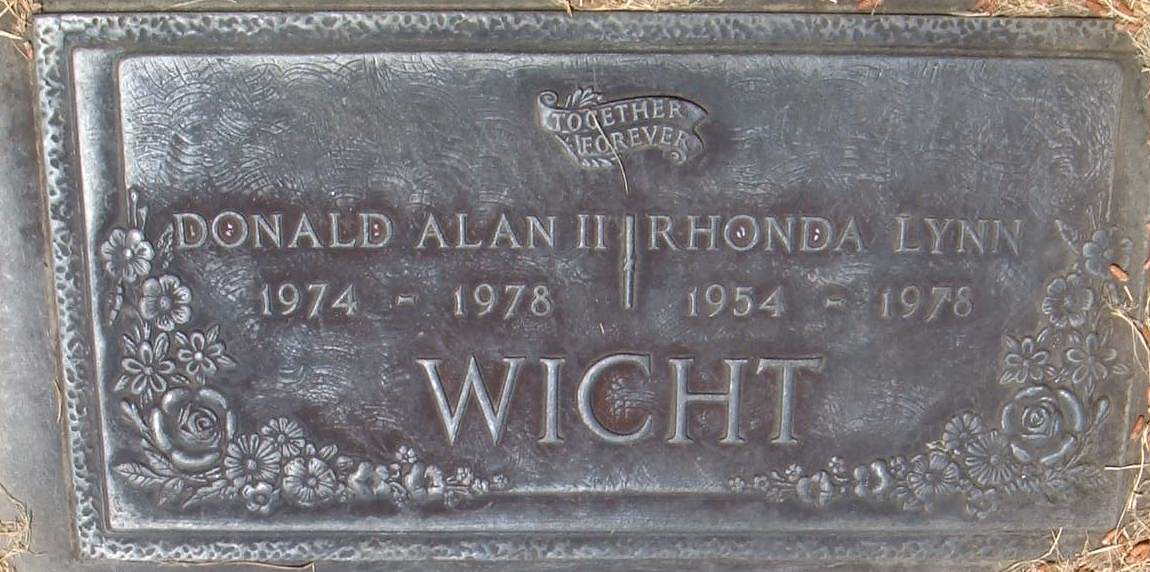
In many cases where someone is wrongly accused it is DNA evidence that is the key that unlocks the cell door. It was no different for Craig.  DNA evidence which was supposed to have been destroyed, was discovered in storage at the original testing lab. The sperm, blood and skin cells on Rhonda’s sheets and clothing belonged to another man.

No DNA evidence was found to connect Craig to Donnie’s murder, either.
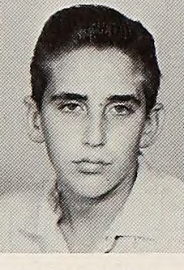
Craig Coley in High School c. 1964 ate 16

On November 22, 2017, Governor Brown granted Coley a pardon based on innocence. The pardon said, “Mr. Coley had no criminal history before being arrested for these crimes and he has been a model inmate for nearly four decades. In prison, he has avoided gangs and violence. Instead, he has dedicated himself to religion. The grace with which Mr. Coley has endured this lengthy and unjust incarceration is extraordinary.”

Craig was released later that day, in time to spend Thanksgiving dinner with Mike and his family.  About his release, Craig said, “You dream about it, you hope for it, but when it happens, it’s a shock. To experience it was something I never thought would feel as good. It was joy, just pure joy. I got all tingly in my stomach and then I was bawling like a baby for a while.”

On November 29, an attorney for Coley asked that Coley’s conviction be vacated. That motion was granted and the judge issued a finding of actual innocence.

In February 2018, Gov. Brown approved a $1.95 million payment. That is $140 for each day he was wrongfully behind bars.

In June 2018, Coley filed a federal civil rights lawsuit seeking damages from the city of Simi and Ventura County. In February 2019, Simi Valley settled with Coley for $21 million.

That Craig fought to win his release is no surprise; but why did Mike spend 28 years of his life fighting for Craig’s freedom?  Mike summed it up, “I always believed in truth, integrity and honor. “I’m glad this story has a happy ending. If I was on my deathbed knowing he was still in prison, I would have had a hard time with that.”

EPILOGUE

Following Craig Coley’s release from prison there was a new suspect in the murders of Rhonda and Donnie Wicht – Joseph James DeAngelo – the Golden State Killer. 

This headline dated June 16, 2020

DNA cleared Craig of the murders, and it also cleared DeAngelo. 

Joseph James DeAngelo, the Golden State Killer

Unless the killer is dead or incarcerated, Rhonda and Donnie’s killer is still out there.
One Hundred Forty Dollars a Day

Ohio native, Edgar Hamilton, a machinist, moved his young family to Pasadena, California in the late 1950s.  The Hamilton’s were among the many thousands of new SoCal residents who chose to leave the harsh Midwestern winters behind them – and who could blame them?

The Southern California landscape was a patchwork of bean fields and orange groves. Summer nights smelled of jasmine. The post-war housing boom made it possible for working-class families to achieve the dream of a ranch style home with a backyard swimming pool.

If you visited Knott’s Berry Farm it was for a chicken dinner, homemade biscuits and boysenberry pie. Disneyland’s Matterhorn Mountain was the park’s main attraction.

Until the late 1960s, the vibe stayed the same in SoCal. It changed everywhere in the late 1960s. Assassinations, protests and Vietnam dominated the news cycle.

Around 1970, the Hamilton family moved out to Simi, in Ventura County. Many working-class people migrated to Simi then. They came largely from East and Central Los Angeles. The population of the Simi Valley swelled – in fact the Route 101 corridor became a full-fledged freeway, but life was still lived at a slower pace than in L.A.
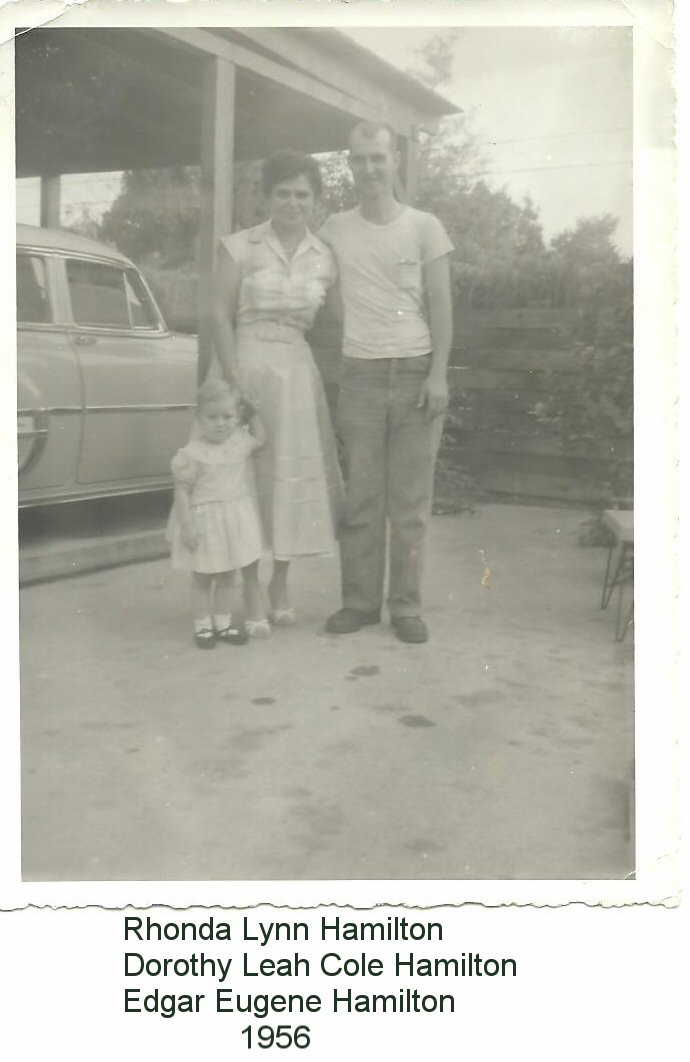
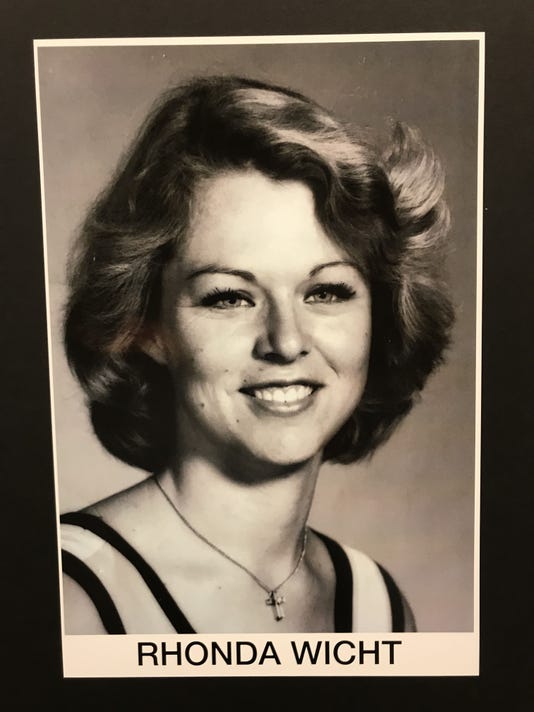
Edgar’s family thrived. His oldest daughter, Rhonda, married young and for a while she lived in Texas.  Her marriage to Donald Wicht failed – but not completely – they had a beautiful son, Donnie.  He was the light of Rhonda’s life.
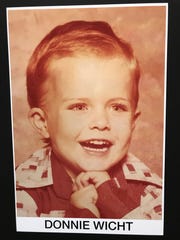
Following her divorce in 1977, Rhonda and Donnie returned to Simi. Rhonda waitressed to provide for herself and her son, and to pay for cosmetology school. She fixed her gaze on the future.

Rhonda’s younger sister, Rachelle (Shelley), planned to attend a wedding on November 11, 1978. Rhonda promised to do her hair.

On the morning of the wedding, Shelly telephoned Rhonda to let her know she would soon be on her way over. Rhonda didn’t answer.  Shelley tried again. Still no answer.

Now Shelley was starting to worry and her uneasiness turned into action. She got into her car and sped over to the Tierra Apartments at 1861 Byers Street, where Rhonda and Donnie lived.

Shelley found the front door of the apartment locked.  She stood outside. She had an overwhelming sense of dread.  She phoned her husband, and it was he who entered the apartment through a window. Shelley said, “. . . when I got inside, I just stood in the living room.  I couldn’t go any farther.  I went downstairs, called my parents, and the rest was a blur.”

Rhonda was beaten, raped, and a macramé rope was pulled tight around her neck. Four-year-old Donnie was suffocated to death with a pillow. One of his arms dangled over the side of his bed.

Someone phoned the police.  Shelley phoned her parent’s home and got her younger brother, Rick. She may have been incoherent, but he got the message. He said later, “I knew something was wrong, so I jumped into my car, and when I got there, no one stopped me; I just walked right into a crime scene.”

Rick sleepwalked through the rest of his senior year at Royal High School. He said he was just trying to get to his graduation.

Rhonda’s family was devastated. She didn’t have any enemies. She was a kind and caring twenty-four-year-old with a toddler. Who would want them dead?
Police found only one person who may have had it in for Rhonda.  Craig Coley.

The 31-year-old restaurant night manager was Rhonda’s steady boyfriend until recently. Rhonda wanted to end their relationship.

Simi police had questions for Coley, so they went out to find him and bring him in.

NEXT TIME: A suspect is arrested.

MIDNIGHT IN THE DESERT –A CONVERSATION ABOUT HISTORIC LOS ANGELES CRIME

https://soundcloud.com/joan-renner-708189114/03-10-2020-joan-renner-deranged-la-crimes-midnight-in-the-desert/s-WnZ2tAvfw98
MY INTERVIEW WITH DAVE SCHRADER ON MIDNIGHT IN THE DESERT

On March 10th, B.C. (before Covid) I was interviewed by Dave Schrader for his wonderful radio show, MIDNIGHT IN THE DESERT. We talked for 3 hours about historic Los Angeles crime.

When I first agreed to do the interview I wondered how we would fill the time. By the 2 1/2 hour mark I knew we’d never be able to cover everything. The time flew. Dave is a terrific host and I recommend that you check out his show. I hope to make a return visit sometime during the summer.

Dave’s area of expertise is the paranormal, but he also has an interest in crime. Here’s a little more about Dave:

Dave Schrader has been one of the leading voices of the paranormal since 2006 when he launched his wildly popular talk show, Darkness on the Edge of Town on Twin Cities News Talk – Minneapolis’s top-rated AM talk station.

The show grew to become one of the station’s most successful shows and most-downloaded podcasts, expanding Schrader’s reach globally. Seeing an opportunity, Schrader moved his show to Chris Jericho’s network of shows on PodcastOne, where he further expanded his worldwide audience.

You can find Dave on MIDNIGHT IN THE DESERT.

30 More Years of Crime in L.A.

When I  began this blog in December 2012, I arbitrarily chose to examine crime in Los Angeles during the years from 1900 to 1970.  Now, however, I think it is time to expand the purview to include the decades of 1970, 1980 and 1990 to encompass all of the last century. In terms of crime in the City of Angels, the last three decades of the 20th Century are enormously interesting.

The 1970s have been called one of the most violent decades in U.S. history. Homicide rates climbed at an alarming rate and people felt increasingly vulnerable.
dirtyharry

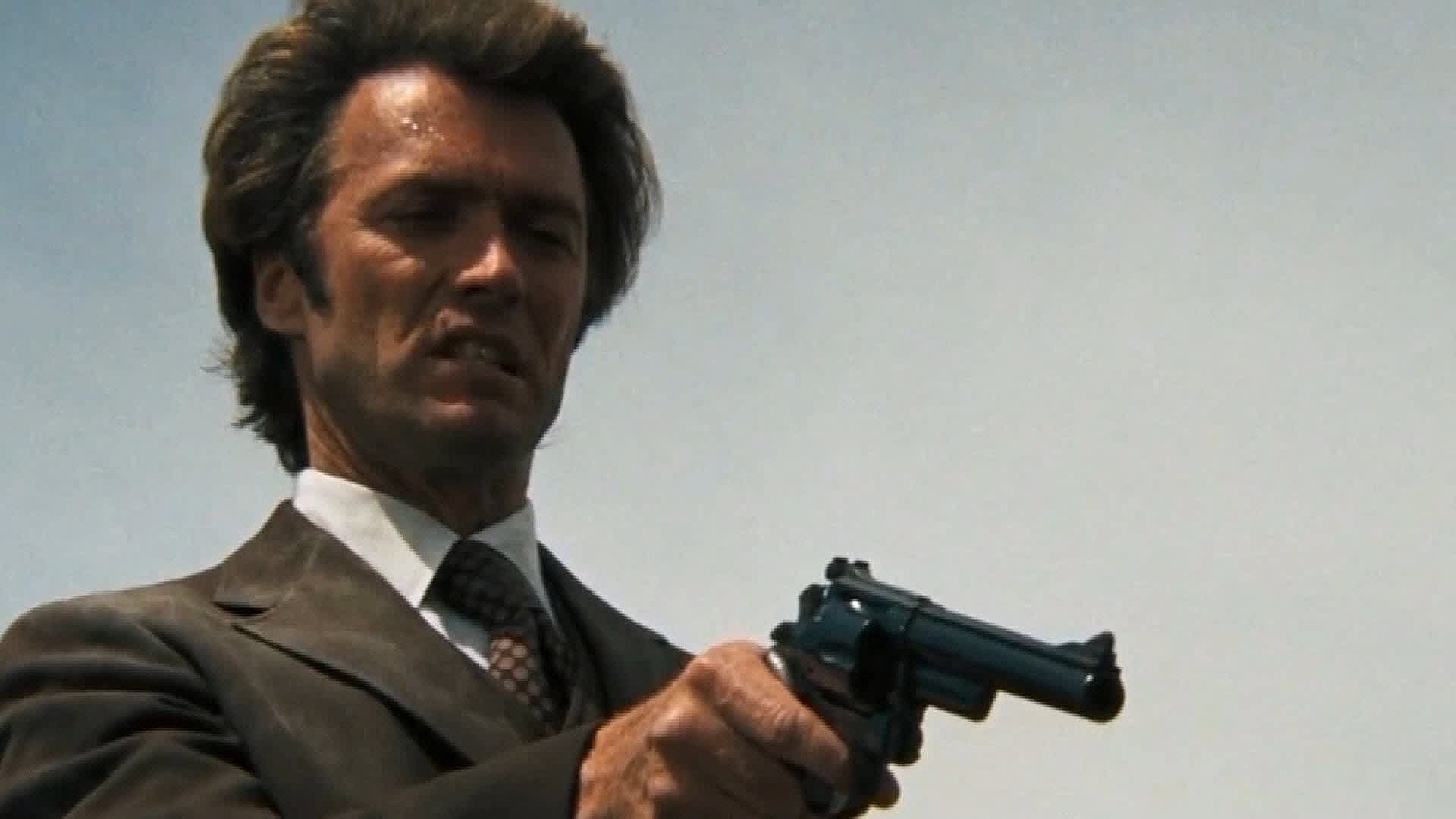
Clint Eastwood as Dirty Harry

Hollywood contributed to popular culture, and helped fuel the debate on crime and punishment, with a slew of vigilante films like Dirty Harry and Death Wish. The films  showed bad guys being blown away by impressively large weapons.  It was cathartic, but not terribly realistic.

It was during the ’70s that the bogeyman got a new name when FBI Investigator Robert Ressler coined the term “serial killer”.

In 1978 convicted rapist and registered sex offender, Rodney Alcala, appeared on the Dating Game. Why wasn’t he more thoroughly vetted by the show’s producers? I have no idea. Even more astounding than his appearance was the fact that he won! The bachelorette who selected Rodney ultimately declined to go out with him–she found him “creepy”. He’s currently on California’s death row and is believed to have committed as many as 50 murders.
ramirez_108a

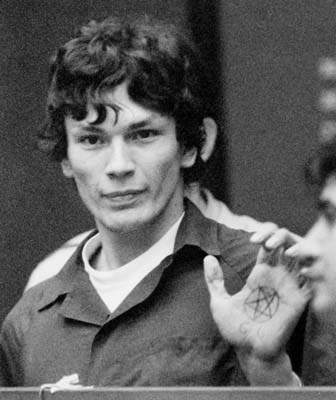
Richard Ramirez aka the Night Stalker, flashes a pentagram on his palm.

Some people joined cults where they banded together with like-minded folks for spiritual comfort and to retreat from the scary world-at-large. But there is not always safety in numbers, and evil can assume many guises. In 1978, over 900 members of the People’s Temple died in a mass suicide commanded by their leader, Jim Jones. The group was living in Guyana when they drank cyanide-laced Kool-Aid. The People’s Temple may have been founded in Indiana, but like so many other cults before them they established a presence in L.A.
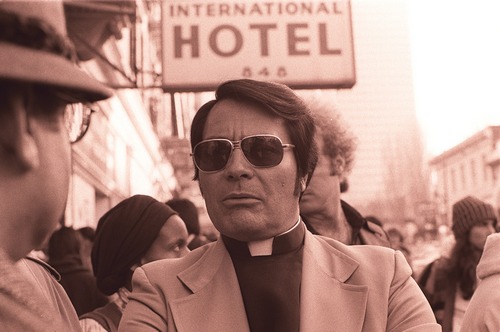
Jim Jones of the People's Temple

Jim Jones of the People’s Temple

A crack cocaine epidemic swept the country in the early 1980s.  It decimated communities and cost many people their lives. Crack  was inexpensive, easily accessible, and even more addictive than regular cocaine.

The 1980s gave rise to a “satanic panic” which resulted in some of most bizarre prosecutions we’ve seen in this country since the Salem Witch Trials in the 1690s. The McMartin Preschool abuse trial was the most costly ($15 million) ever in the U.S. and resulted, rightfully I believe, in no convictions.

Surprisingly, there was a decline in crime during the 1990s, and it has been attributed to a variety of factors including: increased incarceration; increased numbers of police, growth in income; decreased unemployment, decreased alcohol consumption, and even the unleading of gasoline (due to the Clean Air Act). Despite the decline, there was still enough murder and mayhem to make us uneasy.
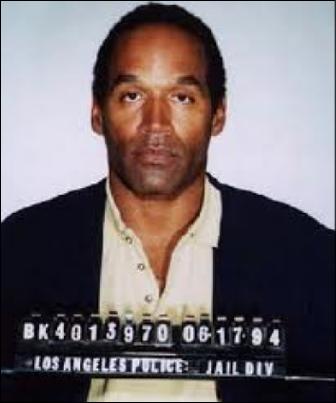
oj-simpson-murdeHere in L.A. there was the murder trial of O.J. Simpson, the so-called Trial of the Century. If you remove fame, wealth, and race and reduce the crime to its basic elements you end up with nothing more than a tragic domestic homicide–the type of crime which is altogether too common everywhere–yet the case continues to fascinate.

Heidi Fleiss, the Hollywood Madam, made news in 1993. At her pandering trial actor Charlie Sheen divulged that he had spent in excess of $53,000 for services rendered by Heidi’s girls.

Please join me as I explore the entirety of 20th Century crime in Los Angeles.

Joan