Elizabeth Short: The French Connection–Conclusion

When Dorothy French brought Elizabeth Short home in early December, she never expected her to stake a claim to the family’s sofa. Dorothy had simply meant to offer a safer alternative to a seat in the Aztec all-night movie theater—a place to rest for a night or two. No more than that.

But Betty stayed.

She took advantage of the Frenches’ hospitality. They were too kind to put her out, but the tension in the home was growing. Betty (she used Beth and Betty interchangeably) must have felt it.
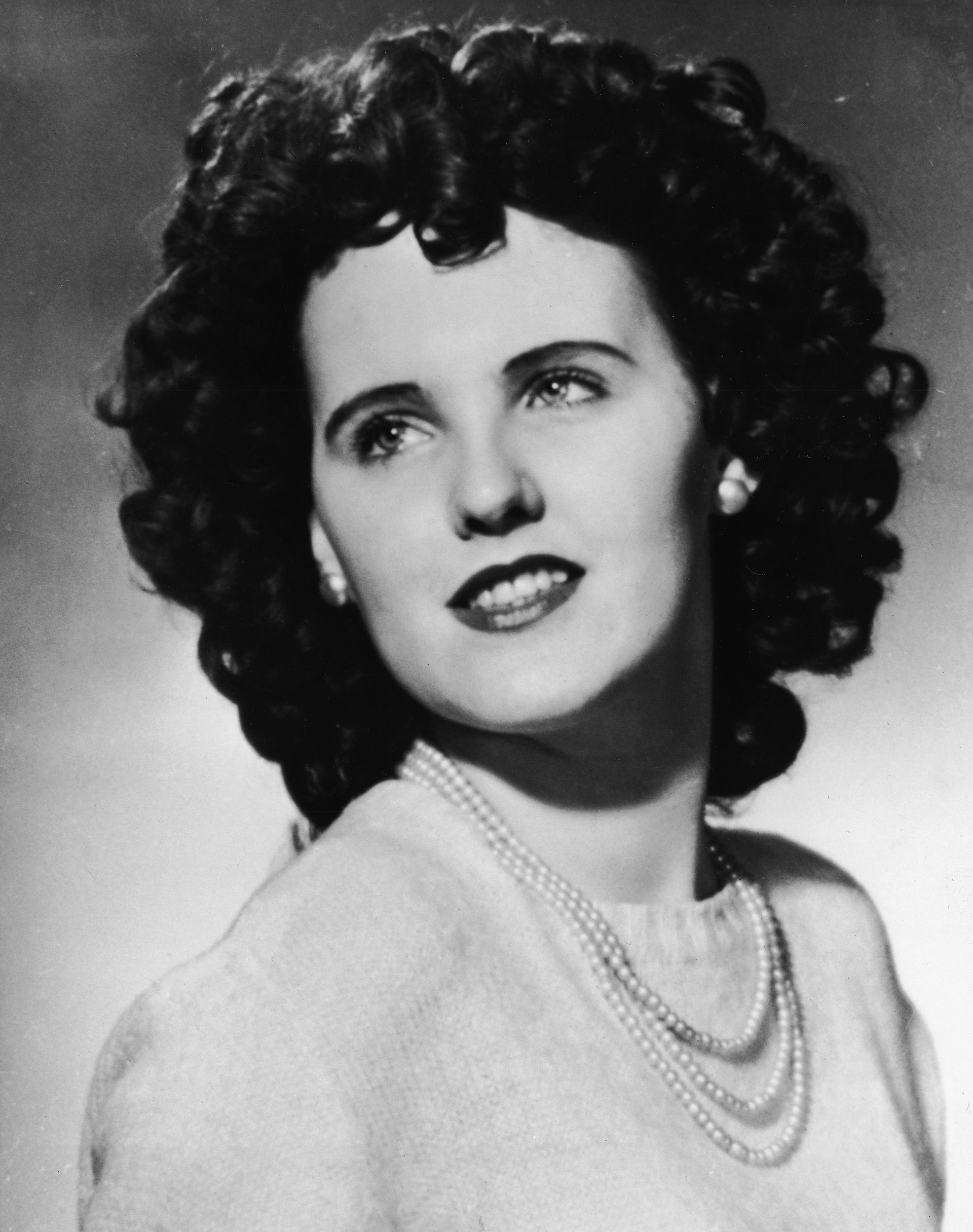
Elizabeth Short

There’s no record of how they spent Christmas. It would have been the perfect time for Betty to leave San Diego, return to Hollywood—where she had connections, where people at least knew her. But she remained, a guest among strangers. The question is why.

Was she waiting for money? A ride? A man?

Some accounts reduce her stay in San Diego to cliché: drifting, partying, mysterious. It was none of those things. It was stasis. A kind of limbo.

She spent her days writing letters—many of which she never mailed.

One of the most poignant was addressed to Gordon Fickling, dated December 13. She had lived with Fickling—a Navy lieutenant and flier—months earlier in Long Beach. Gordon Fickling.

She wrote:

“I do hope you find a nice girl to kiss at midnight on New Year’s Eve. It would have been wonderful if we belonged to each other now. I’ll never regret coming west to see you. You didn’t take me in your arms and keep me there. However, it was nice as long as it lasted.”

The unsent letter offers a glimpse into her state of mind. It is wistful—a quiet longing for something stable. A safe harbor. And the realization that safety, when it appears at all, is always temporary.

The Frenches’ home had become a kind of refuge. Temporary, but real.

Then, something strange happened.
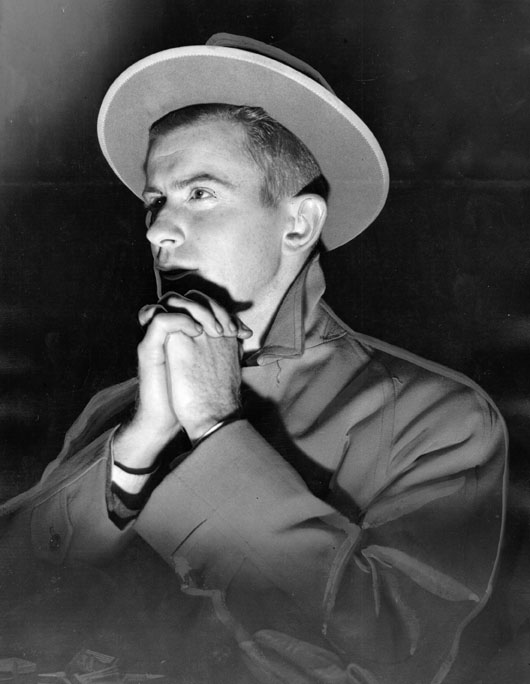
Red Manley

On January 7, two men and a girl came to the door. They knocked, waited a few minutes, and then ran to a car parked outside.

Betty peeked through the window but refused to answer. She was visibly terrified. When Dorothy asked her about it, Betty was evasive—so much so that Dorothy eventually gave up trying to get answers.

Shortly after, Betty wired Red and asked him to come get her. She was ready to leave San Diego.

He responded the next day:

“Wait and I’ll be down for you.”

NEXT TIME: Elizabeth Short’s life is measured in days.

Archival Note: Little contemporaneous documentation exists regarding Elizabeth Short’s daily life during her stay with the French family in Pacific Beach. Beyond later statements attributed to Dorothy French, and the surviving unsent correspondence, no police reports, diaries, or third-party accounts place Short at any specific location in San Diego between December 8, 1946, and her departure in early January 1947.
Elizabeth Short–The French Connection

Elizabeth Short stepped off the bus in San Diego in early December 1946—alone, broke, and fading into the shadows of the chilly evening.

She walked a few blocks to the Aztec, a 24-hour movie theater. The price of a ticket gave her a quiet and warm place to rest. She dozed off, only to be awakened by the cashier, a woman about her age, Dorothy French.

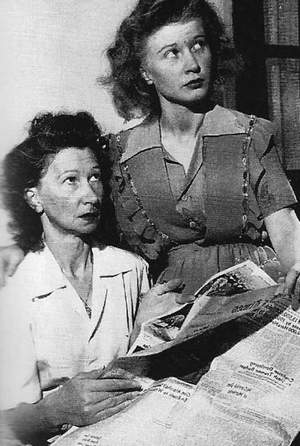
Elvera & Dorothy French

Dorothy could tell the woman, who introduced herself as Betty Short, was at loose ends. She felt sorry for her, and she knew that a woman sleeping alone in the theater was easy prey. Dorothy invited Betty to come with her to Pacific Beach, where she lived with her mother, Elvera, and her teenage brother, Cory. Betty was welcome to spend the night and get a fresh start the next day.

Nearly two weeks had passed since her arrival on December 8. As the days crawled toward Christmas, the Frenches began to regret their kindness. Like many post-war families, they struggled to make ends meet. Betty hadn’t contributed a cent to the household, and the family was tired of tip-toeing around the sofa as she slept.

She showed no interest in finding a job and spent much of her time writing letters. She had one visitor, a man she introduced only as Red. She told the Frenches he was an airline employee in San Diego who lived in Huntington Park, but stayed at a nearby motel.

The sofa in the Frenches’ modest home was a far cry from the glamorous Hollywood backdrop Betty spoke of, but it provided a measure of stability. According to Elvera, Betty was polite but withdrawn. She offered few details about her past and rarely ventured out during the day. She claimed to have worked at a naval hospital but made no effort to find another job. Over time, Elvera grew uneasy. She had a “premonition” that something was wrong. She described Betty’s presence as moody and unsettled.

She was more shadow than guest.

Dorothy said, “Betty seemed constantly in fear of something. Whenever someone came to the door, she would act frightened.”

Despite the undercurrent of discomfort, the family allowed her to stay through the holidays.

NEXT TIME: Elizabeth Short leaves San Diego.

Archival Note:
Details of Elizabeth Short’s (Black Dahlia) stay with the French family in Pacific Beach are based primarily on contemporaneous police interviews and subsequent press reports. Key accounts include statements attributed to Dorothy and Elvera French following Short’s disappearance and murder.

Film Noir Friday: Somewhere in the Night [1946]

Welcome! The lobby of the Deranged L.A. Crimes theater is open! Grab a bucket of popcorn, some Milk Duds and a Coke and find a seat. Tonight’s feature is SOMEWHERE IN THE NIGHT, 1946, starring Lloyd Nolan and Richard Conte.

TCM says:

A U.S. Marine recovering from a combat injury in a Navy hospital in Hawaii suffers from undiagnosed amnesia, and while others call him George Taylor, he has no memory of that man. Upon recovery from his wounds, George is transferred to the hospital at Camp Pendleton, California, and is eventually discharged, even though he still has no memory. He returns to his old civilian address at the Martin Hotel in Los Angeles, but no one recognizes him there. At Union Station, he exchanges a bag check he found in his sea bag for a briefcase, which contains a gun and a three-year-old letter to a man named George stating that $5,000 has been deposited for him in a bank account by Larry Cravat.

Amnesia, guns, and money!

Enjoy the movie!

Film Noir Friday on Saturday Night: Whistle Stop (1946)

Welcome! The lobby of the Deranged L.A. Crimes theater is open! Grab a bucket of popcorn, some Milk Duds and a Coke and find a seat. Today’s feature WHISTLE STOP starring George Raft, Ava Gardner, Victor McLaglen, and Tom Conway.

Enjoy the movie!

TCM says:

TCM says: When Mary returns to Ashbury, the small town she left several years earlier, her first stop is the house she owns, where Molly Veech and her family now live. Before she left town, Mary was in love with Molly’s son Kenny, a loafer and a drunk, but was driven away by his lack of ambition. Mary is disappointed to learn that Kenny still has no job and spends his nights gambling and drinking. That night at dinner, Kenny is angered when Mary receives a large bouquet of roses from Lew, the owner of the town’s hotel and bar, and follows Mary to Lew’s club when she goes there to thank him.

Red Manley and the Black Dahlia

In his 1991 autobiography, Reporters: Memoirs of a Young Newspaperman, Will Fowler recalled one of his colleagues, Baker Conrad, had noticed a telegram among Elizabeth Short’s belongings. The Examiner’s editor, Jim Richardson, dispatched Fowler to the address on the telegram, 8010 Mountain View Avenue in South Gate.

When Fowler arrived at the bungalow court, a strikingly beautiful young woman greeted him. Her name was Harriette Manley. Fowler let her believe he was a cop.

During their conversation, Harriette said her husband phoned her from San Francisco after he saw his name in the newspapers in connection with Elizabeth Short’s murder. Red reassured Harriette that he’d had nothing to do with the slaying. He said he “loved her more than any man ever loved his wife.” 

At 10:00 pm on January 19th, two LAPD sergeants, J.W. Wass and Sam Flowers, staked out the home of Red’s employer in Eagle Rock. When the suspect’s sedan pulled up, the officers approached him with their guns drawn. An Examiner photographer was there to capture the arrest.

Robert ‘Red’ Manley

The next day, Aggie Underwood interviewed him. Red needed no encouragement to unburden himself. He told her how he’d picked Beth Short up on a San Diego street corner. How they had spent an “erotically uneventful” night in a motel and how he eventually dropped her off at the Biltmore Hotel on January 9th.

Red finished his tale with a heartfelt statement. “I’ll never pick up another dame as long as I live.”

Aggie believed Red and shared her gut feelings with the police. Red was forthcoming in his interview. Aggie knew he wasn’t a killer. Red was a frightened man with goofy ideas about love, marriage, and fidelity.

“I was only trying to test my love for my wife,” he said as he sought to explain his brief escapade with Beth Short.

Red said he first saw Beth standing on a street corner in San Diego while on a business trip ten days before Christmas. “She looked cute, so I thought, well, I’ll make a little test and see if I’m still in love with my wife, or whether I could ever fall for anyone else.”

According to Red, he and Harriette, married for just 14 months, were going through a “readjustment period.” He said they had a “few misunderstandings, but nothing important.”

He swore up and down that Beth was the only woman he picked up since his marriage. When he approached her that day, Beth was coy. “She turned to me and said, ‘Don’t you think it’s wrong to approach a girl this way?’” Wrong or not, she got into his car within a minute or two. Before he dropped her off in Pacific Beach, where she was couch-surfing at the home of Elvera and Dorothy French. they sat in his car and talked. He asked her if she would go out to dinner with him. “That would be nice,” she said.

Red drove back up the highway and rented a motel room. He picked Beth up that evening and they went to a nightclub and danced until midnight. Afterwards, they stopped at a drive-in for a snack. He said they talked for a few minutes in front of the French home. Red kissed her goodnight, but said she was a little cold.

He didn’t see her again until January 7, on his next trip to San Diego. He wired ahead to let her know he would be in town. They went nightclubbing again. Then they stayed together in a motel on their way back to Los Angeles.

Red’s story, and his demeanor, convinced Aggie he was not a killer, but that didn’t mean she let him off easy.

If there was one thing that Aggie detested, it was a sob sister. For those of you unfamiliar with the term, a sob sister is a female journalist who writes overly sentimental copy. That sort of journalism was never Aggie’s thing. She said, “A sob sister could have wept with and over Manley, interpolating, editorial gushes to prove what a big bleeding-heart beat in her breast. To hell with that. I’d rather have a fistful—an armload—of good solid facts.”

Her armload of facts made Aggie’s interview with Red Manley riveting. In fact, her city editor, who normally cautioned her to keep her copy short, let the entire interview run without a ton of photos. He knew a great interview when he read one. Aggie was the only Los Angeles reporter to get a by-line in the Dahlia case.

Why, then, amid the covering of the murder, was Aggie yanked off the story? With no warning or explanation, Aggie found herself benched. The city editor let her cool her heels in the newsroom without a thing to do. 

Aggie spent a couple of miserable days at her desk, bored out of her mind. Then she got pissed-off enough to fight back. She didn’t get huffy or raise her voice. She brought in an embroidery project. In no time, the other newsroom denizens were snickering. One newswoman, Caroline Walker, said, “What do you think of that? Here’s the best reporter on the Herald, on the biggest day of one of the best stories in years—sitting in the office doing fancy work!” 

The next day, they reassigned Aggie to the story—only to pull her off a second time. What the hell was going on?

NEXT TIME: The Black Dahlia case continues.

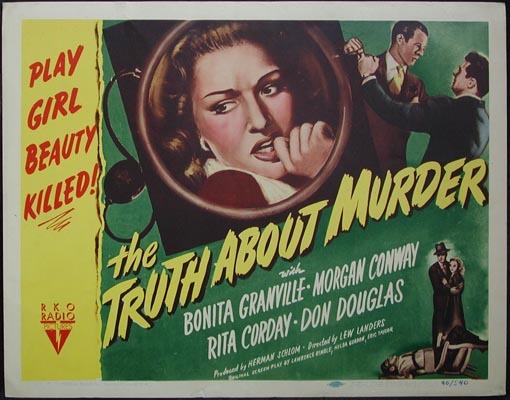
Film Noir Friday, on Saturday Night: The Truth About Murder [1946]

Welcome! The lobby of the Deranged L.A. Crimes theater is open. Grab a bucket of popcorn, some Milk Duds, and a Coke and find a seat.

Tonight’s feature is THE TRUTH ABOUT MURDER (1946) starring Bonita Granville, Morgan Conway, Rita Corday, and Don Douglas.

Enjoy the movie!

TCM says:

Frustrated that her boss, District Attorney Lester Ashton, refuses to promote her to prosecutor, Christine Allen announces that she is quitting her job as the city’s lie detector administrator to take a position with her longtime friend, lawyer William Ames Crane. When Chris arrives at Bill’s office, however, she learns that the attorney has been drinking heavily and neglecting his work.

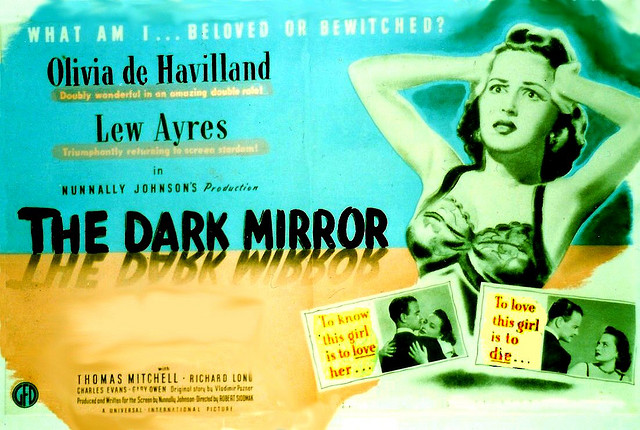
Film Noir Friday–Sunday Matinee: The Dark Mirror

Welcome! The lobby of the Deranged L.A. Crimes theater is open. Grab a bucket of popcorn, some Milk Duds and a Coke and find a seat.

Today’s feature is THE DARK MIRROR [1946], directed by Robert Siodmak and starring Olivia De Havilland and Lew Ayres. 

Enjoy the movie!

TCM says:

A woman suspected of murdering her doctor boyfriend has an identical twin sister. When both twins have an alibi for the night of the murder, a psychiatrist is called in to assist a detective in solving the case. Through a series of tests, he discovers which twin actually committed the crime and in the course of his investigation he falls in love with the normal twin.

Who doesn’t enjoy a psychotic twin tale?

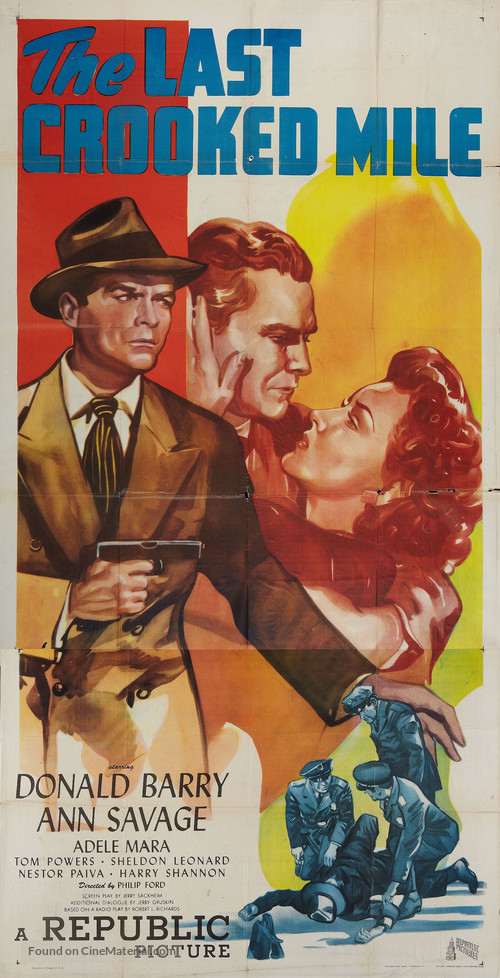
Film Noir Friday: The Last Crooked Mile [1946]

Welcome! The lobby of the Deranged L.A. Crimes theater is open. Grab a bucket of popcorn, some Milk Duds and a Coke and find a seat.

Tonight’s feature is THE LAST CROOKED MILE, starring Donald Barry and Ann Savage with Tom Powers and Sheldon Leonard.

Enjoy the movie!

TCM says:

Just after the notorious Duke Jarvis gang robs his bank of $300,000, bank manager Floyd Sorelson calls the police and insurance offical George Detrich. A frightened teller is able to describe Jarvis as a blonde man with highly polished nails, and the police begin setting up roadblocks to nab him. Meanwhile, Jarvis and his men go to a garage run by Spike Edwards, who hides the loot in the running board of their getaway car. Jarvis and his men drive away, but when the police stop them at a roadblock, Jarvis panics and races off.

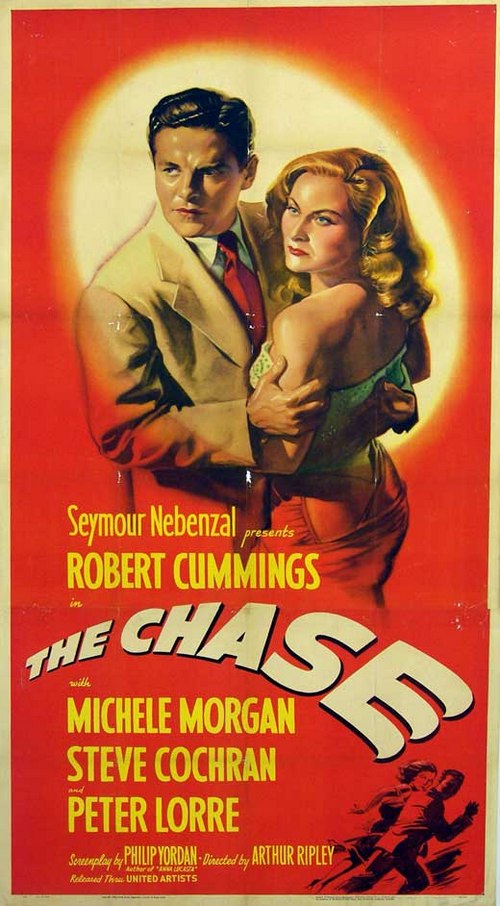
Film Noir Friday: The Chase [1946]

Welcome! The lobby of the Deranged L.A. Crimes theater is open. Grab a bucket of popcorn, some Milk Duds and a Coke and find a seat.

Tonight’s feature is THE CHASE [1946] starring Robert Cummings, Michele Morgan, Steve Cochran and Peter Lore.

Enjoy the film!

TCM says:

Returning a lost wallet gains unemployed veteran Chuck Scott a job as chauffeur to Eddie Roman, a seeming gangster whose enemies have a way of meeting violent ends. The job proves nerve-wracking, and soon Chuck finds himself pledged to help Eddie’s lovely, fearful, prisoner-wife Lorna to escape. The result leaves Chuck caught like a rat in a trap, vainly seeking a way out through dark streets. But the real chase begins when the strange plot virtually starts all over again…

Mid-Week Noir: Black Angel [1946]

Welcome! The lobby of the Deranged L.A. Crimes theater is open for a mid-week noir matinee. Grab a bucket of popcorn, some Milk Duds and a Coke and find a seat.

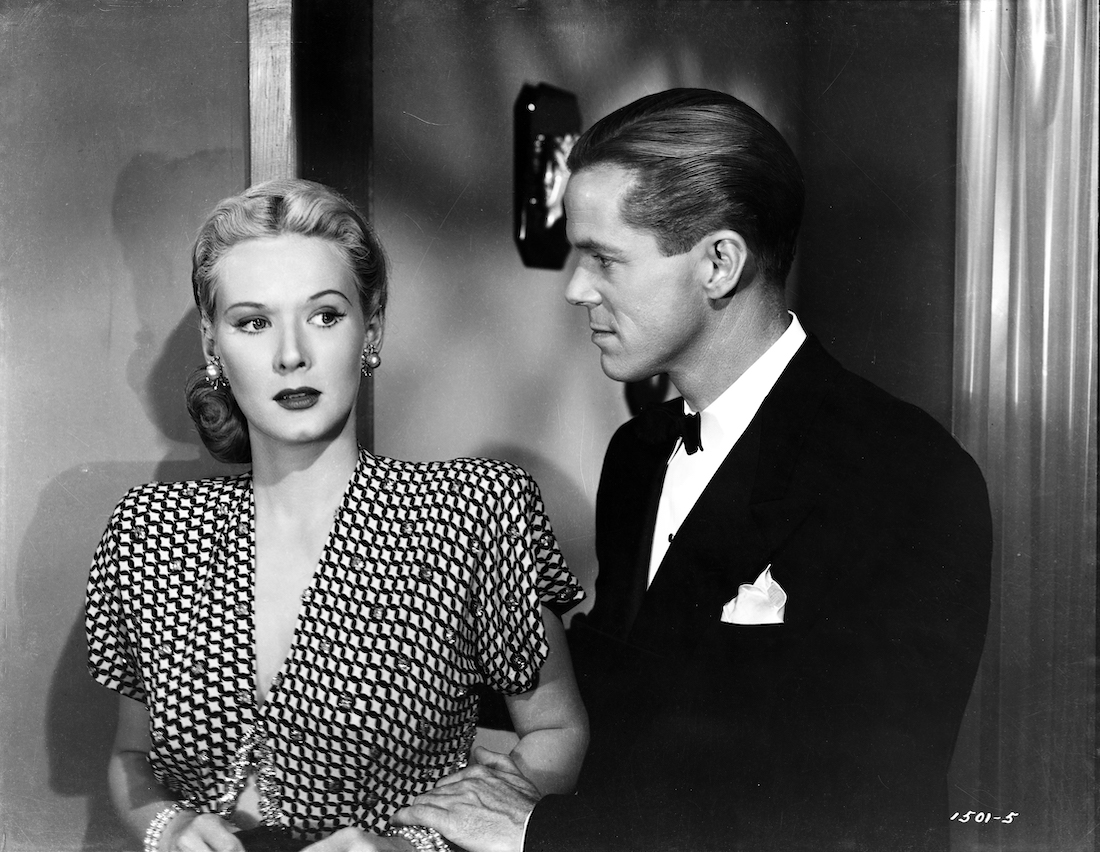
Today’s feature is BLACK ANGEL starring Dan Duryea, June Vincent, Peter Lorre and Broderick Crawford.

TCM SAYS:

Has-been alcoholic songwriter Martin Blair goes to Los Angeles exclusive Wilshire House apartments to visit his estranged wife, popular singer Marvis Marlowe, but is refused entrance by the doorman per Marvis’ instructions. Martin sends up a gift of a small heart brooch and, while waiting outside the building, overhears a man receiving permission to see Marvis. Despondent, Martin goes to a bar to get drunk, then, as he often does, his friend Joe takes him home to his apartment and locks him in for the night. After midnight that same night, musician Kirk Bennett goes to see Marvis and, finding her apartment door unlocked and hearing her recording of “Heartbreak” playing, goes inside to wait.