Death of a Co-ed, Part 3

Sheriff’s detectives couldn’t catch a break. Marina’s case went cold.

In August 1969, the news that five (*see NOTE below) victims were slaughtered at the Cielo Drive home of actress Sharon Tate and her husband, director Roman Polanski shook Angelenos worse than a 9-point earthquake. The brutal, some thought ritualistic, slayings of Tate, Abigail Folger, Voytek Frykowski, Jay Sebring, and Stephen Parent terrified everyone. Rumors that the murders were drug-related caused a panic among Hollywood celebrities.  It wasn’t only the glitterati who felt their lives were in danger, average citizen flocked to gun shops and dog kennels seeking to protect themselves against an unknown evil.

Sharon Tate and Roman Polanski

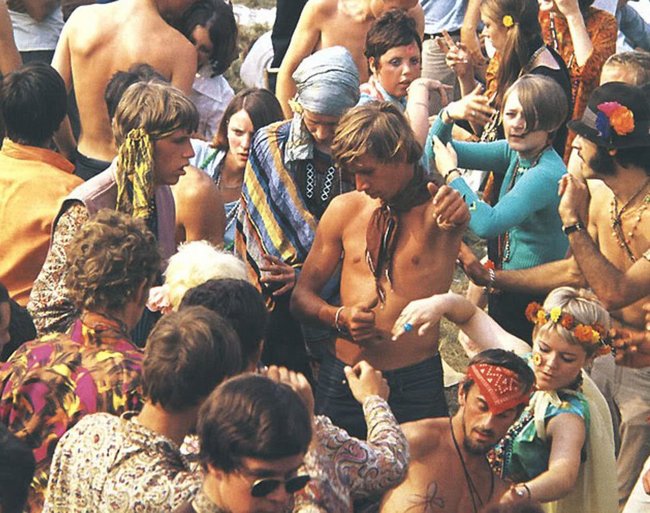
People over 40 saw every long hair as a potential mass killer, and even hippies were paranoid of one another. The murders drove a stake through the heart of the Summer of Love. Was it only two years ago that baby boomers believed they could change the course of the world with beads and flowers?

The level of fear in the city ratcheted up several notches when Los Feliz residents Rosemary and Leno LaBianca were murdered. Eerie similarities between the Tate and LaBianca slayings gave the cops cause to believe they could be linked.

Who committed the cruel murders? Charles Manson, an ex-con conversant with the basic tenets of Scientology and an avid student of Dale Carnegie’s “How to Win Friends and Influence People” had a gift for convincing rootless teenagers to follow him. He lured them  into the desert. He painted mind pictures of free love and great dope. Had he convinced his followers to murder for him?

Charles Manson

As investigators scrutinized the “Savage Mystic Cult” who lived in squalor in the desert, they considered the possibility that the Manson Family committed over seven murders.

What about Marina Habe? Someone stabbed the teenager to death. The killer, or killers, used a knife to butcher several of the victims at Cielo drive.  Another link?

The unsolved homicide of a young woman, Jane Doe #59, whose body was found close to where Marina was found might the Family’s grisly handiwork.

On November 16, 1969, a teenager who was bird watching on Mulholland Drive discovered Jane Doe’s remains. The young man was gazing through binoculars, checking out the various species of birds that populated the area, when his eyes came to rest on the nude body of a woman.

Police arrived at the scene. The victim was young.  She was pretty despite the 157 stab wounds to her neck and upper body.  Defensive wounds on her hands and arms meant she fought hard for her life. She was dead about two days.  Overkill suggested to detectives that the murder was personal. A spurned lover might be capable of such rage; or the killer could be a madman.

Los Angeles Police Department detectives investigated the murder of Jane Doe #59, with the same zeal as their counterparts in the Los Angeles County Sheriff’s Department had done in Marina’s case. Both agencies hit a wall.

NEXT TIME: Who killed Marina Habe and Jane Doe #59?

*NOTE: Thanks to Cheryl, a reader who reminded me of a very important fact. There were six victims on Cielo Drive. We should remember Sharon’s and Roman’s son, Paul Richard Polanski.

Death of a Coed, Part 2

Sheriff’s investigators first believed someone kidnapped Marina. They, and her parents, waited for a ransom demand.  The wait ended almost as soon as it began with the discovery of Marina’s body in the heavy brush down a 30-foot embankment in the 8800 block of Mulholland.

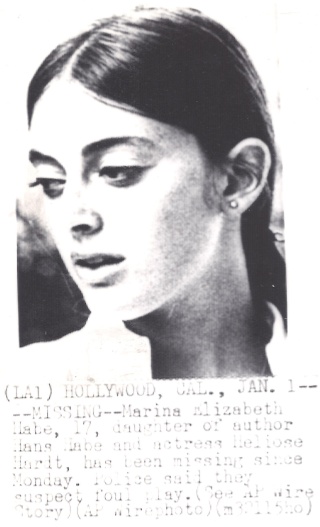
Associated Press index card for Marina Habe

Sheriff’s homicide investigator, Lieutenant Norman Hamilton, told reporters they could not tell if her killer threw or carried Marina down the slope.  Marina still wore the brown capris, white turtleneck sweater and a brown coat with fur cuffs that she wore when she left John Hornburg’s house for her mother’s home.

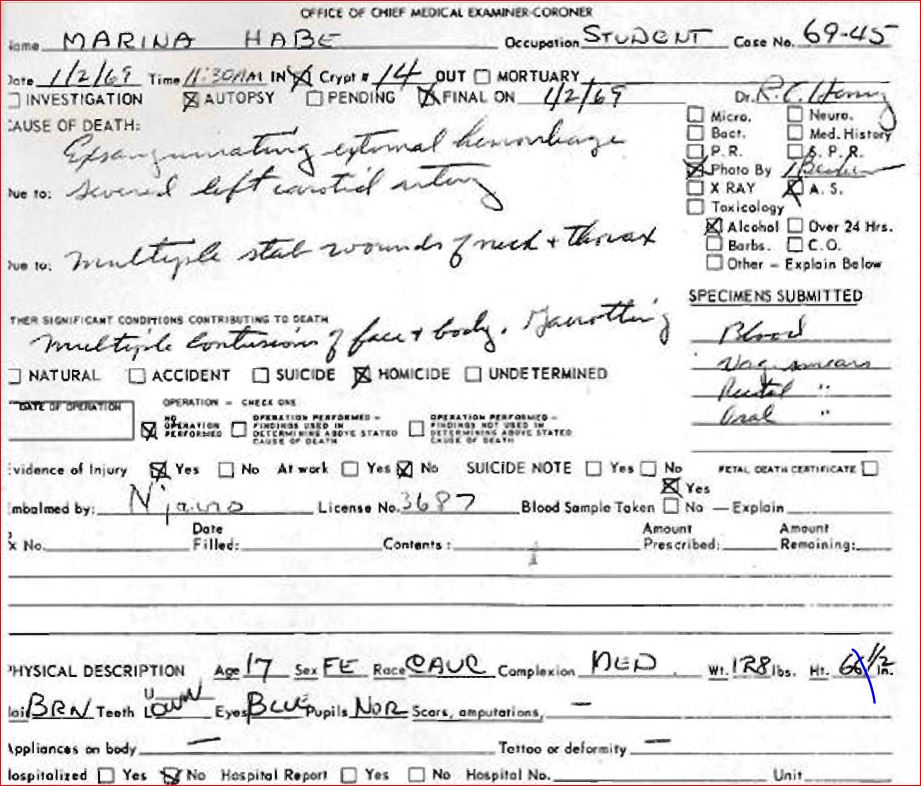
There were no obvious signs sexual assault.  An autopsy, conducted by coroner Thomas Noguchi, determined Marina’s cause of death as exsanguination and found no evidence of rape. The small amount of cash in Marina’s wallet seemed to rule out robbery as the cause of her abduction and murder.

Her car, left in her mother’s driveway, had the emergency brake pulled up.  Investigators said that it took great strength to get the brake into that position and it was doubtful that Marina could have done it on her own.

Lt. Hamilton speculated that her killer (s) abducted Marina and intended to rape her, but she resisted.  According to Hamilton,  In recent weeks Eloise’s neighborhood, located  three blocks below Sunset Boulevard, was the scene of several recent rapes.

The autopsy revealed that Marina’s killer (s), cut her throat, severing her left carotid artery, and stabbed her multiple times in the chest.  She suffered two black eyes inflicted by a fist and someone beat her with a “small blunt object.” She bled to death.  Despite no physical evidence of forcible rape, detectives felt Marina’s death was an attempted sex crime.

Her parents and 350 others mourned the pretty coed at her funeral. Marina converted to Catholicism in 1966 and they held a requiem Mass for her in the Good Shepherd Catholic Church in Beverly Hills.  Father Acton, who knew Marina in life, said, “We wonder about a society, the products of which can be a large in our midst and capable of such heinous crimes.  There you have the perfect formula for bitterness, resentment, hatred, perhaps despair.  This we must guard against.”

Church of the Good Shepherd, Beverly Hills

Sheriff’s Lieutenant Harold White joined in the hunt for Marina’s killer (s).  He said, “We’re tying very hard. But we have turned up nothing that is even remotely interesting.  There are all kinds of things to check out, but there’s nothing conclusive.”

White told reporters they assigned six homicide investigators to the case full-time and 20 deputies were also working the case.  Despite their best efforts, Marina’s case went cold.

NEXT TIME: Is Marina’s murder connected to a Jane Doe case, and is Charles Manson involved?

Death of a Coed, Part 1

Nineteen-sixty-eight was one of the must tumultuous years of the 20th Century. Globally, it began  with the Tet Offensive. Tet is the beginning of the lunar new year and the most important date on the Vietnamese calendar. It was then that the North Vietnamese and the Viet Cong launched surprise attacks on cities throughout South Vietnam. It was a turning point in the Vietnam War, which dragged on for another several years. Student and labor protests during May in Paris and throughout France during the month of May tore the country apart.

In the U.S. hopes for the future died on the second-floor balcony of the Lorraine Motel on April 4th in Memphis and in the Ambassador Hotel pantry in Los Angeles on June 6th with the assassinations of Martin Luther King and Robert Kennedy.

New Year’s Eve 1968 began the countdown to a better year, at least that is what everyone hoped.

Mulholland Drive, the 21-mile long, mostly two-lane road that follows the ridgeline of the eastern Santa Monica Mountains and the Hollywood Hills, is a scenic route that offers breathtaking views of the San Fernando Valley to the north and Hollywood and beyond to the south.  There is scant foot traffic along the road, too many blind curves and a narrow footpath make it tricky to navigate. But the views are spectacular, so on New Year’s Day a couple from Playa del Rey decided it was too nice to stay in their car.

It was 2 pm, and the couple walked along a fire road off Mulholland where they discovered a woman’s handbag.  The bag contained a small amount of cash.  The couple turned the purse over to the police.

Marina Habe  (Credit: LAPD)

Police tentatively identified the bag as belonging to Marina Elizabeth Habe. Seventeen-year-old Marina had disappeared from the driveway of her mother’s West Hollywood home at 8962 Cynthia Street about 3:00 am on Monday, December 30, 1968. The young woman was home for Christmas vacation from the University of Hawaii where she was a freshman studying to be an artist.

Marina’s father and mother were divorced when she was a child. Her father, the author Hans Habe, was living in Zurich, Switzerland. As soon as he got word of Marina’s disappearance he hopped a plane for Los Angeles.

Hans Habe, (Békessy János) 13.08.1968. Ascona (Photo by Karoly Forgacs/ullstein bild via Getty Images)

Eloise Hardt, Marina’s mother, was an actress whose most recent film GAMES, starred Simone Signoret, James Caan and Katharine Ross.

Eloise Hardt. Columbia Pictures promo shot c. 1941

Marina was last seen by John Hornburg, 22, her date on Sunday night. John was a longtime friend of the Habe’s. John and Marina joined two other couples, Dennie Boses, 25, Wendy Kleiner, 18, Norman Elder, 22, and Laurie Kramer, 18, for an evening at  the Troubadour where comedian Larry Hankin was performing.

Troubadour c. 1957 (Photo courtesy DWP)

According to John, he and Marina, and the other two couples, left the Troubadour at 11:30 pm. John drove Marina to his home at 13326 Sunset Blvd, Brentwood, where she parked her car.  Marina changed out of her date outfit into brown capris and a white turtleneck sweater.  The two hung out for a few hours and Marina left for her mother’s home at 3:15 am.

Eloise heard loud exhaust blasts in her driveway and got out of bed to see what was going on.  She saw a black car and a man running toward it yelling “Go.”  The man jumped into the car and it sped away. Marina’s car was parked in the driveway, but the girl was gone.

 NEXT TIME: What happened to Marina?

Death of a Latin Lover, Conclusion

From the moment they entered the case, LAPD kept mum about the weapon used to batter Ramon Novarro to death.  However, at trial the prosecution revealed the sad fact that Ramon was beaten with a cane, a memento from one of his films.  It couldn’t have been more personal, nor more poignant.

Deputy District Attorney James Ideman said he intended to show that Paul and Thomas Ferguson tortured Ramon to death while trying to find out where he hid his money. Ideman described how the 69-year-old former film heartthrob was beaten and then taken into a shower and revived so he could be questioned further.

The seven man, five woman jury listened to Ideman’s description of Ramon’s violent end at the hands of the young hustlers who accepted his hospitality, and then left him on his bed with his hands tied behind him, to drown in his own blood.

Photograph caption dated July 28, 1969 reads, “Paul Robert Ferguson confers with attorneys at opening of murder trial. Richard Walton, left, and Dorothy Montoya represented accused at beginning of jury selection.” [Photo & caption courtesy LAPL]

Forever in need of money, Paul telephoned Ramon on the day of the murder and introduced himself as a relative of Ramon’s acquaintance, Larry (Paul’s brother-in-law).  Paul arranged to see Ramon that evening. He arrived with his brother Thomas and following dinner and drinks they demanded money.  Ramon was wealthy, but never kept large sums at home, in fact, that night he had $45 in his wallet.

The prosecution’s case hinged on three points: (1) fingerprints, (2) the fact that it was impossible for Ramon to have written the name “Larry” with his hands tied and (3) Thomas’ telephone call to his girlfriend in Chicago from Ramon’s house.

As far as anyone could tell, the brothers intended to blame each other for Ramon’s murder.  The main points in their strategy were: (1) blame the other brother and (2) mental illness.

Lawyer Cletus Hanifin, right, with murder suspects Tom (left) and Paul Ferguson. Photograph dated September 25, 1969. [Photo & caption courtesy LAPL]

Victor Nichols, a real estate investor and friend of Paul’s, testified that Paul and Thomas came to his Hollywood apartment after midnight on October 31.  They weren’t trick-or-treating, they were in trouble. According to Victor, Paul said: “Vic, I’d like to see you . . . we are in some trouble. Tom hit Ramon . . . Ramon is dead.”

Victor gave Paul a cup of coffee to sober him up as Tom slept on the sofa.  Victor’s guests made him nervous. He didn’t want to be involved in a murder.  After Paul finished his coffee, Victor suggested he awaken Tom and leave.  When Victor asked, “How could you do such a thing?”  Thomas replied: “I hit him several times very hard and he is dead.”

Victor gave them $8 for cab fare and sent them on their way.

Paul took the stand and gave his version of the night of the murder.  He said he went into Ramon’s bedroom and found him lying on the floor. He was covered in blood and his hands were tied behind him.  “I touched him on the shoulder.  He felt starchy . . . tight, like paper . . . “, said Paul.

From his chair at the defense table, Thomas starred daggers at his brother and shook his head as if he couldn’t believe the lies coming out of Paul’s mouth.

Paul claimed he wanted to phone the police, but Thomas vetoed the plan and suggested they stage a robbery. His attorney asked Paul why he would go along with Thomas’ plan, he answered, “Stupidness.”

Paul’s attorney asserted his client had no reason to kill Ramon because he thought the actor was a “nice guy”, and because Ramon said he might become a “superstar”.  Paul said, “He (Novarro) said I could be a young Burt Lancaster or another Clint Eastwood.”

By the time Ramon met the  Fergusons, Paul already had a minor career in the seedier side of show business.  He was a nude model, and may have appeared in porno films.  Ramon knew nothing about Paul’s career, but perhaps he saw a reflection of himself in the good looking younger man.

Paul Ferguson

The trial continued with the brothers blaming each other for the murder. Paul insisted he slept during the crime because he downed a fifth of vodka, some beer and tequila. Until Thomas awakened him and said, “This guy is dead” he was oblivious to Ramon’s screams and cries for help.  How did Paul take the news of Ramon’s death? He said he was “just plain sad.”  Thomas’ attorney asked Paul, “Why were you sad if you didn’t do it?”

Ramon in the tub.

“I was just sad because Ramon was dead . . . I had just had two weeks of bad luck and now I was thrown into this thing . . . I wanted to know why everything was happening,” Paul responded.

What was the bad luck plaguing Paul? His job sucked and his wife left him.  Small problems compared to a man’s life. Paul admitted under oath that he considered suicide rather than face trial, but he rejected the idea.  Asked why, Paul said, “I want to live.”

Neither Paul nor Thomas would admit to the murder, each blamed the other. There was some evidence to suggest Thomas was pressured by Paul and his mother to take the blame and he gave it a half-hearted try. As a juvenile he could not be sentenced to death.

On Wednesday, September 17, 1969, Paul and Thomas Ferguson faced the jury.  If the plan was to save Paul from the gas chamber, it worked. Paul and Thomas received life sentences for first degree murder.

Prison agreed with Paul. Maybe it provided the structured environment he lacked on the outside. He was on the prison’s radio station and found his voice through creative writing.  In 1975, he won a P.E.N. award for a short story, “Dream No Dreams.”

Thomas’ incarceration did not go well.  He was constantly in trouble and spent much of his time in solitary for attempted escapes and other infractions of prison rules.  It is easy to get drugs in prison, and Thomas got strung out on coke and glue.

Paul and Thomas never saw or spoke to each other again after they were released in 1976.

Parole wasn’t the start of a new life for either brother. Thomas was busted for rape in 1987. He spent four years in prison.  When he did not register as a sex offender he was busted again. On March 6, 2005, Thomas went to a Motel 6 and cut his throat. He didn’t leave a note.

By 2012, Paul was once again in prison. This time it was for rape. Unless he wins an appeal, he can look forward to 60 years in a Missouri prison.


Death of a Latin Lover, Part 3

Ramon Novarro’s funeral. [Photo courtesy Los Angeles Public Library]

LAPD Detective Lauritzen played it cagey with the press when they asked for details regarding the arrests of Paul and Thomas Ferguson. He said only that they had “physical evidence” of the brothers’ involvement in Ramon’s murder. The reporters interpreted Lauritzen’s comments to mean they found fingerprints at the crime scene. The County Grand Jury indicted the Fergusons and they arraigned the brothers in a Van Nuys courtroom.

Attorney Cletus Hanifin (second from left) confers with murder suspect Paul Ferguson (left) while another attorney talks with Ferguson’s brother and fellow suspect Thomas (second from right). [Photo courtesy Los Angeles Public Library]

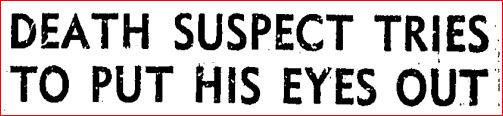
Busted in early November, the brothers awaited trail in county lockup. Early in December new drama in the case erupted with a report that Paul attempted to gouge out his own eyes.  At first he told jailers other inmates attacked him, but they proved he injured himself. If he hoped to eradicate the vision Ramon’s murder from his memory, he should have plunged a knife into his heart. The general feeling was that Paul’s self-inflicted injuries were an attempt to garner sympathy.

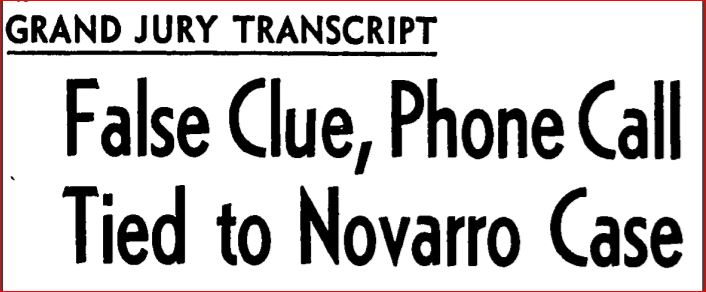
The police found more than fingerprints at Ramon’s home. While Paul beat Ramon in another room, Thomas was on the telephone with his girlfriend of six months, Brenda Lee Metcalf. Brenda flew out to Los Angeles on the county’s dime to testify before the Grand Jury. She was a wealth of information about the night of the murder.

She testified that Thomas told her he and Paul were at Ramon’s house because the actor was going to get him into the movies—then he said no, it was Paul who Ramon was going to get into pictures. While he chain-smoked cigarettes and drank beer, Thomas told Brenda, “… he knew there was $5,000 somewhere in the house behind a picture.” Thomas and Paul had plans for Ramon’s money. Brenda said, “They would tie him up to find out where the money was.”  Brenda told Thomas not to get into trouble.  Brenda said, “He said no matter what happened, he wasn’t going to have nothing to do with it because he didn’t want to get in any trouble.”  The screams she heard in the background sound like trouble to her.  “He (Thomas) said he (Paul) was just probably trying to scare him or hit him with something.”

As the phone called neared an end, Thomas said, “Well, I better go now because I’m going to see what’s happening. . . I don’t want Paul to hurt Ramon.”

Another woman surfaced in the case, Paul’s estranged wife, Mary.  Mary identified the mysterious “Larry” – the name scrawled several places at the murder scene.  Larry was Paul’s brother-in-law, the person Paul blamed for his problems with Mary. Paul’s attempt to frame his brother-in-law was amateur hour, but then nothing about the crime was a stroke of genius.

Brenda received one last telephone call from Tom during his stay in Los Angeles. He telephoned her on November 2.  He said, “Well you know about Novarro.  He is dead.  When I bent down over him I saw he was dead and that if we have enough money, we’ll fly back.  Otherwise, we will have to hitchhike back.  Before they could leave Los Angeles County, they were in police custody.

On August 5, 1969, four days before the murders of Sharon Tate, Jay Sebring, Abigail Folger, Voytek Frykowski and Steven Parent at Tate’s rented home on Cielo Drive, Paul and Thomas were on trial for Ramon’s murder.

The jury of seven men and five women heard Deputy District Attorney James Ideman outline the State’s case in his opening statement. He said he would prove that the brothers tortured Ramon to death on October 30 while trying to discover a hidden cache of money.

Paul and Thomas did not differ from any of the other idiot criminals who murdered people they believed kept large amounts of cash at home.

Defendants Jack Santo (left), Emmett Perkins (center) and Barbara Graham (right) in court for the murder of Mabel Monohan.  [Photo courtesy Los Angeles Public Library]

On March 9, 1953, in Burbank, California, Barbara Graham, Emmett Perkins, Jack Santo, John True and Baxter Shorter invaded the home of Mabel Monohan, a widow. The gang believed she kept a large amount of cash in a safe for her former son-in-law, a professional gambler and local mob affiliate,  Tutor Scherer. The gang walked away with nothing but a ticket to the “green room” (San Quentin’s gas chamber).

Richard Hickock and Perry Smith, two ex-cons, made the same mistake in 1959 in Holcomb, Kansas.  They believed a cellmate when he told them one of his former employers, a farmer named Herb Clutter, was rich and kept his money in a home safe.  It was a tall tale, told by an idiot, to two other morons who believed it. Hickock and Smith executed Herb, his wife Bonnie Mae, and the couple’s two teenage children, Kenyon and Nancy. The killers walked away with fifty dollars in cash, a pair of binoculars and a transistor radio.  Hickock and Smith went to the gallows on April 14, 1965 on the grounds of Leavenworth prison.

Truman Capote with his bestseller, In Cold Blood. [Photo courtesy Los Angeles Public Library]

Truman Capote turned the sordid murders into a brilliant narrative in the mostly true account of the case, In Cold Blood.

Paul and Thomas made the same mistake as their predecessors, but would they pay the same price?

NEXT TIME: Paul and Thomas Ferguson pay for Ramon’s murder.

Death of a Latin Lover, Part 2

Over 40 years had passed since Ramon’s star burned brightly in Hollywood’s firmament but during the 1950s and 1960s he was still working, mostly in character roles on TV.  His was a high-profile case and LAPD wanted it solved.  The department assigned two additional two-man teams of homicide investigators to work on the case.

While LAPD tugged on threads, they made results of Ramon’s autopsy public.  Someone bound Ramon with an electrical cord so there was no way for him to extricate himself and seek help. Ramon died as the result of “suffocation because of massive bleeding because of the fracture of the nose and laceration of the lips and mouth.”  He choked on his own blood.

In their coverage, newspapers omitted the vile message written in bold capital letters in brown eyebrow pencil on the bedroom mirror: US GIRLS ARE BETTER THAN FAGITS (sic faggots) .  Another clue,  made public, was the name LARRY written in ink on the bed sheet next to Ramon’s body. The ligatures around his wrists and ankles made it impossible for Ramon to write the name himself.  Was it a red herring planted by the killer?

Although it may have been an open secret in certain circles, Ramon kept his homosexuality under wraps for his entire career. There were dozens of good reasons for keeping his private life private – chief among them, state sodomy laws made gay relationships illegal.  It wasn’t until the 1970s that the laws were overturned.

It may have been the fear of exposure that led Ramon to numb himself with alcohol for decades. During the 1940s he was arrested for driving under the influence. Police found dozens of empty liquor bottles in the trash outside his home, which meant he forever grappled with his demons.

Ramon leaves jail after paying a fine for drunk driving. [Los Angeles Times, October 30, 1941]

Why the word “fagits” on his mirror?  Was the killer lashing out and that was the only insult he could think of to hurl at the dead man, or was he privy to Ramon’s secret life? At least that aspect of his life wasn’t splashed all over the front pages of the local newspapers. The reporters used the common subtext of the time, describing Ramon as a “lifelong bachelor.”  It wasn’t the same as blatantly outing him, but rather a nod and a wink to those who could read between the lines.

On November 3rd, mourners from all walks of life visited the Cunningham and O’Connor Mortuary, 850 W. Washington Blvd.  to pay their respects to the man who epitomized the glamor of a bygone age.

Just a few days following Ramon’s interment at the Calvary Cemetery in East Los Angeles, police arrested two brothers for the brutal murder. Paul Robert Ferguson. 22, a housepainter and Thomas Scott Ferguson, 17, a recent run away from  the Midwest.

Paul Ferguson

The police possessed evidence implicating Paul and Thomas within a short time of the murder, but they kept quiet about it until they could make an arrest.  Lieutenant Jerry Lauritzen played it cagey when asked about the evidence, but it was thought fingerprints helped identify the suspects. Cops staked out an apartment in Gardena where the brothers were seen, but they never turned up.  Police caught up with them at a location in Bell Gardens and arrested them there.

Thomas Ferguson

Apart from clothing Paul and Thomas stole to replace the bloody garments they wore at the time of the murder; nothing was missing from Ramon’s house.  If nothing was taken, then what reason did they have to batter Ramon to death?

NEXT TIME:  The Ferguson brothers talk.

Death of a Latin Lover, Part 1

The calendar may turn a page, but crime is a continuum.

At 8:30 a.m. on October 31, 1968, forty-two-year-old Edward Weber let himself into the home of his employer at 3110 Laurel Canyon Boulevard.  As he always did, Edward entered the home through the kitchen door with his key . Once inside, he knew immediately that something was wrong.

Edward Weber [Photo courtesy LAPL]

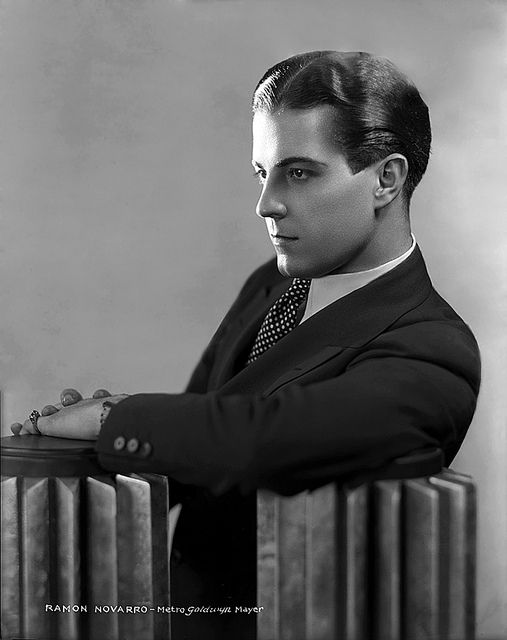
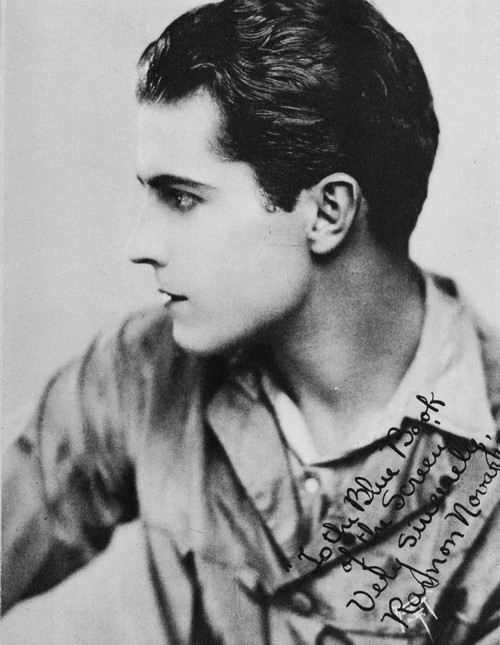
Furniture was overturned in the living room and den, and there were what appeared to be bloodstains in at least three rooms in the house.  When Edward entered the master bedroom he found the nude, bludgeoned body of his employer, actor and former silent film superstar, Ramon Novarro.

The 69-year-old’s face and torso showed unmistakable signs of a brutal beating. Edward phoned the police.

Los Angeles Police Department Lieutenant  Lauritzen spoke to reporters, “We have no evidence yet of anything missing.  Of course, this is a large house, and contains many valuable items.” The lieutenant would not speculate on the weapon used in the murder. However, it was revealed that the blood at the scene was dry, indicating the crime was committed several hours before Edward made his sad discovery.

The police were puzzled. Ramon had no known enemies and the house was not broken into. Ramon had likely known his killer.

Ramon was smart with his money and invested in real estate. His residence on Laurel Canyon is impressive, but even more extraordinary is the home he owned in Los Feliz.  In 1928, Ramon’s then business manager Louis Samuel used money he embezzled from the actor to build his dream home.  When Ramon discovered the theft, he took ownership of the place and hired Lloyd Wright (Frank’s son) to design an expansion. It is an astonishing home and was owned and restored in the 1990s by Diane Keaton.

Ramon Novarro home in Los Feliz. Photo found at Archinect.com

At the time of his murder Ramon was worth between $500k and $1M, giving police ample reason to wonder if money was the motive for the slaying.

First, they would follow the trail of clues left behind at the scene. The most intriguing of them was bloody clothing, a man’s denim shirt, pants and underwear, found discarded on a neighbor’s fence 40 yards from the home.

Ramon’s cause of death was pending an autopsy. Police could only hope that between the results of the autopsy and the clues left at the scene they could find a killer.


NEXT TIME:  Extra detectives assigned to Ramon’s brutal murder find important physical evidence belong to a killer, or killers. The case continues into 1969.


Peace. Love. Murder.

The argument has been made that 1968 was the most tumultuous years in modern U.S. history. It is tough to disagree. The year marked seismic shift in American life and nothing would ever be the same

The changes didn’t occur overnight, although it seemed that way. It was no accident that the changes coincided with the first wave of Baby Boomers hitting their teen years. The music of the late 1960s was as eclectic and schizophrenic as the time. A pseudo-group called the Archies had a smash hit with Sugar, Sugar, but the music that would come to define the era was flying under the radar of the Billboard Top 100. Woodstock changed that. A couple of notes into Jimi Hendrix’s version of the Star Spangled Banner and you knew the Earth had shifted on its axis.

https://youtu.be/MwIymq0iTsw

The assassinations of Martin Luther King, Jr. and Robert Kennedy in 1968 lit the fuse of the bomb that would blow society apart in what remained of the decade. The smoke and ash rained down throughout the 1970s and ripples from the initial explosion are felt today.

January 1969 gave subtle hints of things to come. Richard M. Nixon was sworn in as the 37th President of the United States on January 20, 1969. His election meant more young men would die in the jungles of Southeast Asia.  Elvis Presley recorded “Long Black Limousine” in Memphis, Tennessee which kicked off his comeback. Jimi Hendrix appeared on a BBC1 show, “Happening for Lulu” and Led Zeppelin released their debut album.  The BEATLES performed for the last time in public on the roof of the Apple building at 3 Saville Row in London.

Reflecting on 1969 is mind bending. Consider a year in which the U.S. put a man on the moon, and the era later dubbed the “Golden Age of Porn” (1969-1984)  began.  Sexuality explicit films shown in public on the big screen instead of on a bedsheet in someone’s dingy basement became reality with Andy Warhol’s 1969 film “Blue Movie.”  The only X-rated film to win an Oscar®, “Midnight Cowboy” was released. At the time the X-rating didn’t mean the film was hardcore porn, all it meant was that the subject matter was unsuitable for underage people.

No retrospective of the 1960s is complete without addressing the Hippie aka Flower Power movement which reached a zenith during the summer of 1967 in San Francisco. The Human Be-In at Golden Gate Park on January 14, 1967  paved the way for the Summer of Love. The local underground newspaper, the San Francisco Oracle, offered the following description of the Be-In:  “A new concept of celebrations beneath the human underground must emerge, become conscious, and be shared, so a revolution can be formed with a renaissance of compassion, awareness, and love, and the revelation of unity for all mankind.”  A beautiful sentiment. It was an illusion.

The people who wandered the streets of San Francisco during the summer of 1967 smoking dope, dropping acid, tucking flowers into their hair and anointing themselves with Patchouli oil didn’t know that the Hippie movement was already on life support and about to flatline.

https://youtu.be/JxB2RIP6eD0

The cancer of drug dealers, pimps and others preying on the naivete of lost children looking for love and acceptance in Haight/Ashbury grew into an inoperable tumor. One cell of the malignancy had a name which, in two years’ time would become infamous, Charles Manson.

Charles Manson in court. [Photo courtesy LAPL]

The summer of 1969 had a few of the trappings of the Summer of Love, and it turned into a nightmare of violence and terror when word of  murders of Sharon Tate, Abigail Folger, Jay Sebring, Wojciech Frykowski, Steven Parent, Rosemary and Leno LaBianca hit newsstands in mid-August.

For the next few months, as we approach the 50th anniversary of the brutal Tate/LaBianca murders, Deranged L.A. Crimes will intermittently look at some of the crimes that made news during 1969.

So, put on your love beads, memorize the lyrics to “Fixin’ to Die Rag,” and don’t bogart that joint.   See you in the ’60s.

Happy Birthday to Aggie Underwood & Deranged L.A. Crimes

Aggie hoists a brew c. 1920s.

Aggie hoists a brew c. 1920s. [Photo courtesy LAPL]

Aggie Underwood was born on December 17, 1902 and Deranged L.A. Crimes was born on December 17, 2012, so there’s a lot to celebrate today. We have so many candles on our birthday cake it will take a gale force wind to blow them all out.

It was Aggie’s career as a Los Angeles journalist that inspired me to begin this blog; and my admiration for Aggie and her accomplishments has grown in the years since I first became aware of her.

Aggie at a crime scene in 1946.

Aggie at a crime scene in 1946.

Aggie’s newspaper career began on a whim.  In late 1926, she was tired of wearing her sister’s hand-me-down silk stockings and desperately want a pair of her own. When she asked her husband Harry for the money, he demurred.  He said he was sorry, they simply couldn’t afford them. Aggie got huffy and said she’d buy them herself. It was an empty threat–until a close friend called out of the blue the day following the argument and asked Aggie if she would be interested in a temporary job at the Daily Record. Aggie never intended to work outside her home, but this was an opportunity she couldn’t pass up.

In her 1949 autobiography, Newspaperwoman, Aggie described her first impression of the Record’s newsroom as a “weird wonderland”. She was initially intimidated by the men in shirtsleeves shouting, cursing and banging away on typewriters, but it didn’t take long before intimidation became admiration. She fell in love with the newspaper business. At the end of her first year at her temporary job she realized that she wanted to be a reporter. From that moment on Aggie pursued her goal with passion and commitment.

Aggie at her desk after becoming City Editor at the Evening Herald & Express.

Aggie at her desk after becoming City Editor at the Evening Herald & Express. Note the baseball bat — she used it to shoo away pesky Hollywood press agents. [Photo courtesy LAPL]

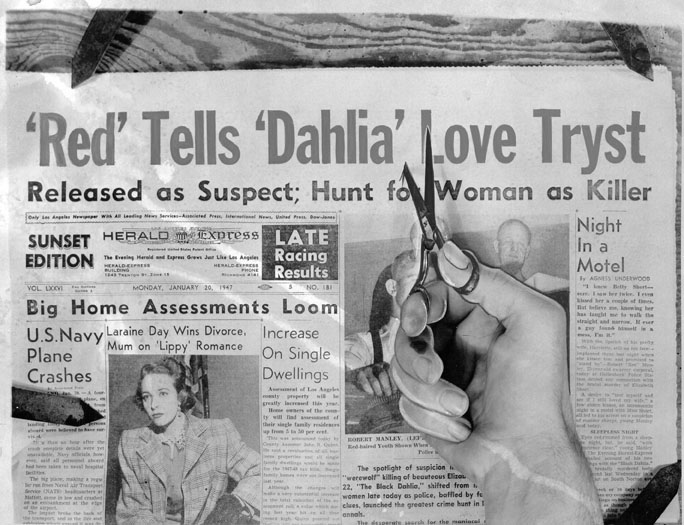
During a time when most female journalists were assigned to report on women’s club activities and fashion trends, Aggie covered the most important crime stories of the day. She attended actress Thelma Todd’s autopsy in December 1935 and was the only Los Angeles reporter to score a byline in the Black Dahlia case in January 1947. Aggie’s career may have started on a whim, but it lasted over 40 years.

Look closely and you can see Aggie's byline.

Look closely and you can see Aggie’s byline under “Night In a Motel”.  [Photo courtesy LAPL]

Over the past nine years I’ve corresponded with many of you and I’ve been fortunate enough to meet some of you in person. Your support and encouragement mean a lot to me, and whether you are new to the blog or have been following Deranged L.A. Crimes from the beginning I want to thank you sincerely for your readership.

There will be many more stories in 2022, and a few appearances too. Look for me in shows on the Investigation Discovery Network (I’ve been interviewed for Deadly Women, Deadly Affairs, Evil Twins, Evil Kin and many others.)  I am currently appearing in the series CITY OF ANGELS: CITY OF DEATH on HULU.

Kentucky University Press will publish my compilation of tales on L.A. crime during Prohibition. Title is TBA.

You can find my short story in the recently released anthology, PARTNERS IN CRIME, edited by Mitzi Szereto.

Whether it is on television, in the blog or some other medium I’m looking forward to telling more crime tales in 2022.

Happy Holidays and stay safe!

Joan

Candlelight Killer, Conclusion

At 7 p.m. on Thursday, March 12, 1970 an unidentified woman telephoned the Huntington Beach Police to report a drunk man lying beside the road. The man, sprawled in the muddy ditch, was twenty-five-year-old Thomas Astorina, but he wasn’t drunk, he was dead. Someone shot Thomas in the stomach with a .22 caliber pistol.

Police speculated that Thomas, arrested in February for possession of stolen property and reckless driving, may have crossed someone and paid with his life.

The killer, or killers, denied the twenty-five-year-old father of two, separated from his wife, a chance to make things right. Why did Thomas die?

Before his death, Thomas lived at 350 Avocado Street in Costa Mesa with three roommates, one of whom, Randall G. Allen, police booked on suspicion of murder. The other two roommates, Robert Connolly and Robert Liberty, remained at large.

Detectives knew of Robert’s trial for Marcella’s murder. His violent past and his release six months earlier from a state run mental institution made Robert a compelling suspect in Thomas’ death.

Robert flew under law enforcement’s radar from March until June when he embarked on a crime spree.

On Saturday, June 6, Robert and a female companion paid an unannounced visit to his mother’s home in Westminster. There, Robert pulled out a .22 caliber pistol and forced his mother to hand over $45. He claimed she owed him the money. Police did Robert’s mother a kindness when they declined to identify her for the newspapers.  Having Robert for a son was a big enough cross to bear in private.

Following the armed robbery of his mother, Robert and the unnamed woman hitchhiked south. A teenage boy picked them up and drove them to the apartment of Robert Irion in old town San Diego. Irion and Robert met in a state run mental facility. It was the same way Marcella Landis, Robert’s first victim, met him.

Rather than turn him loose, Robert and his companion forced the teenager into Irion’s apartment where he watched in horror as Robert and the woman shot and strangled the man.

The couple left the teenager tied up and stole Irion’s Peugeot. The kid escaped his bonds and called police. When police arrived, they found Irions on his bed surrounded by lit candles.

A note scrawled in pencil on a closet door near the body read: “The Candlelight Killer Strikes Again.”

Detectives feared Robert would pay another visit to Orange County, and they began a search of his usual hangouts. He wasn’t in any of his favorite haunts—he was on his way to Colorado.

On the way to Colorado, Robert and his companion, identified as twenty-four-year-old Kendell Bierly of New York City, picked up a 17-year-old boy, Glenn Allen Fawcett, from Midland, Texas. In Colorado Springs, the three of them rented a motel room where, according to Assistant Police Chief Carl Petry, “They harassed everyone quite a bit.”

Around midnight on Tuesday, June 9, the three entered the motel office and tied up the owner, his wife and their small child, and then stole $100 from the cash register. They then searched the adjoining house for more valuables. While they were busy ransacking the house, the manager broke free and ran to another motel and called police.

Robert discovered the manager gone and in retaliation he took the man’s wife, Edna Brenek, hostage. The four left the motel in Brenek’s car.

Detective Bernard Carter and Sergeant Neal Stratton arrived at the motel moments later. Stratton stayed at the motel while Carter took off to search for Brenek’s car. He spotted the vehicle and gave chase.

The chase continued along Interstate 25 south of Colorado Springs and reached speeds of 100  mph. During the chase Robert held Mrs. Brenek up in the rear window of the car and pointed a gun at her temple. He motioned for Carter to stay back.

Carter said, “I felt if he was going to shoot the woman, he would shoot her regardless of whether I was there. Somebody was shooting at me from the back window, but the bullets all went wild—didn’t even hit my car. When I pulled up pretty close behind them, I fired three shots into their car.”

Nine miles and five minutes after the chase began, Robert threw his weapon out of the window and the car pulled to the curb. They arrested Robert, Kendell, and Glenn without further incident.

Charged in Colorado Springs with armed robbery, kidnapping, and assault on a police officer, they set Robert’s bail at $200k and $100k each for the other two.

Huntington Beach and San Diego authorities began extradition proceedings on murder charges against Robert and Kendell.

Robert used his time in the Colorado Springs jail to make a new friend, James E. Jackson Jr., accused of the fatal beating of a local pawnbroker. The two men dug through a cinder block wall at the jail, and they made it halfway through before steel rods stalled their progress.  Someone discovered them and the intended jail break failed.

What do you do when your jailbreak fails? You get married. Robert and Kendall exchanged vows in a double-ring civil ceremony in the El Paso County Courthouse at Colorado Springs. District Judge John Gallagher officiated. A deputy public defender acted as Robert’s best man, and a female inmate was Kendell’s matron of honor. The groom wore no shoes and dressed in dark green pants and a green button-down shirt with its tail hanging out. The bride recited her vows wearing a medium length red-and-white striped dress, with brown shoes.

Robert and Kendell described the day as the “happiest” of their lives. They paid no special attention to the “until death us do part” pledge. Following the ceremony a sheriff’s deputy placed handcuffs on each and led them to separate jail cells where they continued to fight extradition to California.

California won its extradition fight with Robert, and on September 18 he left Colorado for San Diego to stand trial for murder. Kendall joined her husband in San Diego Superior Court where the newlyweds pleaded innocent to the charges against them.

Robert Connolly, the other suspect Thomas Astorina’s slaying, turned up in Waukesha, Wisconsin. The FBI arrested him in Milwaukee on December 10 on a charge of unlawful flight to avoid prosecution.

The case against the Candlelight Killer and his accomplices was coming together.

Robert shared a cell block with two other murder suspects—New Yorker, Timothy Earl Dudley, and Carl Raymond Riggs of Romulus, Michigan. Timothy stood accused of strangling a young man with a bootlace, and they charged Carl with murdering an off-duty San Diego police officer outside a bar.

At 7 a.m. on January 20, 1971, jailers did a routine check of the three killers. They returned at 10:50 in response to an alarm bell. They found Robert dead, face down on his bunk with a blanket pulled up to his head. There were scratches on the knuckles of his left hand, an abrasion on his left elbow and discoloration on the sides of his neck.

Carl admitted to the murder. He said he executed Robert because he believed he was a police informant. Some would say it was a fitting end for the Candlelight killer.