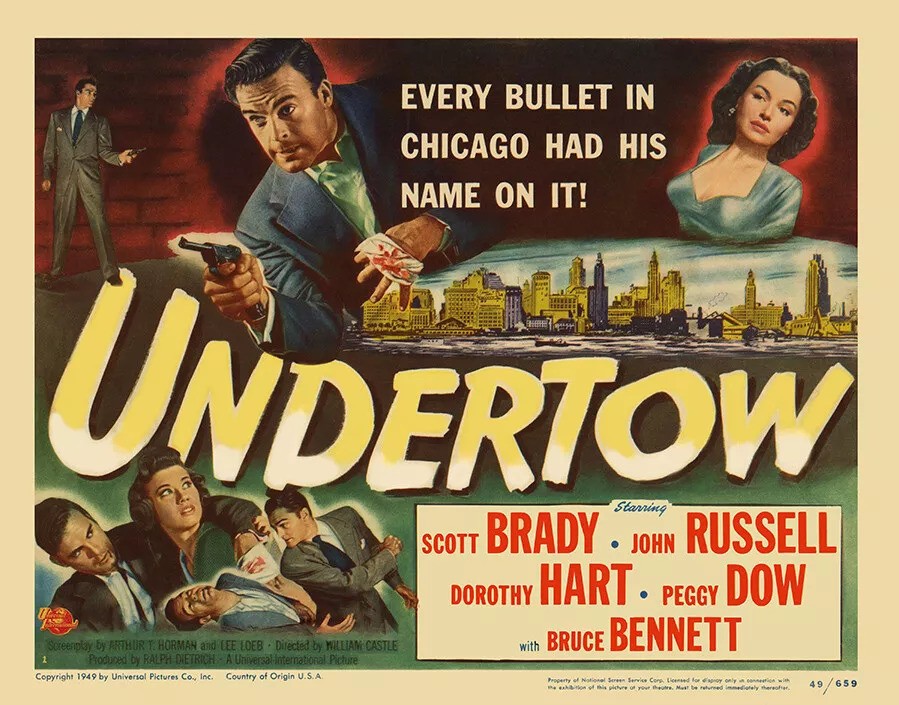
Welcome! The lobby of the Deranged L.A. Crimes theater is open! Grab a bucket of popcorn, some Milk Duds and a Coke and find a seat. Today’s feature is UNDERTOW, starring Scott Brady, John Russell, Dorothy Hart, Peggy Dow, and Bruce Bennett. Directed by William Castle.
TCM says:
After buying a half-interest in a small lodge near Reno, Tony Reagan, a recently discharged veteran, runs into Danny Morgan, an old friend from Chicago. Danny, who operates a Reno casino owned by Chicago racketeer Big Jim Lee, offers Tony a job, but Tony declines, stating that he gave up the “business” long ago. Tony shows Danny the engagement ring he plans to give Sally Lee, Big Jim’s niece and ward, and Danny, in turn, shows off the ring he has bought for his girl. Confident and carefree, Tony then helps novice gambler Ann McKnight win at the craps table. The next day, after he wires Sally that he will be seeing her soon, Tony boards the same Chicago-bound airplane on which Ann is traveling. Tony and Ann, a schoolteacher, spend the flight chatting, and Ann can barely hide her disappointment when Tony tells her about Sally. As Tony deplanes in Chicago, he is met by police detective Chuck Reckling, a childhood friend, who informs him that his captain, Kerrigan, wants to see him.
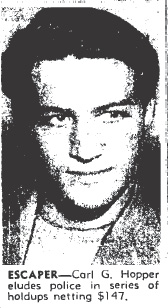
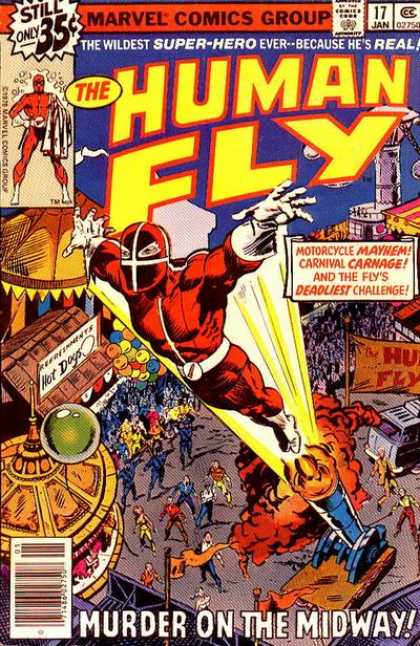
In 1943, the court sentenced Carl G. Hopper, the human fly, to fifteen years to life in prison. Of course, the human fly would not be content to sit in Folsom Prison while some of the best years of his life, um, flew by.
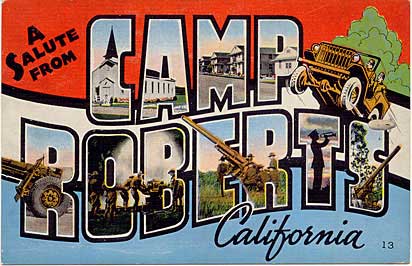
Hopper wangled an early parole so that he could join the Army—but if Folsom couldn’t hold him, how could the Army expect to? By late October 1944, he’d escaped from the guardhouse at Camp Roberts.
On October 27, 1944, at 7:50 p.m. someone observed Hopper in a car listed as stolen. A radio patrolman and a military policeman approached him at Third Street near Lucas Avenue. Exiting the vehicle, he approached the officers on foot. He drew a gun and made his escape when the M.P.’s gun jammed as he tried to fire at the fleeing man.
An hour later, Hopper held up John D. Bowman of Downey in front of 1212 Shatto Street. Bowman told cops that the bandit was “too drunk to know how to drive,” so he forced Bowman to start his (Bowman’s) car for him and then he sped away.
Next, he turned up in Beverly Hills, where he accosted Freddie Schwartz and Maude Beggs as they arrived at 514 N. Hillcrest Street for a party. Schwartz complied with Hopper’s demand for money, but he only had a $5 bill which Hopper hurled back at him in disgust, complaining that it was not enough.
At 10:35 pm. Hopper held-up Sherman Oaks residents Mr. and Mrs. Julian N. Cole and Mr. and Mrs. Walter Deutsch on Valley Vista Blvd. He took $25 from Cole and $2 from Deutsch.
Only minutes later, he held up Dorothy Snyder in the 600 block of S. June Street, but he refused to take her money when he discovered she had only $7 in her purse. The fly was a gentleman.
Hopper’s one-man crime wave continued.
A about half a block away from where he’d encountered Dorothy Snyder, he held up Dr. Rudolph Mueller, getting away with $65.
After robbing Dr. Mueller, police officers, S.W. Stevenson, and K.M. Aitken observed Hopper driving at a high rate of speed. They pursued him until he crashed into a palm tree on Second Avenue near Santa Barbara Street. The fly fled on foot between.
About ten minutes following the car crash, Hopper committed another hold-up. This time he robbed C.B. Kaufman of his sedan and $55 near 43rd Street and Western Avenue.
Then the fly disappeared.
At the Mexican border near Tijuana, Hopper got caught when his attempt to shoot a U.S. Customs Service inspector, who had stopped him for routine questioning, was thwarted. The inspector, Richard McCowan, wasn’t entirely satisfied with Hopper’s answers to his questions and ordered him to wait. Hopper responded by pulling out a .38 caliber revolver and jamming it into McCowan’s abdomen. Hopper may have seen too many western movies. He tried to discharge the weapon by fanning it, but failed to pull the hammer back far enough. Police took him into custody.
Hopper admitted his identity and boasted of how he led police in Los Angeles on a merry chase. He denied committing any of the crimes laid at his feet. He said, “they are just trying to pin something on me.”
The police did not have to pin anything on him. When they busted him, he had a gasoline ration book and a driver’s license made out to C.B. Kaufman, the man he had robbed of $55 and his sedan.
During the couple of days he conducted his one-man crime wave, Hopper committed six robberies, netting him $147. He stole three automobiles, one of which was a police car.
Authorities returned Carl to the Los Angeles County Jail, where they booked him on suspicion of the various crimes committed during his escape from Camp Roberts. They set his bail at $10,000.
The court tried, convicted, and then sentenced Hopper to life in Folsom Prison.
On December 12, 1946, only three years after his escape from the Hall of Justice Jail in Los Angeles, Hopper attempted to break out of Folsom. He slugged a guard, ran to the top cell block, broke a skylight, and made his way to temporary freedom over the roof, and down the ladder of an unmanned guard tower. Then he took a 12-foot leap from a wall. Hopper got no further than the prison yard when he discovered the American River, swollen by recent rains, was far too dangerous to cross.
When guards found Hopper, he said that he was “cold, wet and hungry.” They returned him to his cell.
The ordinary housefly lives from 15 to 30 days. The human fly never reached old age. On June Jail in Los Angeles, twenty-nine-year-old Hopper hanged himself with a bed sheet tied to a piece of plumbing in his solitary cell in Folsom Prison.
On April 2, 1943, Carl Hopper, a 22-year-old bandit and kidnapping suspect, made a daring escape from HOJJ (Hall of Justice Jail). His agility earned him the nickname of the “Human Fly. “
Police hunted the fly for several days before he surfaced in a shoe store at 4411 W. Slauson. He entered the store and, simulating a gun, he held up the manager, Hans A. Camnizter. He got away with $23.51. A private patrolman, Edward Scheld, heard the ruckus and saw Hopper fleeing the store. Scheld fired a couple of rounds, but they went wild. Hopper ran to the rear parking lot where he forced Sam Tenn and his wife out of their car and drove away. The Tenn’s car was found abandoned in the 400 block on E. Fairview Avenue, Inglewood.
Hall of Justice c. 1939 [LAPL Photo]
On April 18th, officers answered a prowler call at the home of Mrs. James Lehy, 38 Marion Avenue, Pasadena. Patrolman Gerald Wilson noticed Hopper limping along Harkness Street, a block away. Patrolman Wilson thought the limping man was drunk because he smelled of booze. Wilson cautiously approached the man and took him into custody for public intoxication. While driving toward the Pasadena Police Station, Hopper attacked Wilson in the neck, took the broadcasting microphone from the car, and leaped out.
Wilson gave chase. He caught up with Hopper in front of 234 N. El Molino. Hopper struggled, but Wilson subdued him and got him to the station.
At first Hopper refused to reveal his identity, but when they confronted him with fingerprint records and his photo in a police bulletin, he confessed. Then he wouldn’t shut up. He boasted about how he eluded police for over two weeks.;
“I started for San Francisco, hitchhiking, but learned there was a police blockade on the highway, so headed back here. Things went all right until last Thursday, when some fellows were chasing me, and I broke my leg getting off a little roof.”
The human fly continued to brag that he was under the noses of police every day in Pasadena. He’d taken a room in a house across from Pasadena Junior College, bought some collegiate clothes, and hung around malt shops where he mingled with students, showing off his leg in a plaster cast. His injured leg was his excuse for not being in the Army.
Police wanted to know how the human fly spent his time following his flight from the Hall of Justice. He told them on the day he escaped he went to the beach, bought a pair of swimming trunks, and lay all day with his face in the sand to avoid recognition.
Police booked Carl in Pasadena Jail for drunkenness, resisting arrest, vagrancy, suspicion of burglary and violating the Selective Service Act. They later transferred him to Central Jail and booked him on suspicion of robbery.
Officers took Carl to his room at 73 N. Harkness Street in Pasadena, but they didn’t find anything of interest except a small bottle filled with water. Hopper said he carried the vial on hold-ups and pretended it was nitroglycerin! He also told cops he used a cap pistol in his robberies.
Because the fly was such a slippery character, police believed his leg cast might hold hacksaw blades, a gun, or other jail breaking equipment. They planned to x-ray the cast to be sure. When they did, all they found was Carl’s leg.
Of course, everyone wanted to hear the details of the fly’s original escape. He recounted the story chapter and verse. He said he found his way to the 14th floor roof top, and lowered himself down a ventilator shaft to the eighth floor. He then exited through a window and ran down the stairs.
He said, “I was scared all the time. I’m darned lucky to be alive. The worst part was getting over the hump (the rounded top of the ventilator) and down the side of the fire wall. I put one foot inside the ventilator, next to the wall, and started sliding. Every four feet there was a two-inch reinforcing flange, and I grabbed that to slow up. I just about tore my fingers off.”
He told police that at one time he wanted to turn around and go back, but he couldn’t climb up. When he reached the eighth floor, he jumped six feet sideways into space and caught a narrow window ledge; still six floors above the concrete bottom of a light well.
Jesse Owen
Hopper attempted to plead insanity, but that went nowhere. He entered a guilty plea to two counts of armed robbery and one count of attempted robbery. Superior Judge Arthur Crum sentenced the human fly to a term of 15 years to life. He admitted to the judge that he was already on a 50-year parole from San Quentin where he served 26 months for first-degree robbery. They released him in December 1942 and began his life of crime anew.
Bailiffs, H. H. Parker and N. C. LeFever led the still limping fly away. The injury didn’t stop him from boasting about being an escape artist. Judge Crum reminded him others had escaped from the jail before him, but Hopper replied, “Not in the daytime, Your Honor.”
He said he could outrun Jesse Owens, handicap or no handicap. He even offered to prove it if the deputies would turn their backs. They declined.
Welcome! The lobby of the Deranged L.A. Crimes theater is open! Grab a bucket of popcorn, some Milk Duds and a Coke and find a seat. Today’s feature is MIDNIGHT MANHUNT (1945), starring Ann Savage, William Gargan, and Leo Gorcey.
Ann Savage appeared in four movies in 1945, one of them is tonight’s feature; another is DETOUR, a cult favorite. Her co-stars in MIDNIGHT MANHUNT are William Garagan and Leo Gorcey. Gargan,was a Academy Award-nominated actor known for’ THEY KNEW WHAT THEY WANTED, and his work on NBC radio and TV. You may recognize Gorcey from the DEAD END KIDS and the BOWERY BOYS.
Enjoy the movie!
IMDB says:
Master criminal Joe Wells is shot and left for dead in his hotel room. Wells rouses himself and wanders into the street before finally expiring in an alley next to a wax museum. Reporter Sue Gallagher, who lives upstairs from the museum, is first on the scene, and conceals the body among the wax exhibits in order to get a scoop.
Welcome! The lobby of the Deranged L.A. Crimes theater is open! Grab a bucket of popcorn, some Milk Duds and a Coke and find a seat. Today’s feature is THE UNSEEN starring Joel McCrea, Gail Russell, and Herbert Marshall.
The movie is an unofficial sequel to the THE UNINVITED (1944), which starred Ray Milland and Gail Russell, and based on a novel written by Ethel Lina White. Another of White’s novels was adapted for the screen and became Alfred Hitchcock’s wonderful film, THE LADY VANISHES.
Enjoy the movie!
TCM says:
On Crescent Drive in New Bristol, on a dark, rainy New England night, an elderly housekeeper named Alberta sees a man lurking inside the boarded-up house at Number Eleven, and is strangled by him in nearby Salem Alley. Young Barnaby Fielding watches the scene from his bedroom window at Number Ten, and retrieves Alberta’s gold watch. The murder is still unsolved when Elizabeth Howard arrives at the Fieldings’ to be the new governess for Barnaby and his sister Ellen. Barnaby is strangely devoted to their former governess, Maxine, who orders him to keep watch at night and leave his stuffed elephant in the window. Elizabeth finds the gold watch and gives it to Barnaby’s father David, but because he was suspected of killing his wife, who died in an automobile accident two years earlier, David is afraid to give it to the police.
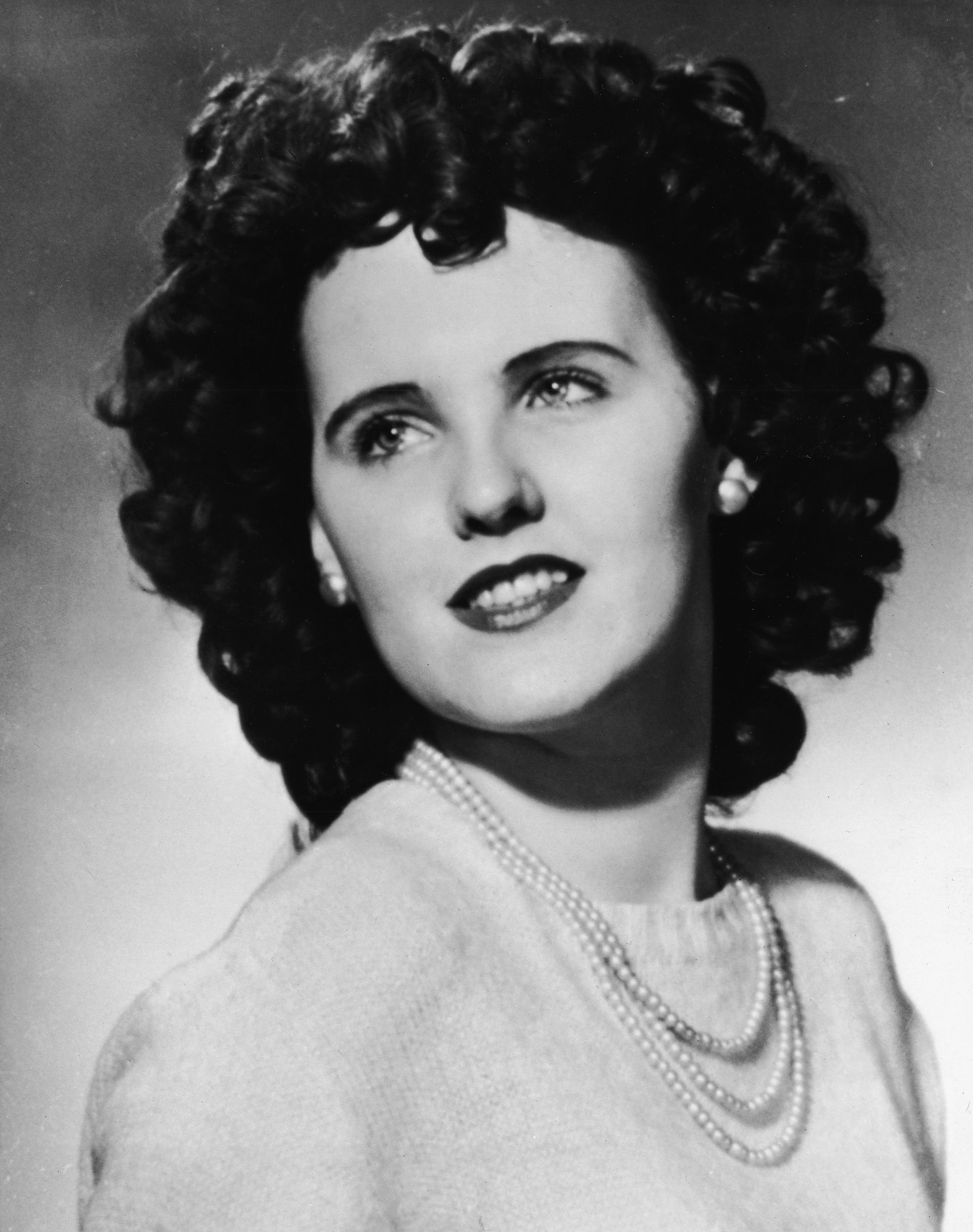
Today, July 29, 2024, marks the centenary of Elizabeth Short’s birth. Born in Boston, Beth, as she often preferred to be called, was the middle child of Cleo and Phoebe Short. She had four sisters: Virginia, Dorothea, Elnora, and Muriel.
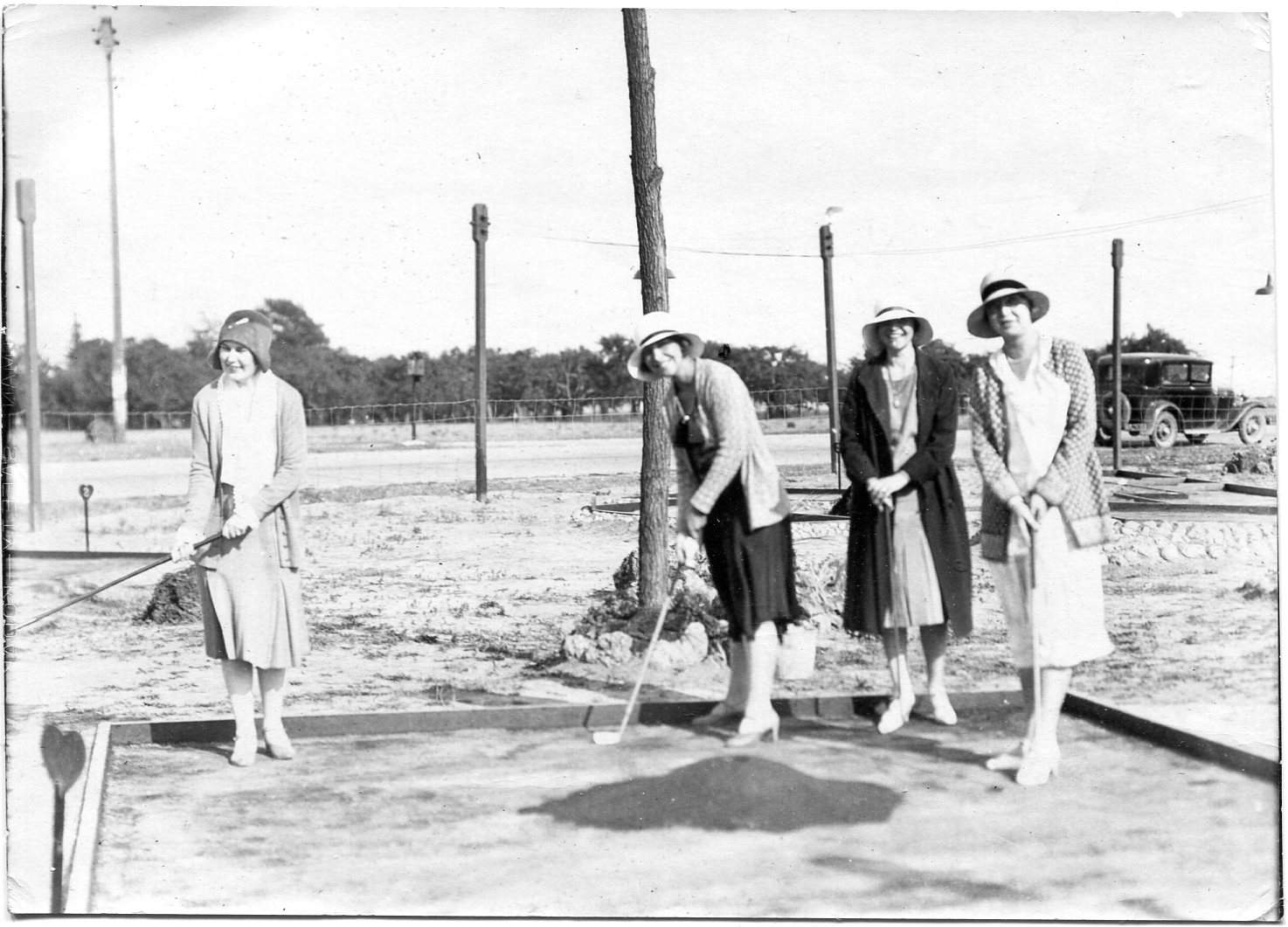
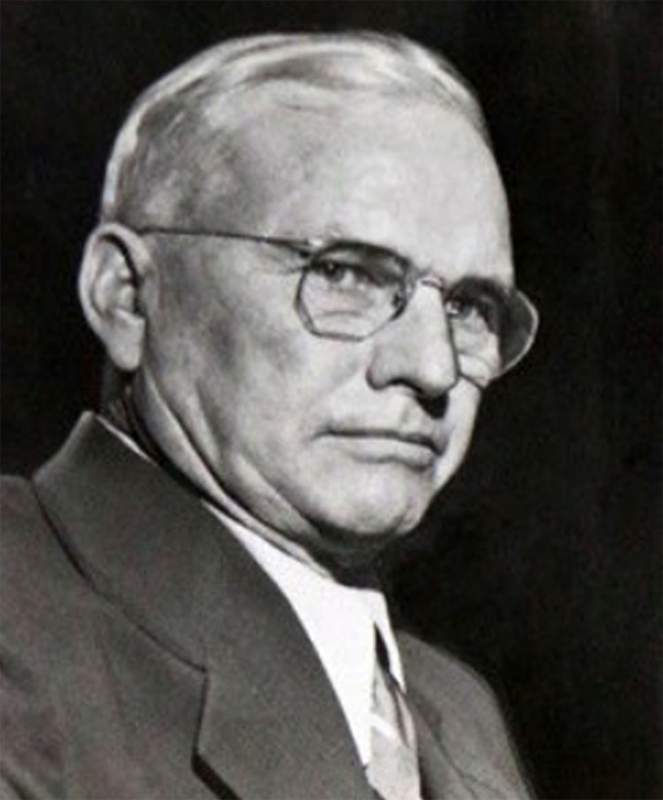
Cleo held various sales jobs over the years. The miniture golf craze of the 1920s captured his imagination. He opened a course, but in 1930, the business tanked. Rather than face the loss, and his responsibilities to his family, he positioned his car close to a bridge to create the appearance of suicide. A houseful of women has its comforts, but Cleo’s abandonment appears to have profoundly affected Beth.
Miniature golf was all the rage in the 1920s and 1930s.
A few years later, Cleo wrote to Phoebe and asked for forgiveness. She refused. At least Beth knew Cleo was alive. She hoped for a relationship. She found him in California. Rather than a loving father, he was a mean drunk, looking for a housekeeper, not a daughter. Their reunion failed.
Cleo Short
In 1943, she worked at Camp Cooke, now Vandenberg Air Force Base, where they voted her “Camp Cutie. On September 23, 1943, she got arrested for underage drinking at the El Paseo restaurant in Santa Barbara. The jail matron gave her money for a bus ticket back to Medford, Massachusetts.
Because of her asthma, Beth would regularly escape the harsh Massachusetts winters to work as a waitress in Florida.
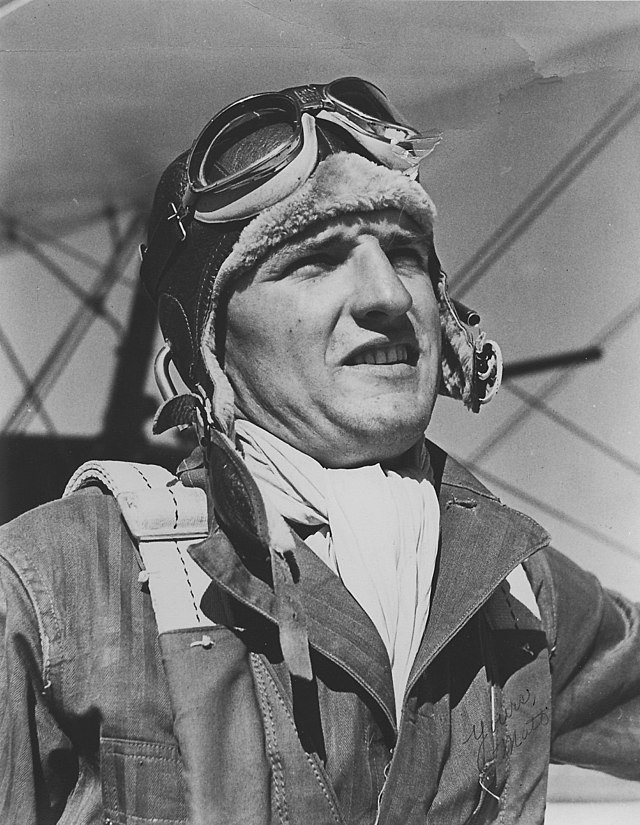
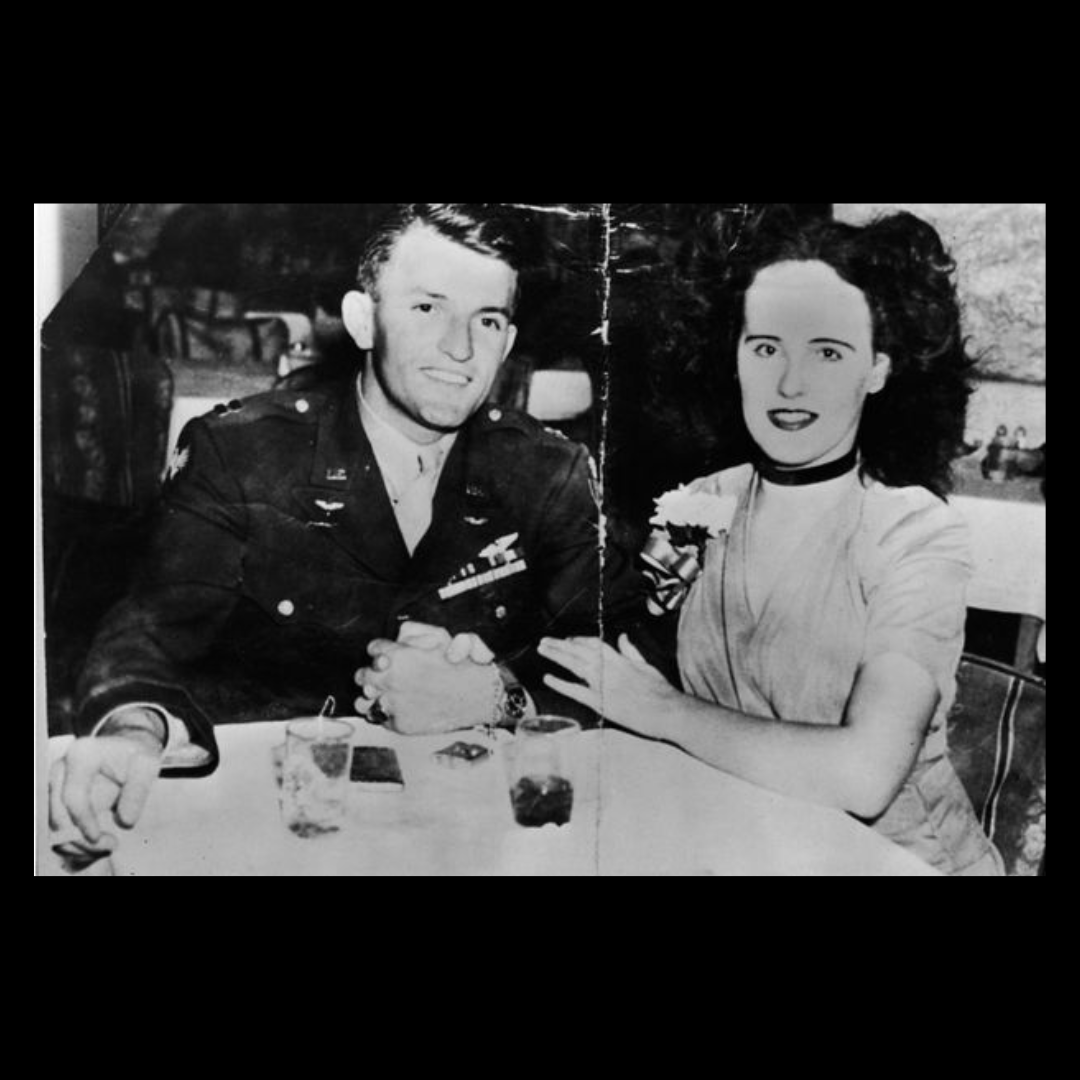
Major Matt Gordon, a decorated fighter pilot, met Beth in Miami, Florida while on leave in 1944. He may have been on leave after sustaining injuries in a plane crash in February. A photo of them together shows him smiling, and Beth with stars in her eyes, and a proprietary hand on his arm. The handsome pilot was everything the twenty-year-old wanted.
Matt Gordon
Matt’s death in a plane crash near Kalaikunda in West Bengal, India, on August 10, 1945, was a cruel twist of fate. It happened just one day after the bombing of Nagasaki, Japan, and only weeks before the war ended. Matt’s loss devastated Beth.
After August 1945, she never worked again. She drifted from Medford, to Chicago, Florida, and to Los Angeles—chasing a ghost.
She lived in Long Beach, California, during the summer of 1946. While there, friends nicknamed her the Black Dahlia. By the end of the year, she was couch surfing at the home of Dorothy and Elvera French in San Diego. While in San Diego, she met a traveling salesman, Robert “Red” Manley, when he offered her a ride.
Beth and the married salesman, a fact he no doubt concealed from her, corresponded for a month or two before she asked him if he would drive her back to Los Angeles in early January 1947. He agreed.
Matt Gordon and Beth Short
Red picked her up at the French’s on January 8th. They drove up the coast and stayed the night in a motel before arriving in Los Angeles on January 9th. Beth checked her luggage at the bus depot. Red refused to leave her in such a sketchy neighborhood. He took her to the Biltmore Hotel, where she told him she was meeting her sister, Virginia. It was a lie. Virginia lived hundreds of miles north in Oakland.
Red stayed with her in the hotel lobby for a long time before he left. Beth, now on her own, left the hotel lobby, turned right on Olive, and vanished.
On the morning of January 15, a Leimert Park housewife, Betty Bersinger, discovered Beth’s body while out running errands. Where was Beth for those missing days? No one who knew her saw her during that time. The thought of her being held captive by her killer is horrifying.
Once police established her identity, reporters saw it as an opportunity to pry into every detail of Beth’s life. The dead lose their right to privacy. Speculation filled column after column in the newspapers. The prevailing attitude was that nice girls do not get murdered. Yet Beth had done nothing, good or bad, worthy of note. At 22-years-old, she never got the chance.
As time passed with no solution, the case grew cold. Other murders captured headlines. It was not until decades later, following a couple of books, and a mid-1970s made-for-TV movie, that Beth’s story became news again.
It is understandable that the case is known in Los Angeles, but what I find most interesting is that the 77-year-old Los Angeles murder mystery has drawn global interest. What is it about Beth’s murder that resonates with people even today?
It may be the supposed Hollywood connection.
Most contemporary articles erroneously describe Beth as an aspiring actress, or starlet. Such characterizations make her murder the ultimate Hollywood heartbreak story with a violent twist.
Still, two distinct narratives about Beth co-exist. One is the myth of the Black Dahlia, a fictional character based on Beth’s life.
The second story, and the one I believe is true, is that of a depressed, confused, and needy young woman seeking marriage and stability in the chaos and uncertainty of the post-war world.
Each of her sisters married and had children. By the time of Phoebe’s death in 1992, three daughters, thirteen grandchildren, twenty-one great-grandchildren, and one great-great-grandson survived her. If Beth had lived, she would undoubtedly contributed heirs.
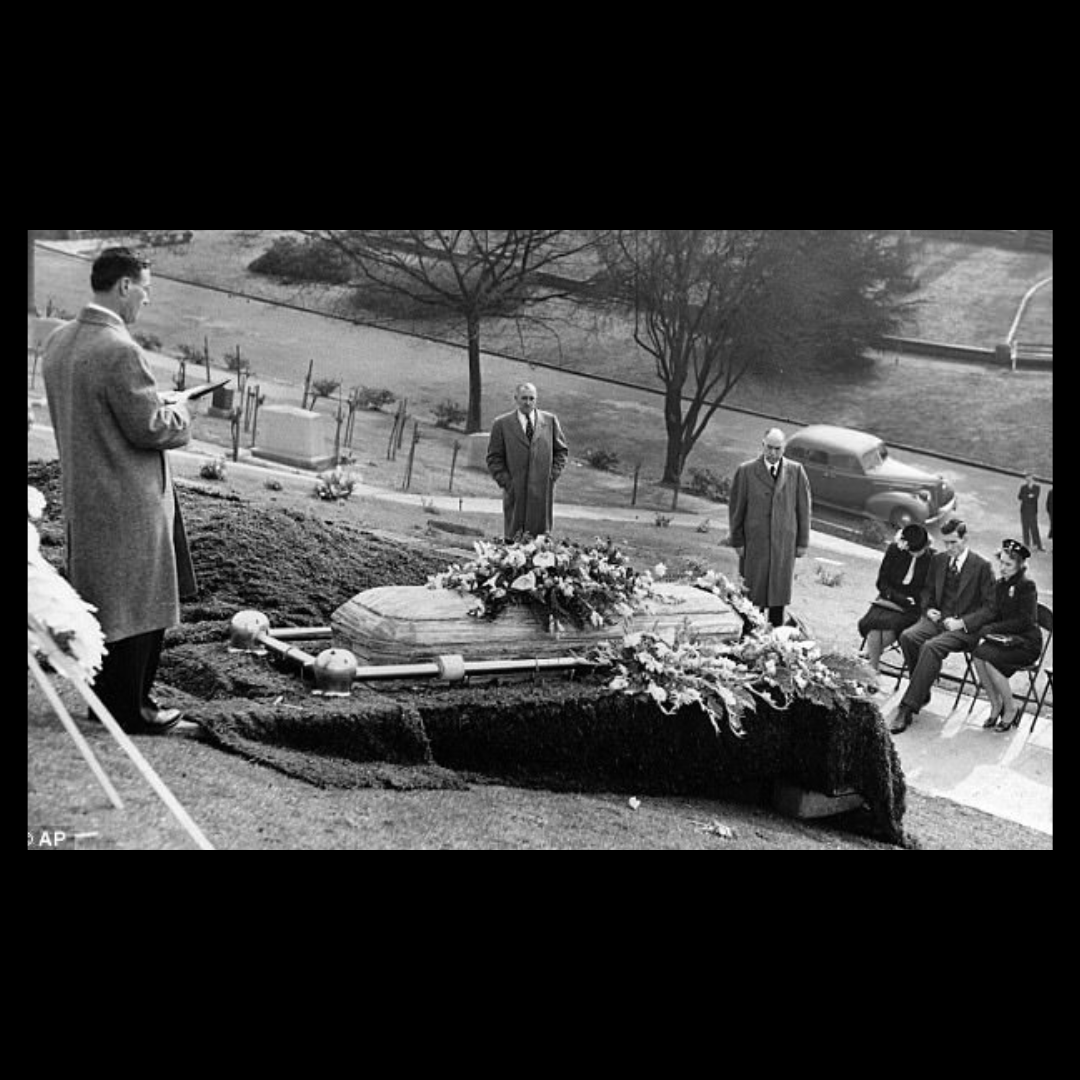
Beth’s funeral in Oakland, California
We have lost sight of the troubled young woman who came to California to connect with her father—not to break into the movies.
The tragedy of Beth’s life is not that she failed to achieve Hollywood stardom, she never sought it.
Beth was looking for what most people her age wanted—marriage and a home. She pursued a romantic vision of a husband in uniform with shiny bright brass buttons, and a bungalow with a white picket fence.
Judging by an undated letter she received from Lieutenant Stephen Wolak, she did not hesitate to press a man for marriage. Wolak’s letter reads in part, “When you mention marriage in your letter, Beth, I get to wondering. Infatuation is sometimes mistaken for true love. I know whereof I speak, because my ardent love soon cools off.”
Wolak’s response to Beth’s letter is a frank assessment of their relationship—which, in his estimation, was not serious. You can gauge her desperation from his response.
How many other men in uniform received letters from Beth suggesting marriage?
A depressed and lonely young woman with daddy issues looking for love is not necessarily the stuff of bestselling books or blockbuster movies.
The pathos of Beth’s real life can make us uncomfortable, so we perpetuate the myth of the Black Dahlia. It is the epic tale of a beautiful young woman seeking stardom who meets a brutal end at the hands of a depraved killer that mesmerizes us.
I imagine in the years to come—no matter what may be revealed; we will continue to hold fast to the myth.
Welcome! The lobby of the Deranged L.A. Crimes theater is open! Grab a bucket of popcorn, some Milk Duds and a Coke and find a seat. Today’s feature WHISTLE STOP starring George Raft, Ava Gardner, Victor McLaglen, and Tom Conway.
Enjoy the movie!
TCM says:
TCM says: When Mary returns to Ashbury, the small town she left several years earlier, her first stop is the house she owns, where Molly Veech and her family now live. Before she left town, Mary was in love with Molly’s son Kenny, a loafer and a drunk, but was driven away by his lack of ambition. Mary is disappointed to learn that Kenny still has no job and spends his nights gambling and drinking. That night at dinner, Kenny is angered when Mary receives a large bouquet of roses from Lew, the owner of the town’s hotel and bar, and follows Mary to Lew’s club when she goes there to thank him.
Welcome! The lobby of the Deranged L.A. Crimes theater is open! Grab a bucket of popcorn, some Milk Duds and a Coke and find a seat. Tonight’s feature is FEAR IN THE NIGHT, Paul Kelly, DeForest Kelley, and Ann Doran.
One of the film’s stars, Paul Kelly, was involved in a real-life murder case. In 1927. Kelly beat to death actor Ray Raymond, husband of his lover, Dorothy Mackaye. Kelly did time in San Quentin for the crime, and so did Mackaye. Read all about their story in my new book, OF MOBSTERS AND MOVIE STARS: THE BLOODY GOLDEN AGE OF HOLLYWOOD.
This film is based the story NIGHTMARE, by William Irish, one of the pen names of writer Cornell Woolrich. Woolrich wrote many stories that made it to film: Rear Window, The Bride Wore Black, Black Angel, and Phantom Lady, to name just a few. If you are not familiar with Woolrich, he is worth reading. His biographer, Francis Nevins Jr., rated Woolrich the fourth best crime writer of his day, behind Dashiell Hammett, Erle Stanley Gardner and Raymond Chandler
Enjoy the movie!
TCM says:
Bank teller Vince Grayson dreams he is in a mysterious mirror-panelled octagonal room, where a man accompanied by a blonde woman is robbing a safe. Vince and the man fight, and when the man begins to strangle Vince, the woman hands him an awl, with which he pierces the stranger’s heart. The woman flees, and Vince places the man’s body behind one of the mirrored doors and locks it, taking the key. When Vince awakens, he discovers the key in his coat and thinks that he may be a murderer. Distraught, he calls in sick at work and visits his brother-in-law, homicide detective Cliff Harlan.
Welcome! The lobby of the Deranged L.A. Crimes theater is open! Grab a bucket of popcorn, some Milk Duds and a Coke and find a seat. Tonight’s feature is JOHNNY STOOL PIGEON (194) and stars Howard Duff, Shelley Winters, and Dan Duryea. Enjoy the movie!
TCM says:
While following a trail of narcotics, San Francisco-based Treasury agents George Morton and Sam Harrison interrupt an illicit exchange between sailor John Whalen and drug dealer Pete Carter. In the ensuing confusion, Carter shoots and kills Whalen, then escapes. Later, Morton and Harrison locate Carter, but arrive at his hideout seconds after hired killer Joey Hyatt, a mute, murders him. From Carter’s address book, the agents deduce that he was working with the Arctic World Trading Company of Vancouver, Canada. After Morton offers to go undercover to expose the drug ring, he contacts convict Johnny Evans, a former childhood friend, and asks for his help in catching the dealers.
Welcome! The lobby of the Deranged L.A. Crimes theater is open! Grab a bucket of popcorn, some Milk Duds and a Coke and find a seat. Tonight’s feature is SLEEP, MY LOVE (1948), and stars Claudette Colbert, Robert Cummings, and Don Ameche. Enjoy the movie!
TCM says:
Alison Courtland, who is from a wealthy family and married to architect Richard Courtland, wakes up hysterical on board a train from New York to Boston with no idea of how she got there. At the airport on her way back to New York, she meets an old friend, Barby, there to see off explorer Bruce Elcott, who joins Alison’s flight. Richard, meanwhile, has informed police sergeant Strake about Alison’s unexplained absence and because she has disappeared before, he is arranging for her to see an eminent psychiatrist, Dr. Rhinehart.