Due to an audio glitch on February 9th, this webinar has been rescheduled to February 16, 2021 at 7 pm.
Please join me for one of the wackiest, and most deranged, love stories in L.A.’s history.
There is always some madness in love. — Friedrich Nietzsche
On the evening of August 22, 1922, at about 10:30 pm, Fred Oesterreich and his wife Walburga, nicknamed Dolly, returned to their home at 858 North La Fayette Place after visiting friends in the Wilshire district.
The couple engaged in a bitter argument as they crossed the threshold of their home; however, it was not unusual for the heavy-drinking apron manufacturer and his wife to shout at each other. After over 25 years of marriage each was armed with a vast stockpile of grievances to hurl with deadly accuracy at the other.
Their evenings customarily ended when the combatants retired to their separate quarters to lick their wounds; but this night ended like no other before it. Moments after arriving home, Dolly found herself locked in her upstairs bedroom closet screaming for help. Fred lay dead in a pool of his own blood on the floor downstairs near the front door.
Publicly, the police attributed Fred’s murder to burglars. Privately, they were skeptical of Dolly’s account. With detectives unable to substantiate their suspicions with hard evidence—Fred’s case went cold.
In 1930, Fred’s killer came forward and revealed a bizarre tale of sex, murder, and attics.
Join me on Tuesday, February 16, 2021 at 7 p.m. Pacific time for a webinar about the strangest love affair in L.A.’s history.
If you can’t watch the live presentation, it will be recorded and available on demand via BigMarker.
On December 15, 1927, twelve-year-old Marion Parker, daughter of Perry Parker a prominent banker, was abducted from Mt. Vernon Junior High School.
The kidnapper went directly to the office of Mary Holt, the school’s registrar. The young man told her that Perry Parker was seriously injured in an automobile accident and was calling for his youngest daughter. Times were different then; Holt never asked the man for his identification, nor did she ask him what he meant by the youngest daughter since Marion was a twin, separated in age from her sister Marjorie by minutes.
The demeanor of the young man erased any doubt that Mary Holt had about his character or intent. He insisted that he was an employee at Parker’s bank. When police questioned her later, Holt said the man seemed sincere because he was quick to suggest that if she doubted his word, she should phone the bank.
If only she had.
William Edward Hickman, who nicknamed himself ‘The Fox’, murdered and mutilated the girl. The crime made him the subject of the largest manhunt in Los Angeles’ history until the 1947 murder of Elizabeth Short.
Who was William Edward Hickman, and why did he kidnap and murder and innocent child?
Below is the webinar schedule for the remainder of December 2020. Deranged L.A. Crimes webinars will be dark from December 23, 2020 through January 11, 2021.
If you missed the UNSOLVED HOMICIDES OF WOMEN IN LOS ANGELES DURING THE 1940s in November, a brand new version will be offered on January 12, 2021.
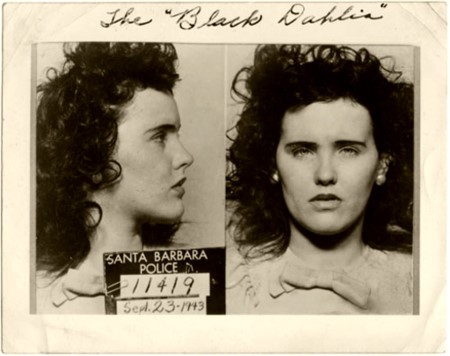
January 2021 marks the 74th anniversary of the murder of Elizabeth Short, the Black Dahlia. It is fitting that we look at that crime and some of the other unsolved murders of women during that deadly decade.
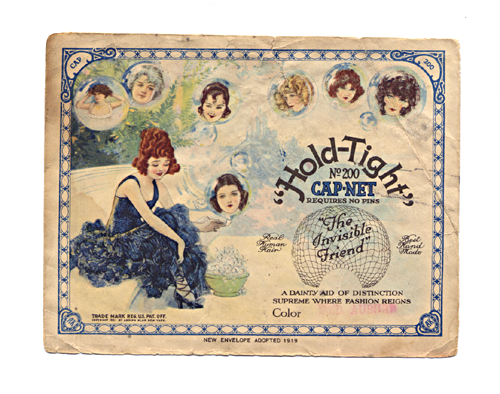
My other passion in life, besides true crime, is vintage cosmetics ephemera, and fashion. On January 19, 2021, the topic is HAIR TODAY, GONE TOMORROW: HOW THE BOB CHANGED HISTORY. You’ll learn about the history of the bob hairdo, a style that has endured for over 100 years. This is my opportunity to display some of the girlie treasures from my vast collection.
Crime topics for 2021 will include: Harvey Glatman: The Glamour Girl Killer and Attic Sex Slave: The Strange Affair of Dolly Oesterreich and Otto Sanhuber.
What is it about Los Angeles that brings out the evil in a woman? Crime writer Raymond Chandler speculated that a local weather phenomenon could cause a woman to contemplate murder:
“There was a desert wind blowing that night. It was one of those hot dry Santa Anas that come down through the mountain passes and curl your hair and make your nerves jump and your skin itch. On nights like that every booze party ends in a fight. Meek little wives feel the edge of the carving knife and study their husbands’ necks. Anything can happen. You can even get a full glass of beer at a cocktail lounge.”
Join me on Tuesday, November 24, 2020 at 7pm PST for a webinar that will introduce you to some of the baddest dames in L.A. history.
“There is no killer type. Slayers range all ages, all sexes. . . Homicide is expected from the hoodlum, the gun moll, the gulled lover. It isn’t from the teenager, the . . . sweet old lady, the fragile housewife, the respectable gent who is the proverbial pillar of society.“
“They kill with pistol, rifle, or shotgun; with the blade . . . with poison; with ax, hatchet or hammer; with cord or necktie; with fake accidents; with blunt instruments or with phony drownings.“
“Killers do not run true to form. What they have in common is killing.”
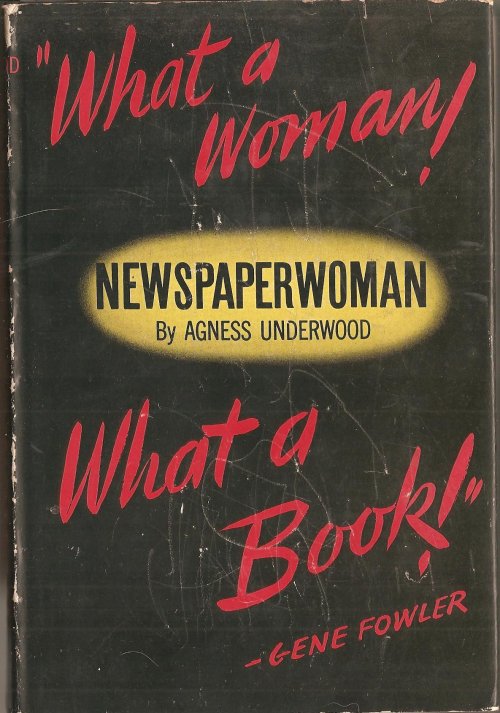
The quote is from my favorite Los Angeles crime reporter Aggie Underwood, from her 1949 autobiography, NEWSPAPERWOMAN, and she knew what she was talking about.
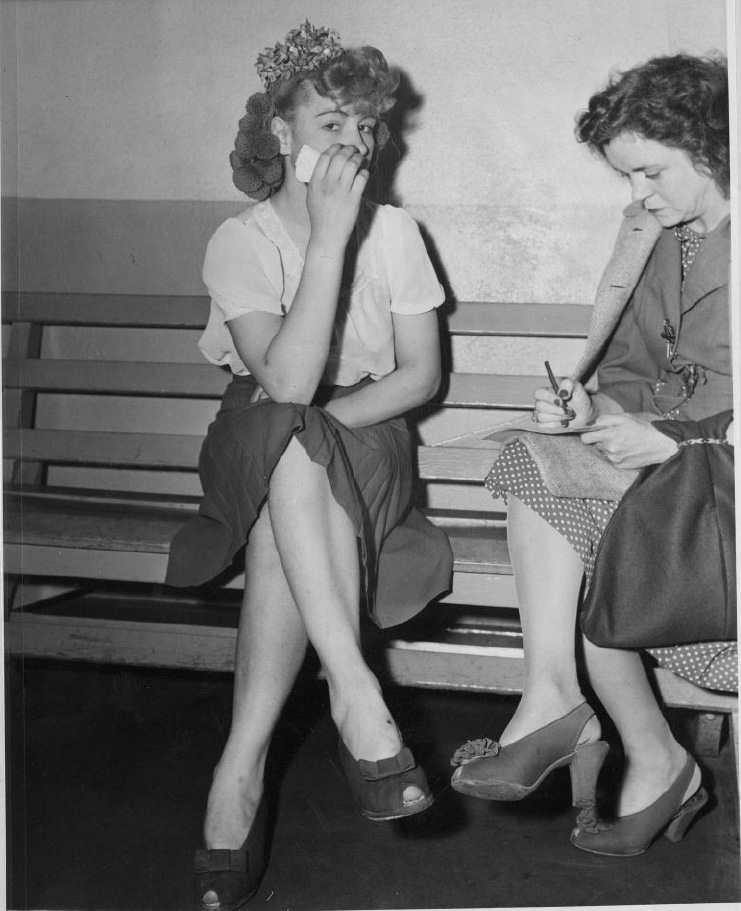
During her career as a reporter, Aggie covered nearly every major crime story in the city. Law enforcement respected her and occasionally sought her opinion regarding a suspect. They even credited her with solving a few crimes.
Cops and journalists have a lot in common. Both professions rely on intuition guided by experience and intelligence. They see the worst that humanity has to offer, but no matter what they witness, they strive to maintain their objectivity.
Inspired by Aggie, I began this blog in 2012 and wrote her Wikipedia page. In 2016, I curated an exhibit at the Central Library on Aggie’s career and wrote the companion book.
Join me on November 17, 2020 at 7pm PST for the webinar and you will meet one of the most fascinating women in Los Angeles’ history.
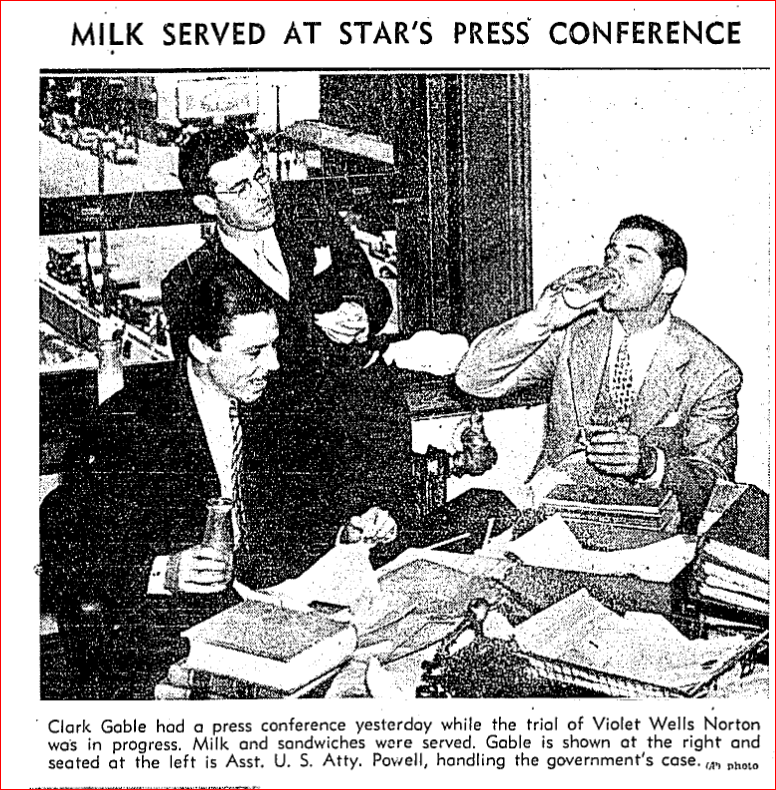
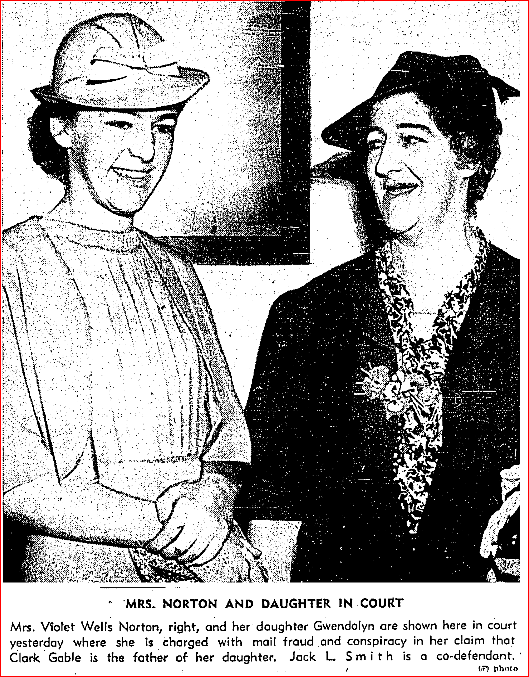
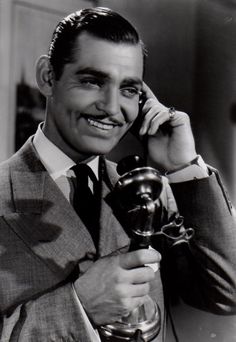
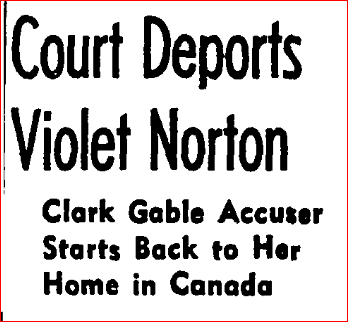
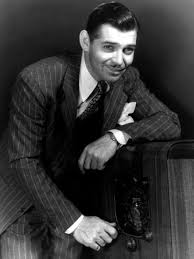
In her effort to prove that Clark Gable fathered her daughter, Gwendolyn, Violet mounted a vigorous media campaign. If you believed her story, he was the man who seduced and abandoned her 14 years earlier in a sleepy English village.
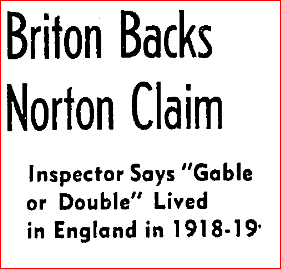
There was limited support for Violet’s fantastical tale. In fact, other than her immediate family (and even they weren’t enthusiastic), Violet’s only supporter was H. Newton, a Birmingham, England factory inspector.
In an interview with the London Daily Express, Newton confirmed that a man calling himself Frank Billings, who bore a striking resemblance to Gable, ran a poultry farm at Billericay “around 1918-1919”. The dates supplied by Newton were a few years earlier than Violet’s alleged affair.
Newton studied a photo of Gable and said,
“That either is Frank Billings or his double, even to the trick of folding one hand over the other. Yes, he has the same brow, nose, temples and twisted, cynical half-smile.”
Adding another layer of absurdity to the unfolding story was a penny postcard mailed from Tacoma, Washington. It read,
“Dear Sir—The lady is right—Frank Billings is the father of her child, but I am the man. Also am a perfect double for C.G.”
The perfect double from Tacoma did not come forward.
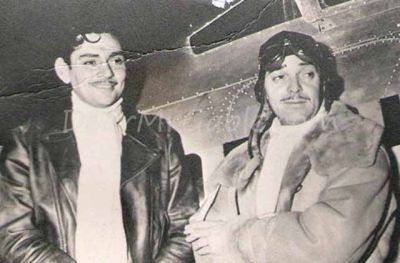
CLARK GABLE WITH HIS STUNT DOUBLE
Several of Gable’s friends, acquaintances, and a former wife received subpoenas to appear in court. Among those supoenaed was Jimmy Fidler, a radio personality and journalist. Violet wrote to Fidler offering to sell him “for a price” the story of her affair with Clark Gable, the man she knew as Frank Billings.
Violet shared with Fidler her version of how Gable got his screen name. She wrote:
“In Billericay, Essex, England where I was wooed and won by a man known as Frank Billings, but who I now believe to be Clark Gable, this man told me of his love. I later learned, through pictures and a story in a film fan magazine, that he had changed his name to Clark Gable. It is my belief that he got his name in this way—our grocer, in Billericay was named Clark and he owned an estate he called The Gables. Hence Clark Gables.”
Yes, Violet frequently referred to the actor as Gables and was apparently unaware of his birthname, William Clark Gable.
The letters to Fidler weren’t the only ones Violet wrote. She attempted to correspond with Mae West, but West’s publicist, Terrell De Lapp, intercepted the missive during a routine vetting of Miss West’s incoming mail.
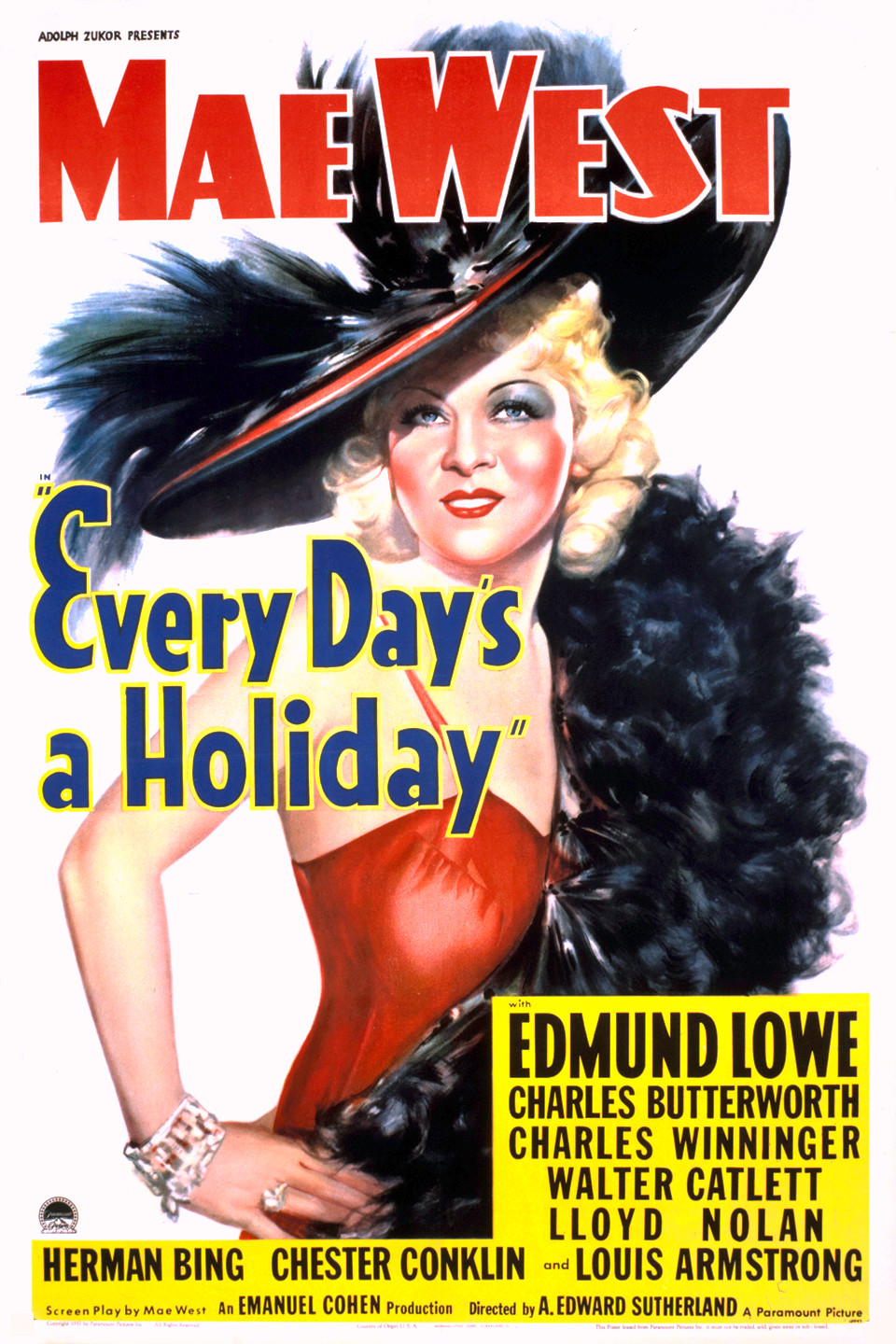
MAE WEST IN ‘EVERY DAY’S A HOLIDAY”–1937
The letter received at Paramount Studio in January 1936 read:
“Dear Mae West—How would you like to be fairy godmother to Clark Gable’s child. Nothing could be more lovely than for you, Miss West, to be fairy godmother to my Gwendolyn, and put Clark Gable to shame.”
Despite Violet’s attempts to garner support from Fidler and West, and who knows how many others, Gable had no difficulty refuting her claims. He produced witnesses from the Pacific Northwest to prove that during the time he was allegedly impregnating his accuser, he was selling neckties and working as a lumberjack in Oregon.
Gable’s first wife, Josephine Dillon, was steadfast in her defense of her former spouse.
JOSEPHINE DILLON–CLARK GABLE’S FIRST WIFE c. 1919
“Clark and I were married in December 1924. But I knew him the year before in Portland, Oregon when he attended my dramatic classes. To my knowledge, he has never been in England. It is sure he was not there in 1923 or 1924 when we were married, and, therefore, could not be the father of a 13-year-old girl born there at that time.”
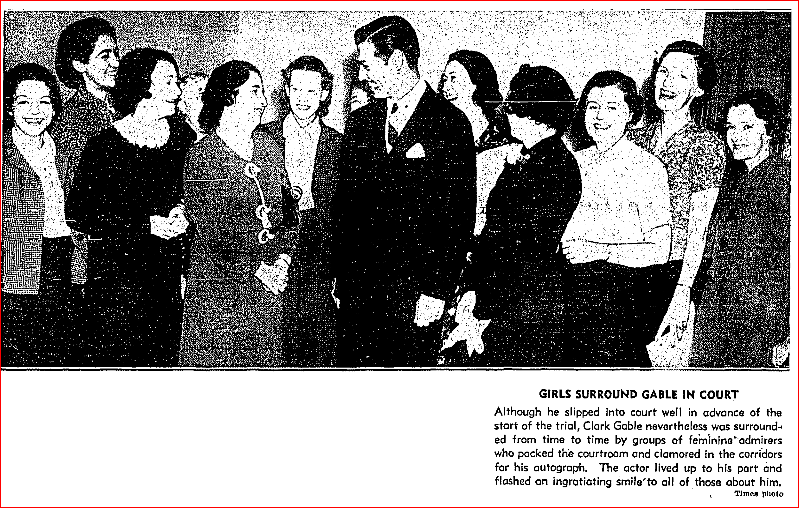
Violet’s accusation was ludicrous, but on the plus side the trial afforded hundreds of women an opportunity to catch a glimpse of the man who would become The King of Hollywood. Secretaries and stenographers in the Federal Building held an impromptu reception for him. He autographed mementoes and chatted with them. They were in heaven.
In the hallway prior to testifying, Gable chain smoked and appeared a little nervous. He told reporters:
“It’s my first court appearance. I don’t know what to expect.”
In court, Gable testified that he did not recognize the woman in court.
For her part, Violet remarked sotto voce to her attorney:
“That’s him. I’d know him anywhere.”
Courtroom spectators, keen to see Gable face his alleged progeny, were disappointed when he wasn’t required to appear during her testimony.
Judge Cosgrave wasn’t well-pleased that Gwendolyn was subpoenaed to appear.
“I regret that this witness has to be called at all, and I insist that her examination be limited only to extremely necessary points bearing on the charges in the indictment.”
Gwendolyn had nothing substantive to a add to her mother’s scheme—the girl was Violet’s pawn.
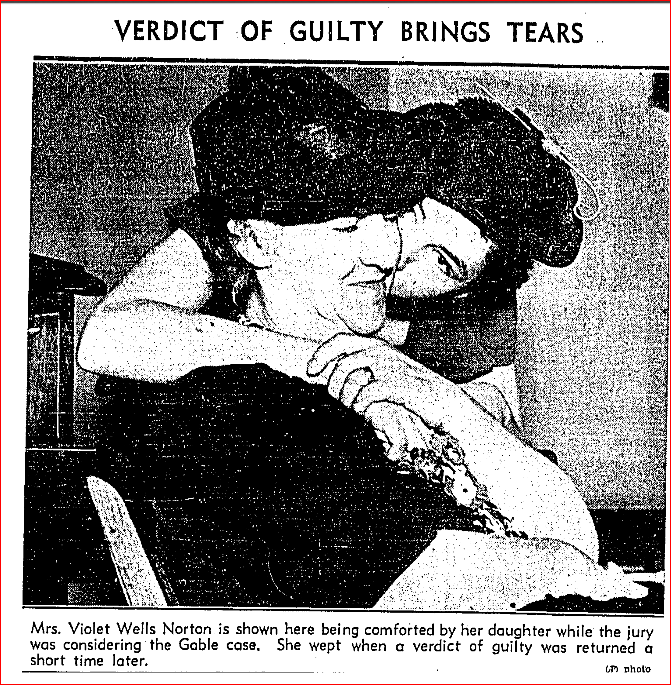
The jury began deliberations at 3:40 pm on April 23, 1937 and returned with their verdict at 5:20 pm. They found Violet guilty of fraudulent usage of the mails.
As Gwendolyn attempted to console her distraught mother, reporters reached Gable by telephone. He said:
“Of necessity, the woman’s charges were false, in view of the fact that I have never been in England and had never seen her until the trial began. It is unfortunate, of course, the she must come to grief in this manner, particularly because of her children.”
U.S. Attorney Powell, who prosecuted Violet, was not as understanding as Gable.
“This woman should be made an example, that men of Clark Gable’s type cannot be crucified in such a manner.”
Powell went on to describe Clark’s ascent to stardom:
“Clark Gable has pulled himself up by the bootstraps, out of an obscure background. He worked as a lumberjack, longshoreman, struggling actor, to achieve the ambition which drove him on to a $250,000-a-year salary.”
Attorney Morris Lavine, who would handle Violet’s appeals, defended her.
“She was simply calling to her sweetheart. She was sincere,” he said.
It is doubtful that Morris Lavine believed a word Violet said, but he was an attorney known to go the extra mile for a client. Violet was lucky to have him as her appeals attorney. (Lavine’s life and career in Los Angeles is a topic I’ll cover in future posts. He was a fascinating man and the self-described “defender of the damned.”)
The appeal Lavine filed on Violet’s behalf was nothing short of brilliant. He contended that her letter did not fall within the statute concerning mail fraud.
The court agreed with Lavine and ruled in Violet’s favor in October 1937. They characterized Violet’s plan as “a scheme to coerce or extort and is a species of blackmail.”
If local authorities had filed on Violet for blackmail or extortion she would have done more time.
In February 1938, following the success of her appeal, Violet faced deportation. An action was filed on the grounds that she had overstayed her visa and that she committed a crime involving moral turpitude. Lavine told reporters that Violet would stay with a sister in Vancouver.
Gwendolyn did not accompany her mother to Canada. She was placed in a private school by a local religious organization and was required to remain there until June.
Was Violet a greedy blackmailer or a delusional dreamer? We’ll never know for sure.
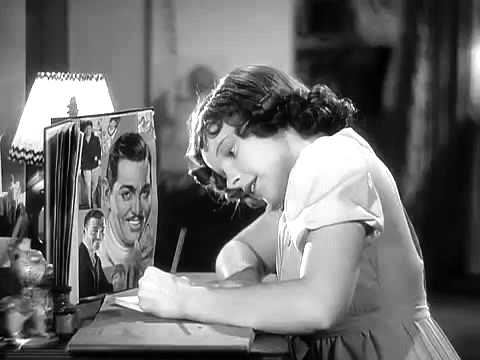
Clark Gable received thousands of fan letters over the course of his decades long career. Violet’s letter was an unwelcome anomaly. The adoring letter written to him by Judy Garland in the movie Broadway Melody of 1938 was probably a more accurate depiction of the kinds of letters he received.
As Judy writes she sings, ‘You Made Me Love You.” She performed the song earlier, in 1936, at Gable’s birthday party. It is one reason she got the part in the film which helped launch her career.
From 1931 to 1932, Clark Gable went from relatively unknown to a superstar. Bags crammed full of fan letters from adoring women, and the occasional man, arrived at MGM. One male fan described Gable in a letter to Picture Play magazine:
Tall, dark, and steely eyed, he walks among men, yet strangely apart from his fellows. One minute a nobody, and then–a giant of the screen! Just one more actor looking for his coffee and cake and then–a star of stars!
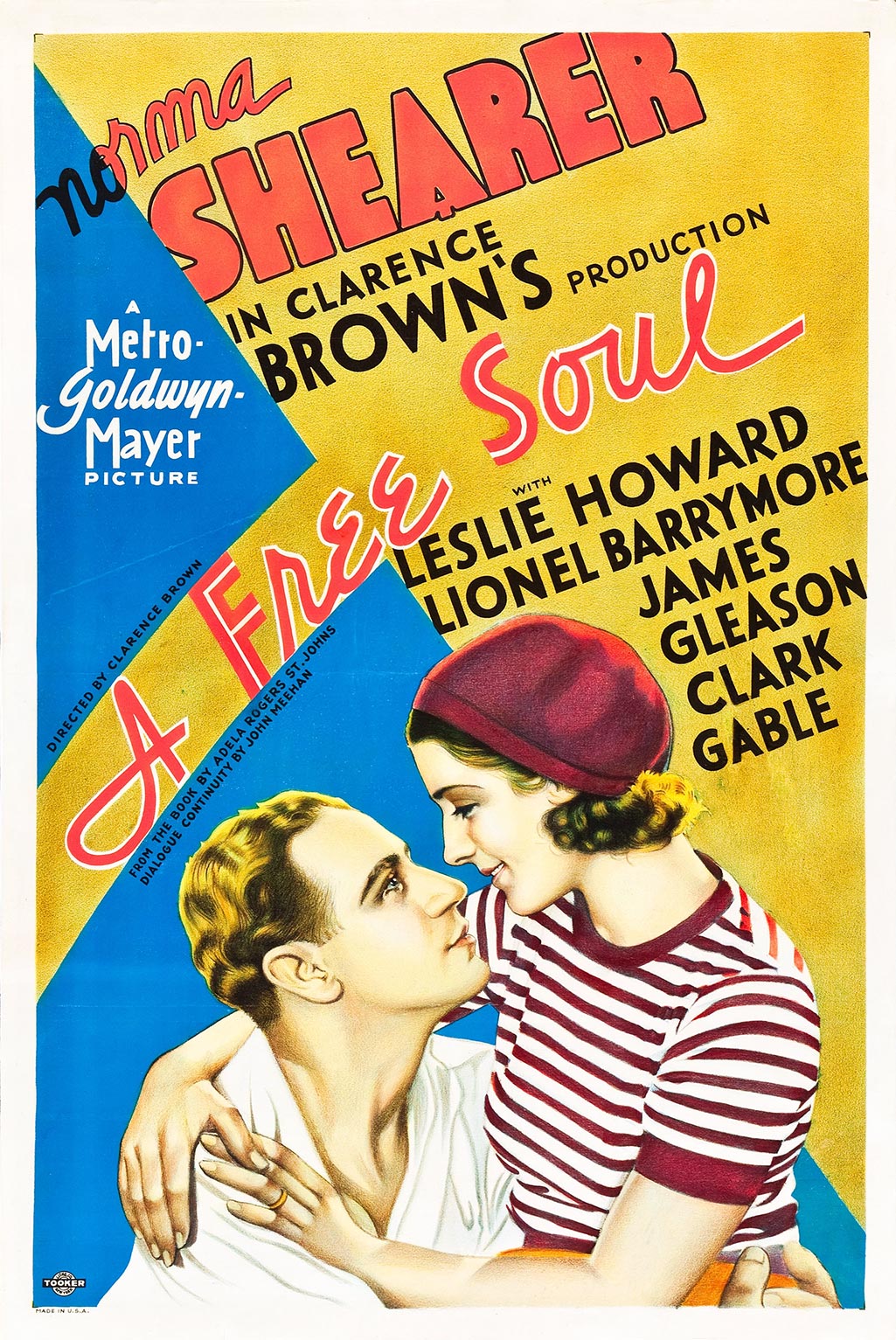
Seeing him in films like “Dance, Fools, Dance,” “The Finger Points,” and “A Free Soul,” women compared Gable to earlier heart-throb, Rudolph Valentino.
Movies provided a welcome escape for Depression-weary audiences. Among the throngs of movie-goers was Violet Wells Norton. She sat in a darkened theater in Canada, her eyes glued to the screen. Everyone else in the audience saw Clark Gable. Violet didn’t see Gable, she saw Frank Billings, the father of her daughter Gwendolyn.
Frank Billings?
Violet met Frank Billings in 1923 in Billericay, Essex, England. Billings was her neighbor and one night he overheard Violet and the man she called her husband arguing. Offering a shoulder to cry on, and a warm bed to lie in, Frank Billings fathered a daughter Violet named Gwendolyn.
Frank had no interest in fatherhood, and even less in a woman he considered damaged goods. He abandoned her and left for his home in the U.S. Violet did not see Frank again until years later when he appeared before her on a movie screen.
In 1925 Violet married Herbert James Norton and moved with him to Winnipeg, Canada. They separated on November 23, 1934.
For two years Violet wrote to Gable. She never received a reply. Gable was aware of the letters and ignored them as the ravings of a crank.
Violet traveled to Hollywood in October 1936 to confront Gable with his teenaged daughter Gwendolyn and convince him to set up a trust fund for her education. Or, failing that, purchase one or all of the four scripts she penned: Gipsy Nell’s Revenge, Love in a Cottage, Love at First Sight and The Spirit Mother.
Gable turned Violet’s letters over to police. He said he was never in England, never met Violet, and was not a papa.
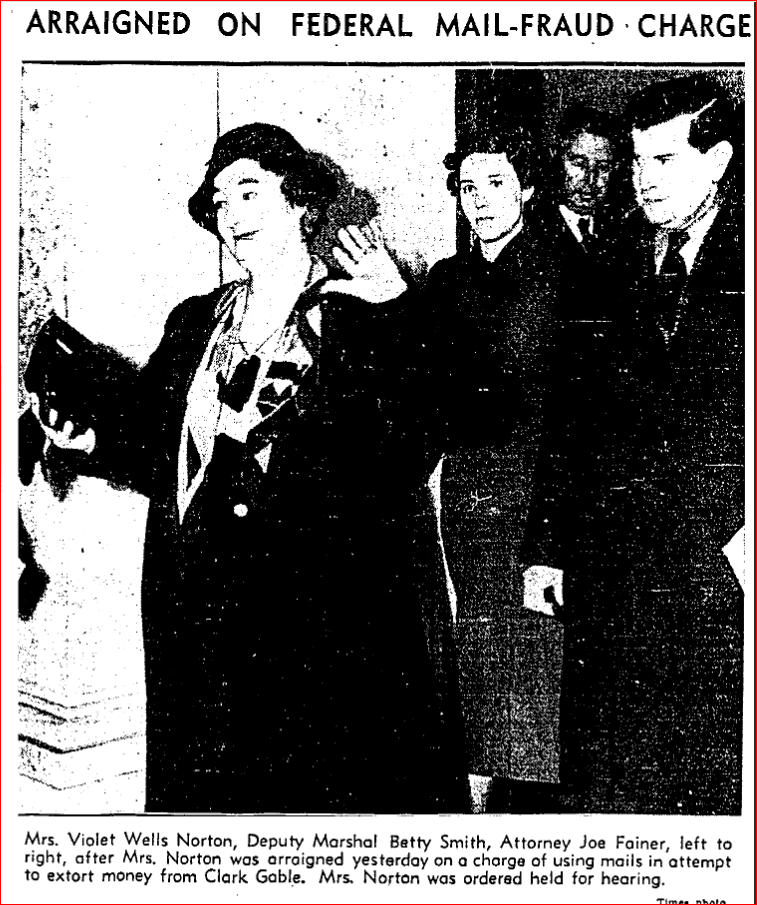
Federal authorities indicted Violet for mail fraud. The letter on which the Feds based the mail fraud charge came from 451 Cumberland Avenue, Winnipeg, Manitoba, Canada, mailed on March 9, 1936, addressed to Clark Gable, MGM, Beverly Hills, and signed Violet N.
Following her indictment, Violet addressed the press.
“Don’t misconstruct (sic) me!” she said.
She explained that she merely asked “Gables”, as she called him, to support her daughter or buy her scripts. Violet asserted her requests were reasonable. From her jail cell, she said, “He looks like the Frank Billings I knew in 1923. I’d like to see him in person.”
Gable dismissed Violet’s accusations as “silly and fantastic.”
Ten days ago I narrated the first part of the Dear Hattie post. Your feedback was encouraging, and I took your constructive comments to heart. I will get better as I go along. I truly believe that an audio version of Deranged posts is an idea whose time has come.
I have other ideas for content, too. In my research I often find newspaper and magazine stories that run the gamut — some are heartwarming, others sleazy or just flat-out horrifying, but I don’t feel they are enough to support a full written post. These gems are perfect to share via audio.
I’ll begin digging through my files to see what I can unearth.
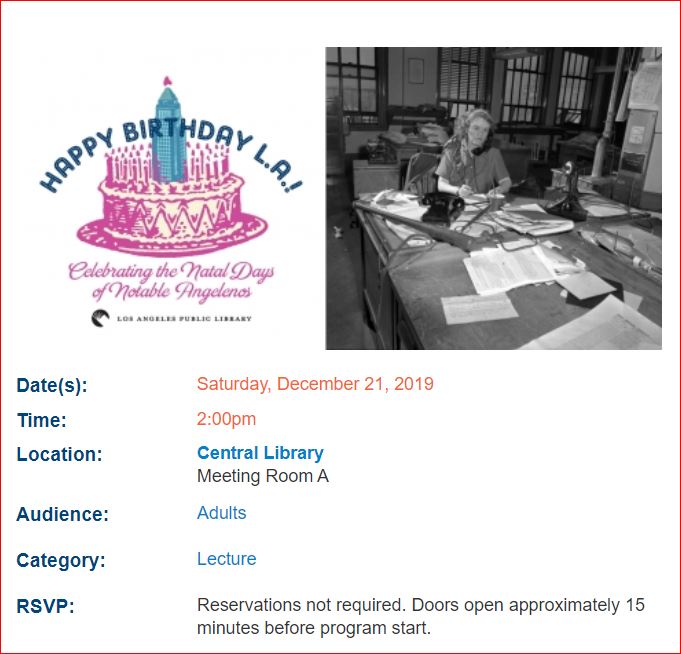
Yesterday was the 117th anniversary of Aggie Underwood’s birth. In her honor the Central Library downtown is hosting a party on Saturday, December 21, 2019 at 2 pm.
I will speak about Aggie and her many accomplishments from her time as a switchboard operator at the Record to her groundbreaking promotion to city editor at the Evening Herald and Express. And yes, there will be cake.
Aggie inspired me to create this blog and her Wikipedia page on December 12, 2012. Aggie loved the newspaper business as much as I love writing for the blog and connecting with all of you.
Aggie hoists a brew.
Deranged L.A. Crime readers are an impressive group. They include current and former law enforcement professionals, crime geeks (like me), and the victims of violent crime. I have even been contacted by a serial rapist (a despicable scumbag).
Each December I reflect on the year that is ending and make plans for Deranged L.A. Crimes. In 2020, the blog’s reach will extend to encompass all of Southern California, which includes the following counties: Los Angeles, San Diego, Orange, Riverside, San Bernardino, Kern, Ventura, Santa Barbara, San Luis Obispo, and Imperial.
I look forward to new stories, personalities and challenges.
Please join me as we enter the Roaring Twenties. This time, no Prohibition.